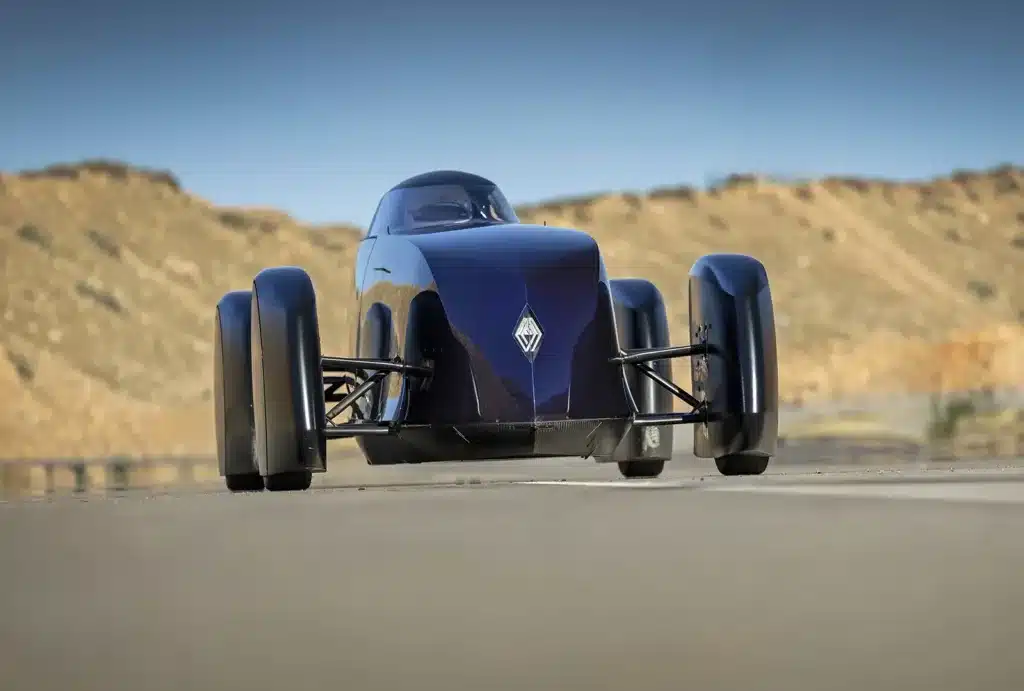
The Renault Filante Record EV isn’t just another electric concept chasing headlines; it’s a rolling, whirring rebuttal to everything we thought we knew about range anxiety. By quietly covering an astonishing 1,000 kilometres on a single charge at realistic motorway speeds, Renault has demonstrated that the next leap in electric vehicle capability won’t come from ever-larger batteries, but from ruthless efficiency, intelligent engineering and aerodynamic obsession. This is not science fiction, nor a marketing stunt, it’s a laboratory on wheels proving that long-distance EV travel can be both achievable and repeatable.
What makes the Filante Record genuinely fascinating is not simply the number attached to its range figure, but how that figure was achieved. Using a real-world 87kWh battery, the same capacity found in Renault’s Scenic E-Tech, the Filante strips away excess mass, friction and drag with the precision of a Le Mans prototype. At a steady cruise just north of 68mph, it reveals an uncomfortable truth for the wider industry: most modern EVs are not limited by their batteries, but by their inefficiencies.
And while the Filante Record will never appear in a showroom, its significance is far from theoretical. Every lesson learned here about rolling resistance, airflow management, drivetrain optimisation and energy discipline, feeds directly into Renault’s next generation of electric road cars. In that sense, the Filante isn’t a glimpse of some distant electric future; it’s a quietly radical preview of how everyday EVs will go farther, last longer and ask far less of their batteries than we ever thought possible.