


James Bond’s Bentley: The Real-Life ‘Locomotive’ Build

Any true James Bond fan, one familiar with Ian Fleming’s books, knows that before Aston Martin’s famous film partnership, Bond was a Bentley man.
Long before Sean Connery slid behind the wheel of an Aston Martin DB5 in Goldfinger (1964), the literary Bond roared through the pages of Fleming’s novels in a Bentley.
In Moonraker (1955), he drove a supercharged Bentley 4.5-litre coupé painted in battleship grey.

That inspiration is what led British designer and lifelong Bond enthusiast Tony Hunter to take on an extraordinary challenge: to build a real-life version of the Bentley that Fleming described but Bentley never made.
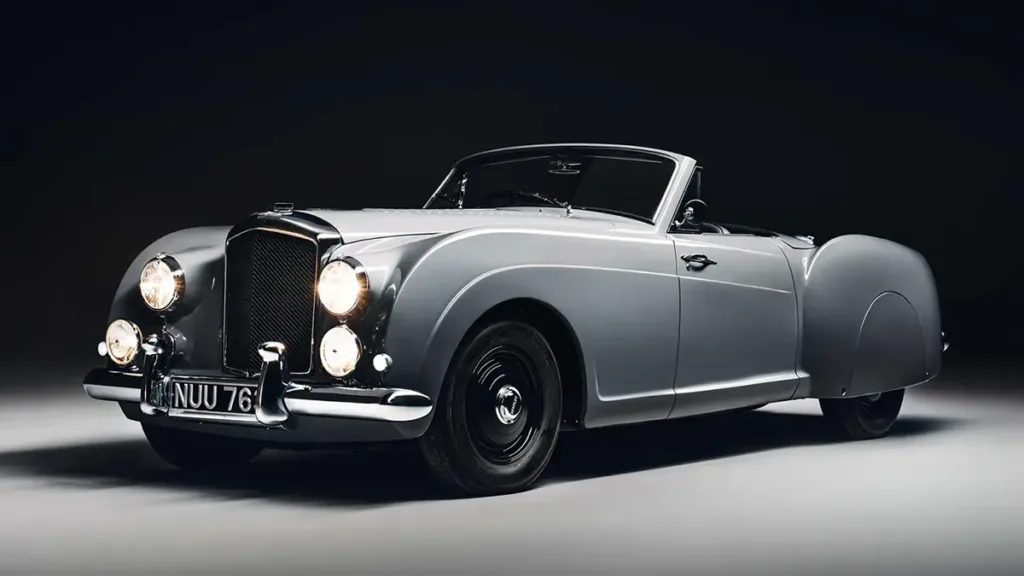
The result is a stunning creation called “The Locomotive” — a bespoke 1953 Bentley Continental reimagined exactly as Bond might have driven it.
Bentley — The Original James Bond Car

Before Aston Martin became synonymous with Bond, Ian Fleming’s secret agent had a soft spot for Bentley. Fleming himself was a Bentley owner and often described Bond’s cars in loving detail, handcrafted coachwork, leather interiors and high-speed capability for long Continental runs.
In Thunderball (1961), Fleming wrote that Bond’s Bentley was a “Continental Mark II” with a powerful supercharged engine, finished in his trademark battleship grey.
No such car ever officially existed. The R-Type Continental had just been launched by Bentley, and its sleek curves and formidable power likely inspired Fleming’s imagination.

It’s this blend of fact and fiction that sparked Hunter’s vision: to build the Bentley that Bond should have driven, the ultimate gentleman spy’s grand tourer.
Creating the Bentley Locomotive
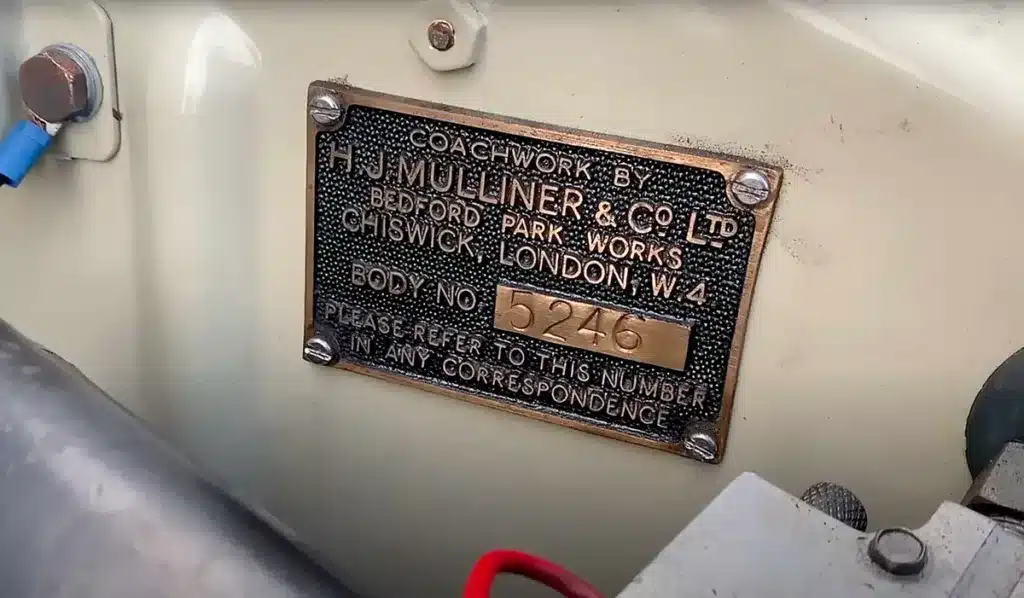
Tony Hunter’s project began with a genuine 1953 Bentley R-Type Continental, a model revered for its balance of refinement and power.
He shipped it to Poland, where a team of expert coachbuilders spent nearly a year rebuilding it into what Fleming might have imagined.
Hunter’s aim was simple: make a real Bond car, not a replica of any film vehicle but a working interpretation of the car described in the novels.

The design brief included an aluminium chassis, a two-seat configuration, a straight-six engine producing around 180 bhp, and most importantly, the battleship grey finish that defined Bond’s understated style.
The finished car, now known as The Locomotive, is a glorious hybrid between period authenticity and creative interpretation, a Bentley that might have existed in a parallel Bond universe.
Exterior Design: Battleship Grey Brilliance
The Locomotive’s exterior takes cues from the R-Type Continental but with distinct modifications. The front grille is bold and upright, evoking power and elegance, while the bonnet carries subtle louvres that hint at its hidden strength.
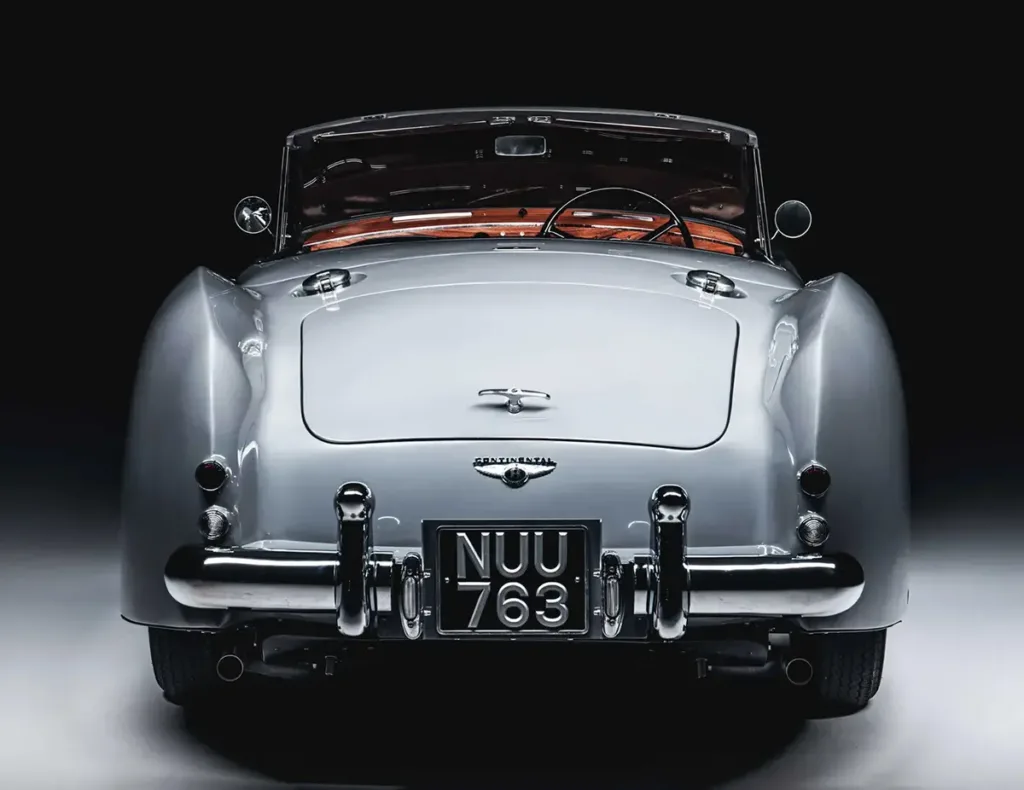
Twin fuel fillers sit symmetrically at the rear, purely for show, paying tribute to the fictional gadgetry of Bond’s world.
Painted in Bond’s favourite battleship grey, the finish has a deep metallic tone that shifts subtly under light, perfectly balancing menace with sophistication.
Hunter even omitted the traditional Bentley mascot, replacing it with a plain bolt head, just as Fleming described in his novels, understated, purposeful, and British to the core.
Inside Bond’s Bentley: Gadgets and Grace
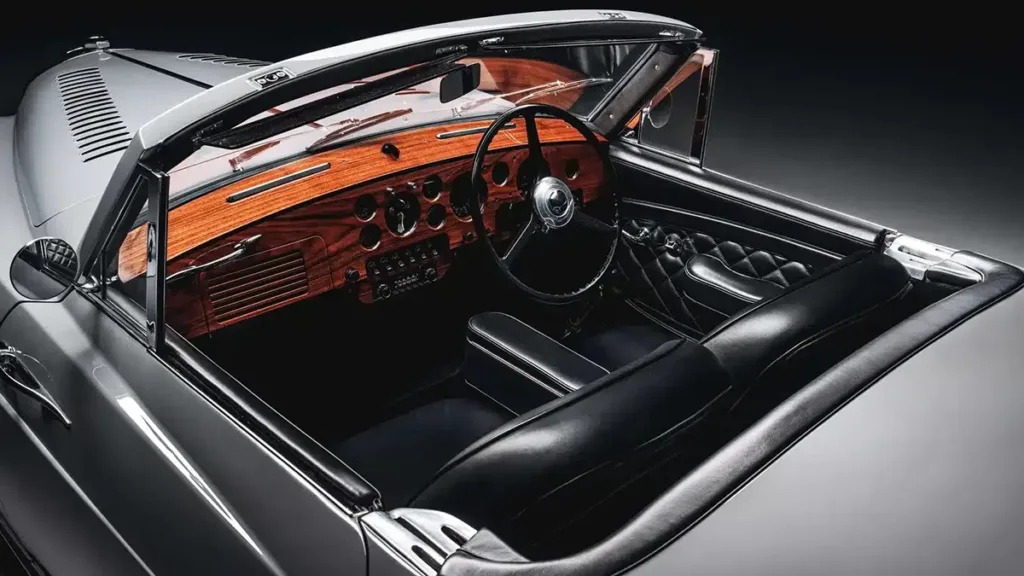
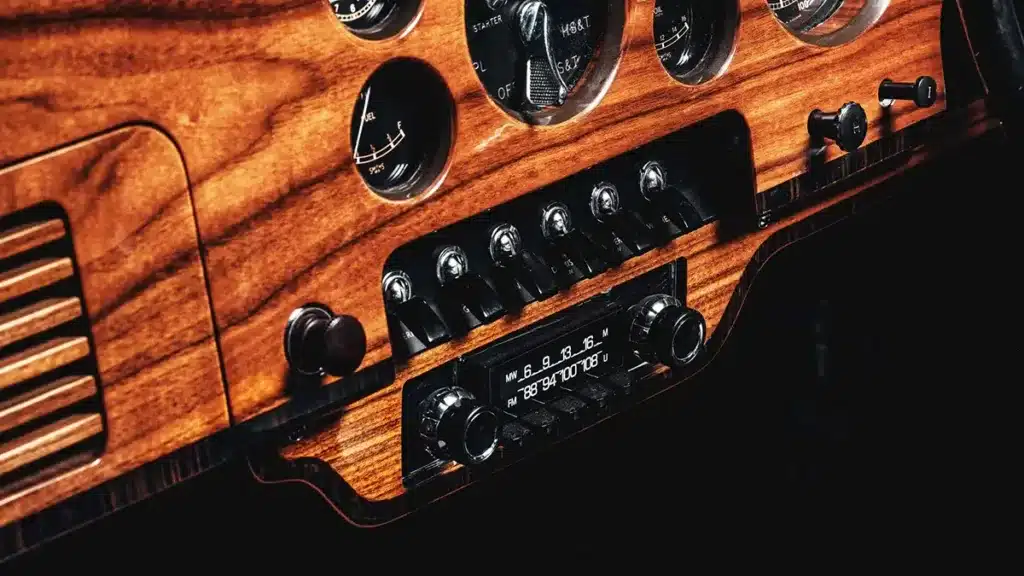
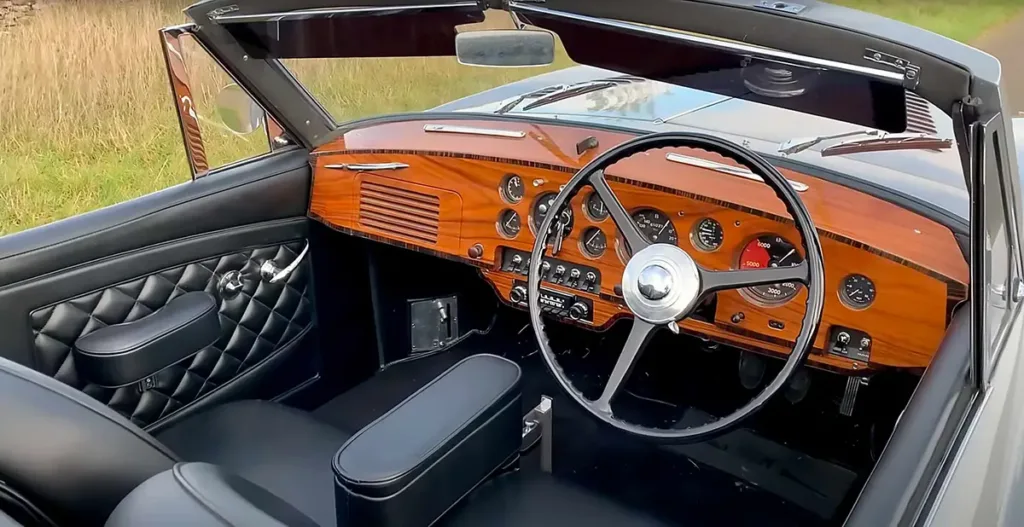
The cabin continues the homage to Fleming’s attention to detail. A warm walnut veneer dashboard offsets the deep black leather seats, while a collection of toggle switches hides a series of tricks and features. Some are practical; others are playful nods to Bond’s gadget-filled heritage.
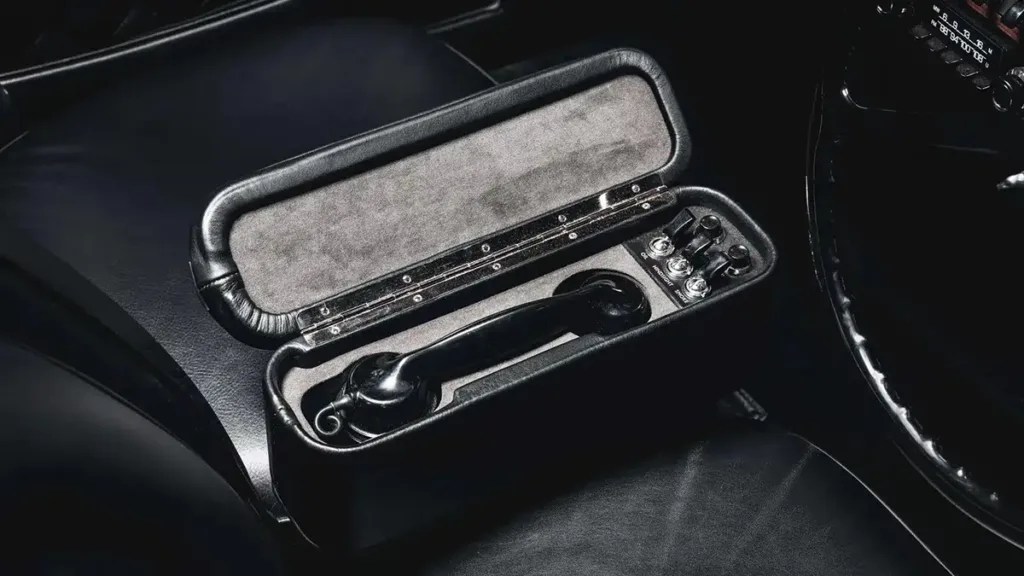
Among the highlights is a vintage phone handset sourced from an RAF bomber, now cleverly wired to operate through a hidden mobile phone.
Various compartments and dials control mock “defence systems,” including a smokescreen and oil-spray switch.
None are functional, of course, but they deliver a grin to anyone familiar with Bond’s penchant for mechanical mischief.
Everything inside has been built with care and authenticity. The car’s layout mirrors Bond’s described two-seat configuration from Thunderball, giving the cabin a purposeful, driver-focused feel.
Power and Performance
Under the bonnet sits a straight-six engine tuned to match the spirit of Fleming’s prose. Producing around 180 bhp, it’s paired with a lightweight aluminium chassis to improve handling and ride quality.
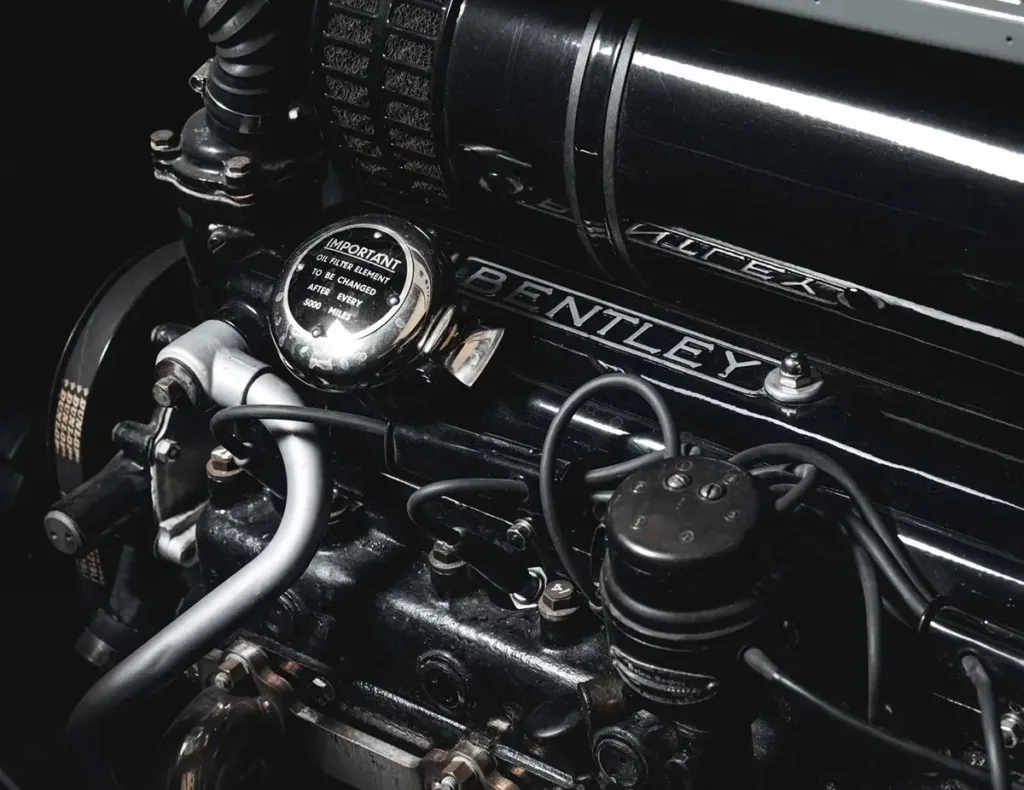
While not a modern performance car, the Locomotive delivers brisk touring pace and a wonderfully mechanical soundtrack, a reminder of when power was felt through your fingertips, not your screens.
Hunter has hinted that a supercharger, similar to Bond’s “Blower Bentley” from Moonraker, could be added in the future. That would bring the project full circle, combining Bond’s early motoring history with this 1950s masterpiece.
The Inspiration Behind the Build
For Hunter, the motivation was deeply personal. He has said he grew up reading Fleming’s novels and was always intrigued by the mystery Bentley that never existed in real life.
“Bond’s Bentley was more than a car,” he explained. “It was an extension of his character, understated, brutal when needed, and always impeccably British.”
The project took several years to complete, involving extensive design sketches, metalwork, and sourcing of authentic components.
The attention to detail has won admiration from car enthusiasts and Bond fans alike.
Reaction from Motoring Media
When the project was unveiled, it immediately caught the attention of major motoring outlets.
TopGear featured the car in its article “Meet the one-off James Bond car that never existed”, describing it as a “faithful tribute to the car that only ever lived in Fleming’s imagination.”
Meanwhile, James Bond Lifestyle called it “a bespoke creation that bridges the gap between literature and motoring reality,” praising its craftsmanship and attention to detail. (Source)
Public reaction has been overwhelmingly positive. Classic car enthusiasts admire its authenticity, while Bond fans celebrate its faithfulness to Fleming’s vision.
Many have suggested that this Bentley deserves an appearance in a future Bond film, perhaps as a nod to 007’s literary roots.
Strengths and Limitations
As with any bespoke build, there are both triumphs and compromises. The Locomotive’s greatest strength lies in its authenticity and attention to detail.
It looks and feels like the car Bond might genuinely have owned, a machine for long, fast journeys across Europe.
The craftsmanship is exquisite, from the hand-finished aluminium panels to the functional switchgear.
The downside, as some traditionalists note, is that it’s not a restoration of an original R-Type but an interpretation. Its gadgets are largely decorative, and some modern components may offend purists.
Yet few can deny that it captures the essence of Bond’s automotive soul better than any film prop.
Why It Matters
Tony Hunter’s Bentley Locomotive represents something rare in motoring culture, a car born not from commercial intent but from imagination and literary devotion.
It connects two British icons: Bentley and Bond. It also reminds enthusiasts that great engineering begins with a story.
This project is more than a build; it’s a conversation between fiction and craftsmanship. It celebrates Britain’s design heritage while reigniting interest in the Bond novels’ motoring legacy.
Where to See It

The car has appeared at several classic car events in the UK and Europe, often drawing crowds who are fascinated by its blend of history and fantasy.
A detailed walkaround video is available on the Number 27 YouTube channel, showing its elegant design and driving character.
The Locomotive continues to inspire debate and admiration and perhaps a little envy among those who wish they could build their own piece of Bond history.
Images: youtube.com/@Number27

Like What You’ve Read?
For more articles like this, receive our weekly e-newsletter, including partner deals and all things motoring, register your email below.
Please note: You cannot subscribe to Smart-Motoring unless you put a tick in the checkbox below to indicate have read and agreed to our privacy policy.