Fake Gearboxes in EVs: The Debate, Explained
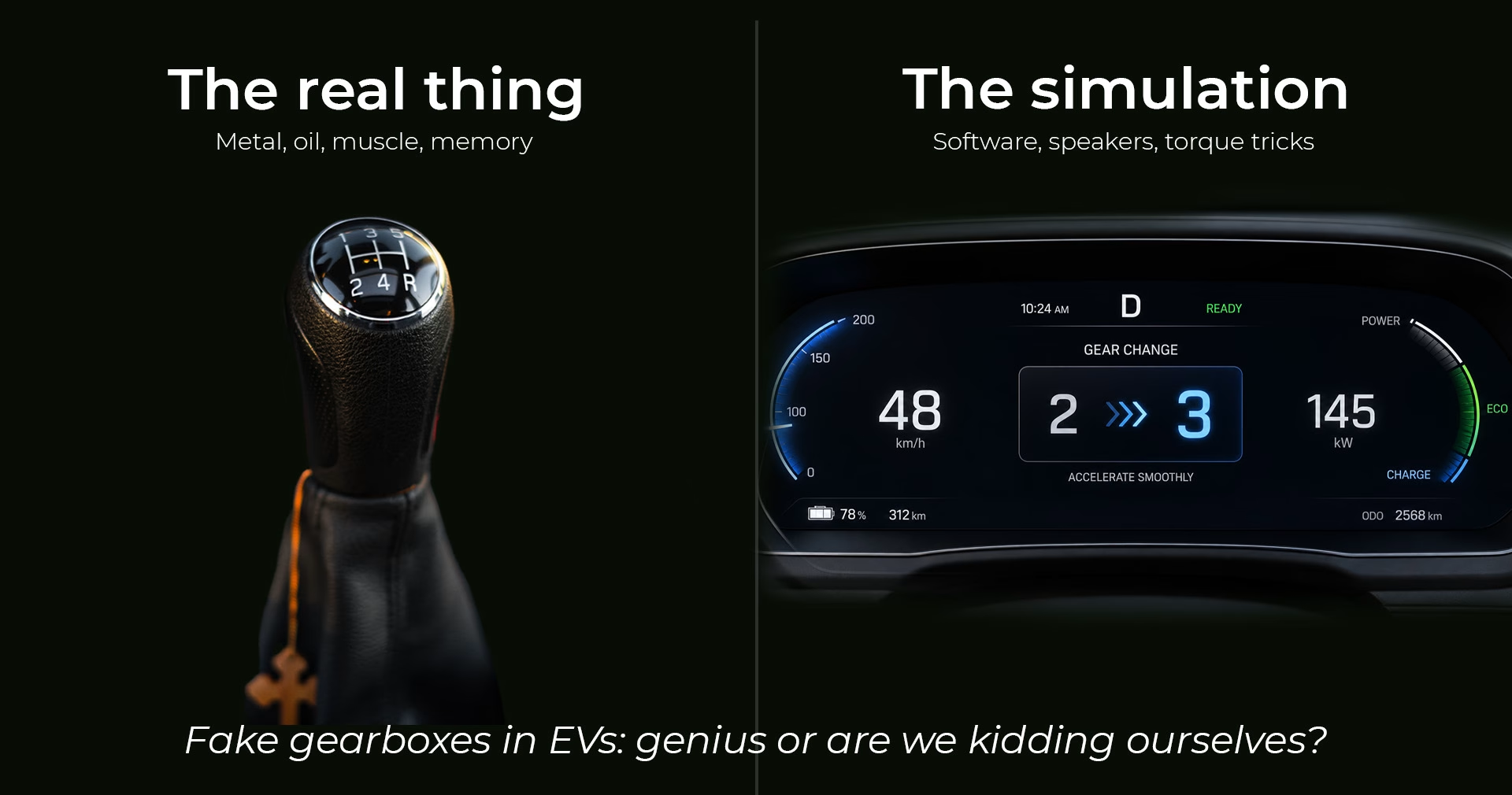
A fake gearbox in an electric car should be the easiest thing in the world to sneer at, and for about a year I managed it beautifully. An EV does not need gears. Its motor delivers a single, seamless shove from a standstill, which is precisely the point of the thing. So when Hyundai announced that its electric hot hatch would pretend to have an eight-speed gearbox, complete with a fake redline and a fake engine note, I filed it under gimmick and moved on. Then people who had actually driven it started saying it was brilliant. That is the trouble with this particular debate. The moment you drive the fakery, the sneering gets a lot harder.
The strange, revealing rise of the simulated manual
There is a version of this column that simply lists the clever things engineers are now doing to make silent cars feel busy, awards them full marks for effort, and sends you on your way. This is not that column, because the simulated manual is more interesting than that. It is a mirror. What manufacturers choose to fake, and what we decide we are willing to accept, tells us something quite uncomfortable about what we thought we loved about driving in the first place. So let us take it seriously, gimmick and all.
The gearbox that isn’t there
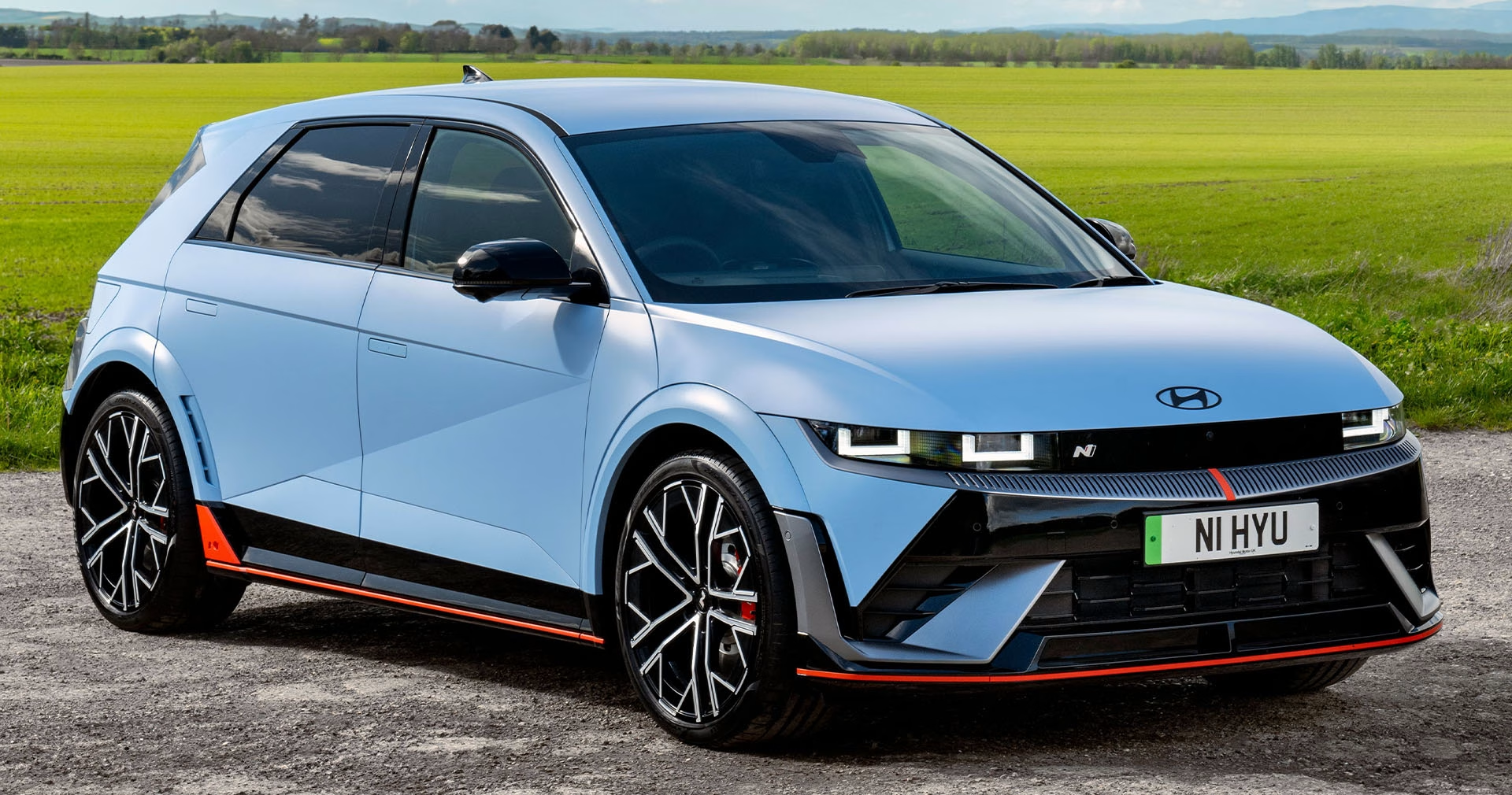
Start with the car that changed the argument, the Hyundai Ioniq 5 N. On paper it is faintly absurd: a 2.2-tonne electric crossover with 641 horsepower and paddles behind the wheel that select gears which do not exist. The system is called N e-Shift, and it simulates the feel of Hyundai’s own eight-speed dual-clutch gearbox by cutting and restoring the motor’s torque in tiny, deliberate stumbles. Pull the paddle and the car jolts as if a clutch had bitten. Hold a gear too long and it bounces off a rev limiter. Choose too high a ratio out of a slow corner and it bogs down, sulking, exactly as a petrol car would.
None of this makes the car faster. It cannot, because you are imposing the limits of an old combustion engine on a motor that has no need of them. And yet the reviewers who went in ready to scoff, myself among the sympathisers, came out converted. The consensus was almost sheepish: it should not work, it sounds ridiculous written down, and it is one of the most engaging things to happen to the performance EV. The Ioniq 5 N did not just add a gimmick. It exposed how much of driving pleasure was never really about going fast at all.
How a fake gearbox actually works
It helps to understand what is really happening under the floor, because it is cleverer, and stranger, than a simple sound effect. Three things happen at once when you pull that paddle, and none of them involves a gear.
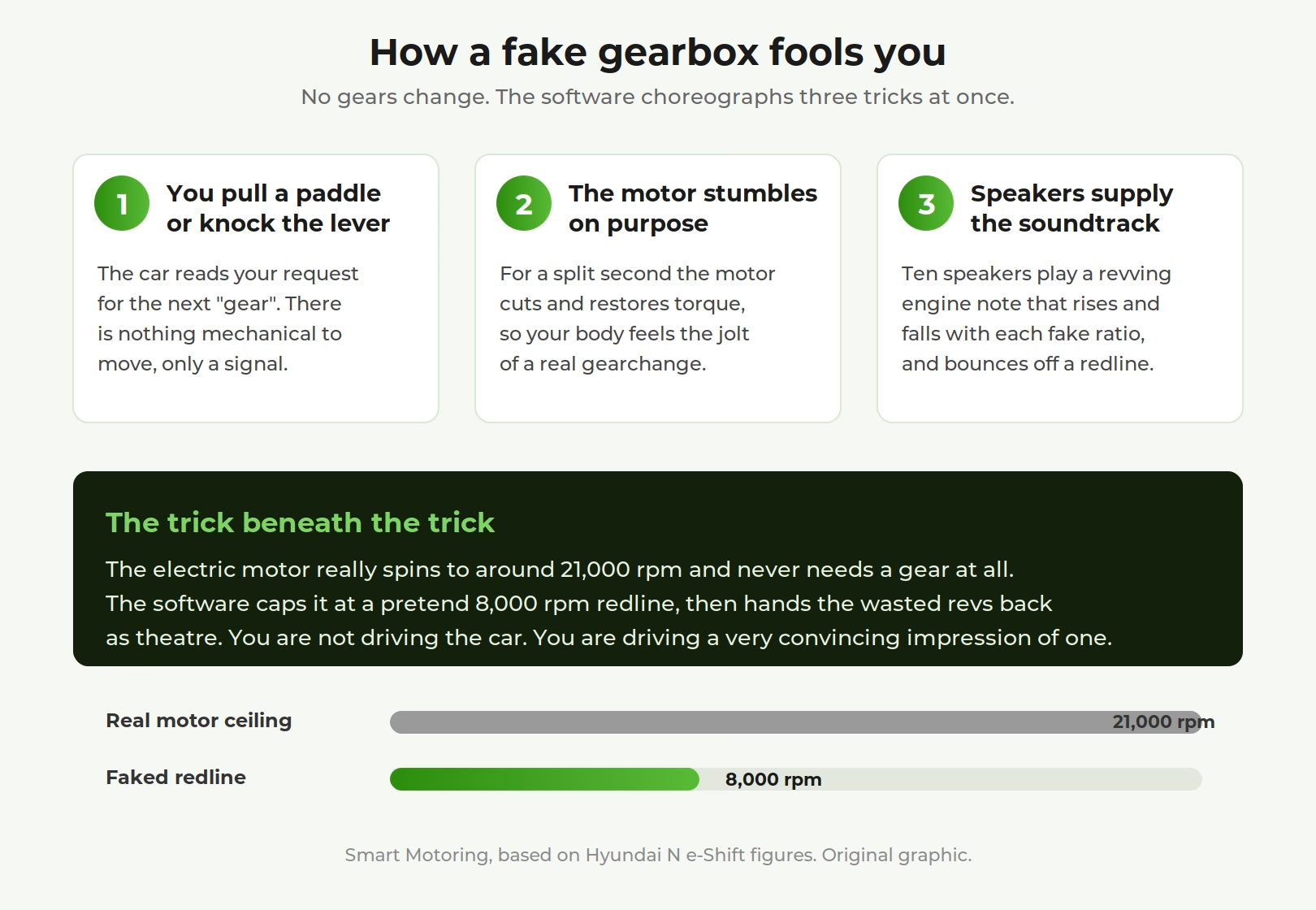
The detail I keep coming back to is the rev ceiling. A performance EV motor of this kind spins to something like 21,000rpm and pulls cleanly the whole way, needing no gears whatsoever. The software throws most of that away, capping the experience at a pretend redline of around 8,000rpm so that it feels like an engine you recognise. Read that back slowly.
The engineers built a powertrain free of the compromises of the combustion age, then spent a fortune reintroducing those compromises on purpose, because we missed them. If that does not tell you something odd about the human animal behind the wheel, nothing will.
We have been faking it for years
Here is the part the purists tend to skate over. If simulated shifting offends you on principle, your principles should have been offended a long time ago, because the industry has been quietly faking the driving experience for the better part of two decades. The noise, in particular, has been a polite fiction for years.
Volkswagen fitted a device called the Soundaktor, essentially a dedicated speaker bolted to the bulkhead, to pump synthesised engine grumble into GTIs and Golf Rs. Porsche used a Sound Symposer, a tube arrangement piping induction noise at the cabin. And BMW, of all the supposed drivers’ brands, wired the engine management of the F10 M5 to the stereo and played a stored recording of a V8 through the speakers, adjusted live to the revs. The technology traces back to a MINI prototype shown as far back as 2009. When owners found out, there was outrage, and BMW eventually gave them a switch to turn it down. But the point stands: the roar you were savouring in a great many modern performance cars was, in part, an audio file.
So the simulated gearbox is not some sudden collapse of automotive honesty. It is the logical next chapter of a story that has been running for years. We accepted fake sound because it flattered the drive. The only genuinely new question is whether we will accept fake feel as readily, and the early evidence, awkwardly, is that we will.
Toyota wants you to stall
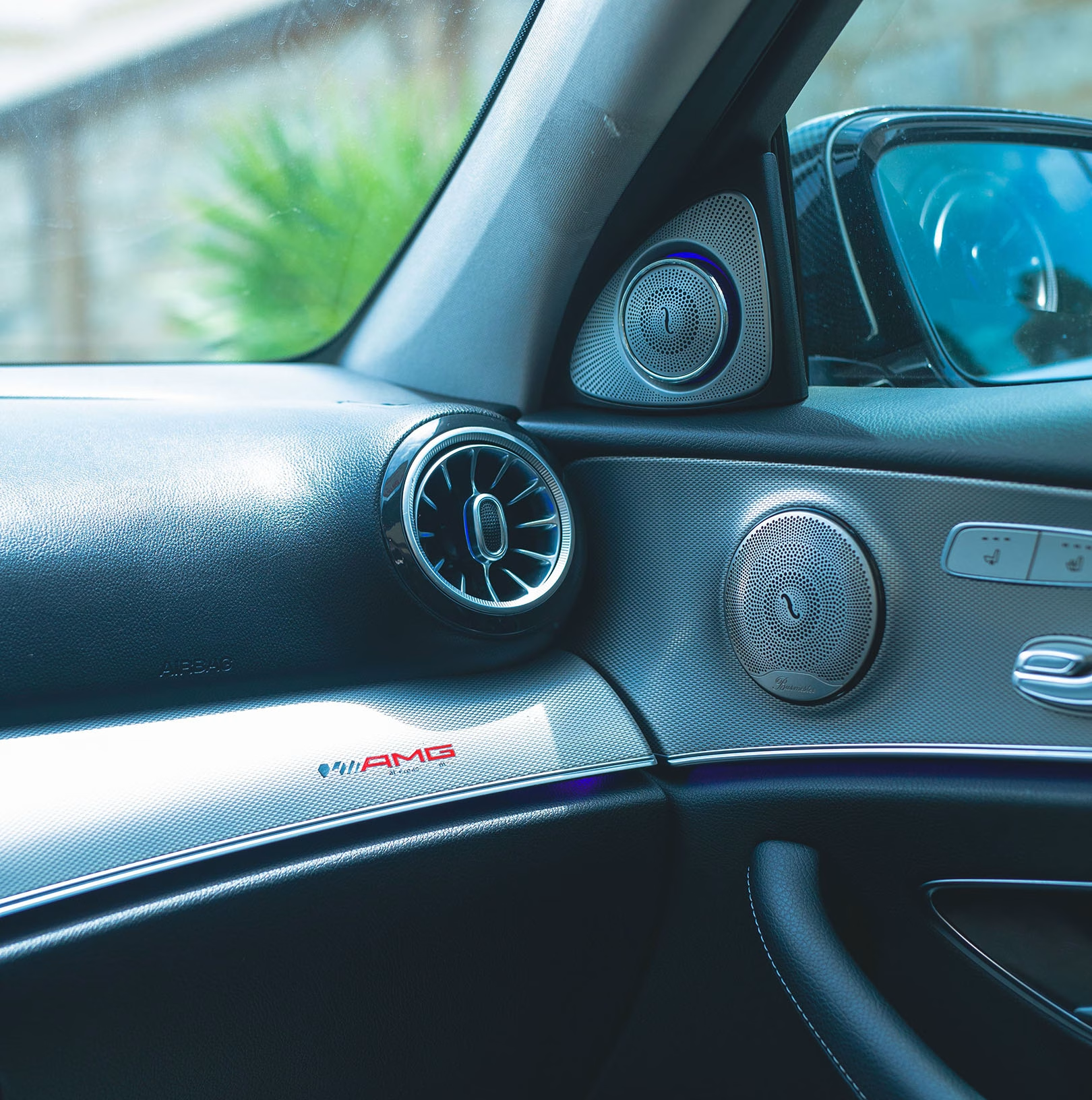
If Hyundai made the case for tasteful simulation, Toyota is busy testing where the joke breaks. The company has patented, and is developing, a far more thorough fake manual for its electric cars, one with an actual clutch pedal, an actual gear lever, and a party trick the others have carefully avoided: it can stall. Botch the clutch, pick the wrong gear at the wrong speed, and the system will cut the motor, jerk the car and bring you to an embarrassed halt, precisely as a real one would humiliate a learner.
I find this genuinely funny, and also rather profound. Toyota has looked at the manual gearbox and concluded that the good bit, the bit worth preserving, is not the smoothness. It is the difficulty. The possibility of getting it wrong is the whole point, because a skill you cannot fail at is not a skill, it is a light switch.
Whether a single customer will actually pay to be told off by their own car remains to be seen. But as a statement about what we lost when driving got easy, the fake stall is unimprovable.
Even Porsche caved
For a while, the sceptics had a champion, and it was Porsche. The company that knows one or two things about drivers’ cars looked hard at simulated shifting and, through its development driver Lars Kern, called it a bad idea, a distraction from building an electric car honest about what it is. I quoted that line approvingly for months. It was the principled position, and Porsche seemed just the firm to hold it.
I thought it was a defensible position, and possibly the principled one. There is something to be said for a company deciding that an electric Porsche should feel like the best possible electric Porsche, rather than a nervous impression of a petrol one. Then, quietly, Porsche caved.
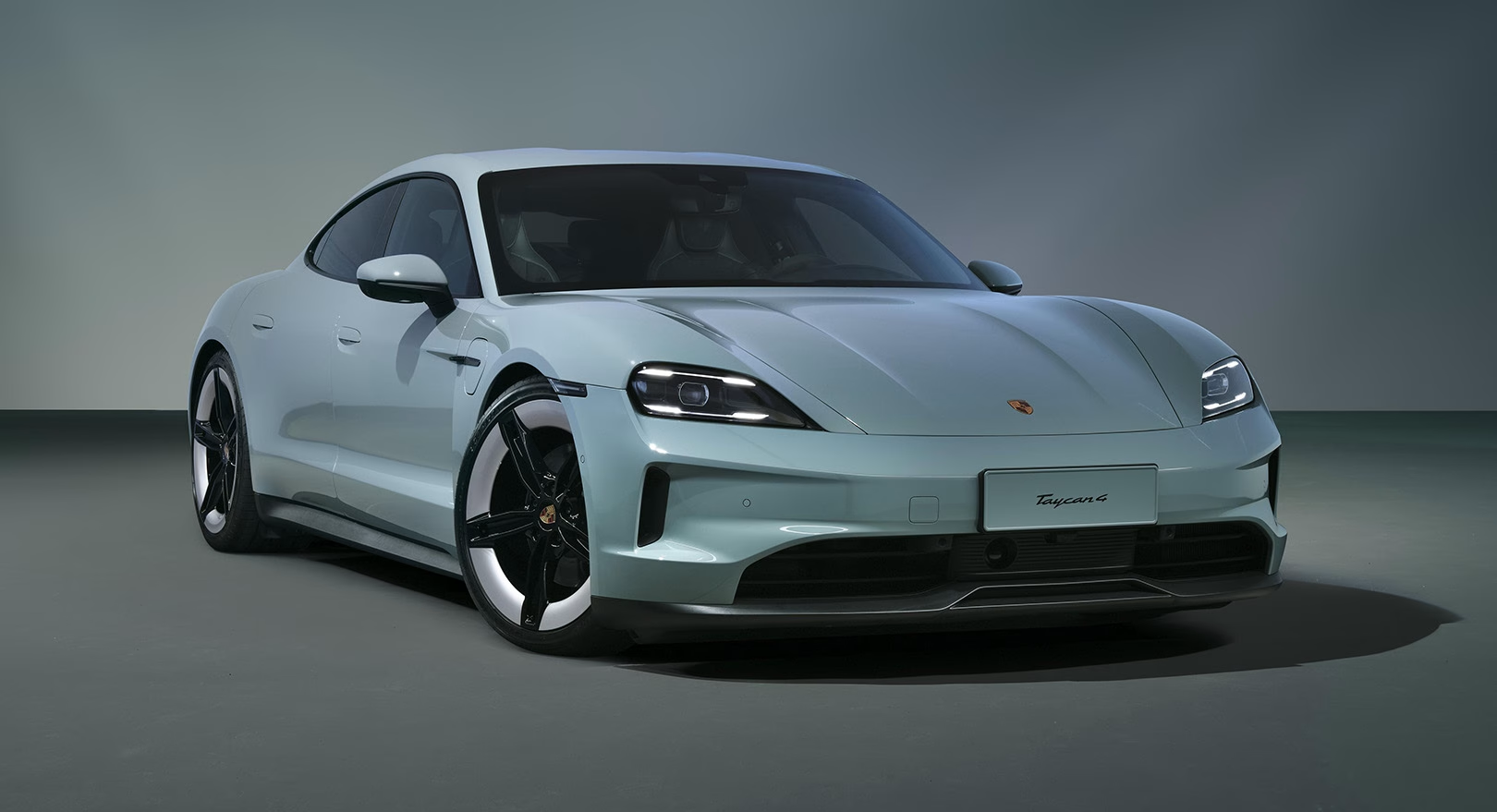
For the 2027 model year it added an option called E-Shift to the entire Taycan range, and it is precisely the thing Kern once dismissed: a software-simulated eight-speed PDK, worked by the same paddles as a real one, with deliberate torque cuts on each shift, engine-braking on the overrun, a virtual rev counter climbing to 7,500rpm and a bespoke soundtrack to match. Porsche’s own line now is that E-Shift brings more emotion and more feedback into the car. Autocar drove it and called the fake gears a game changer. The firm that said no has shipped a yes, and put it on the price list from base saloon to Cross Turismo.
There is one detail in the Porsche system I cannot stop admiring, because it blurs the honest and the artificial in a way that is almost philosophical. The Taycan has always had a real two-speed gearbox on its rear axle. Rather than ignore it, Porsche’s engineers timed the jump from virtual second to virtual third to land exactly when that one real mechanical change happens. So seven of the eight shifts are pure theatre, and one of them is genuinely, mechanically true, and you are not meant to be able to tell which.
When even the pretend gearbox contains a real gearchange, the line between authentic and simulated has not just blurred, it has been quietly abolished. And if Porsche has crossed it, the argument is effectively over.
So, genius or gimmick?
Both, obviously, and the fact that it can be both at once is what makes it worth writing about. It is a gimmick in the strict sense, an added feature that serves no functional purpose and can be switched off. But it is a gimmick that a lot of hard-bitten sceptics have driven and quietly loved, which is not the usual fate of gimmicks. Somewhere in the pretend jolts and the piped-in revs, these systems have located something real: the small, absorbing business of managing a machine, of doing a thing slightly badly and wanting to do it better.
My honest view, for what it is worth, is that the simulated manual is a going-away present. It is the industry preserving the feeling of shifting precisely because it has decided to stop preserving the hardware, and there is a melancholy in that which no amount of clever software quite hides. The real manual is becoming a museum piece. The fake one is how we will remember it. I would rather have the ghost than nothing, and I suspect, whatever we say in public, most of us feel the same. Just do not let anyone tell you it is the same as the real thing. It is a beautiful impression of something we were not brave enough to keep.
Frequently asked questions
No. An electric motor delivers strong torque from zero revs across a very wide range, so most EVs use a single fixed reduction ratio and need no multi-speed gearbox at all. Any gears you feel in a performance EV like the Hyundai Ioniq 5 N are simulated in software, not mechanical.
No. The Ioniq 5 N’s N e-Shift feature simulates an eight-speed dual-clutch gearbox by briefly cutting and restoring motor torque to mimic gearchanges, paired with synthetic engine sound. There are no physical gears involved, and the whole system can be switched off.
Not normally, because there is no engine to stall. However, Toyota has patented a simulated manual for EVs that can deliberately mimic a stall, cutting power and jolting the car if the driver mishandles the fake clutch and gearlever, purely to recreate the feel of a real manual.
Mainly for driver engagement. Electric cars are fast but can feel clinical and silent, so manufacturers use simulated shifts, synthetic sound and torque tricks to make them feel more involving and familiar to drivers raised on petrol cars. It also lets them preserve the sensation of shifting without the cost of a real gearbox.
Yes, now it does. Porsche initially rejected simulated shifting, with a development driver calling it a bad idea, but for the 2027 model year it added an E-Shift option to the Taycan: a software-simulated eight-speed PDK with paddle shifts, torque-cut shift kicks, engine braking and a virtual 7,500rpm rev counter.
The Hyundai Ioniq 5 N and Ioniq 6 N are the best known, with N e-Shift, and the Porsche Taycan now offers a simulated eight-speed E-Shift from the 2027 model year. Toyota, Ford, Subaru and others have filed patents or run prototypes, so expect the feature to spread across performance EVs.
Photo credits: hyundai.news, Pexels, newsroom.porsche, Smart-Motoring
Like What You’ve Read?
For more articles like this, receive our weekly e-newsletter, including partner deals and all things motoring, register your email below.
Please note: You cannot subscribe to Smart-Motoring unless you put a tick in the checkbox below to indicate have read and agreed to our privacy policy.