The Auto Union Lucca is one of the wildest racing machines ever to wear Audi’s four rings, and Audi Tradition has now brought it roaring back into view. The recreated Auto Union Lucca has made its dynamic public debut at Goodwood, giving us a much clearer and more complete story than the original launch announcement.
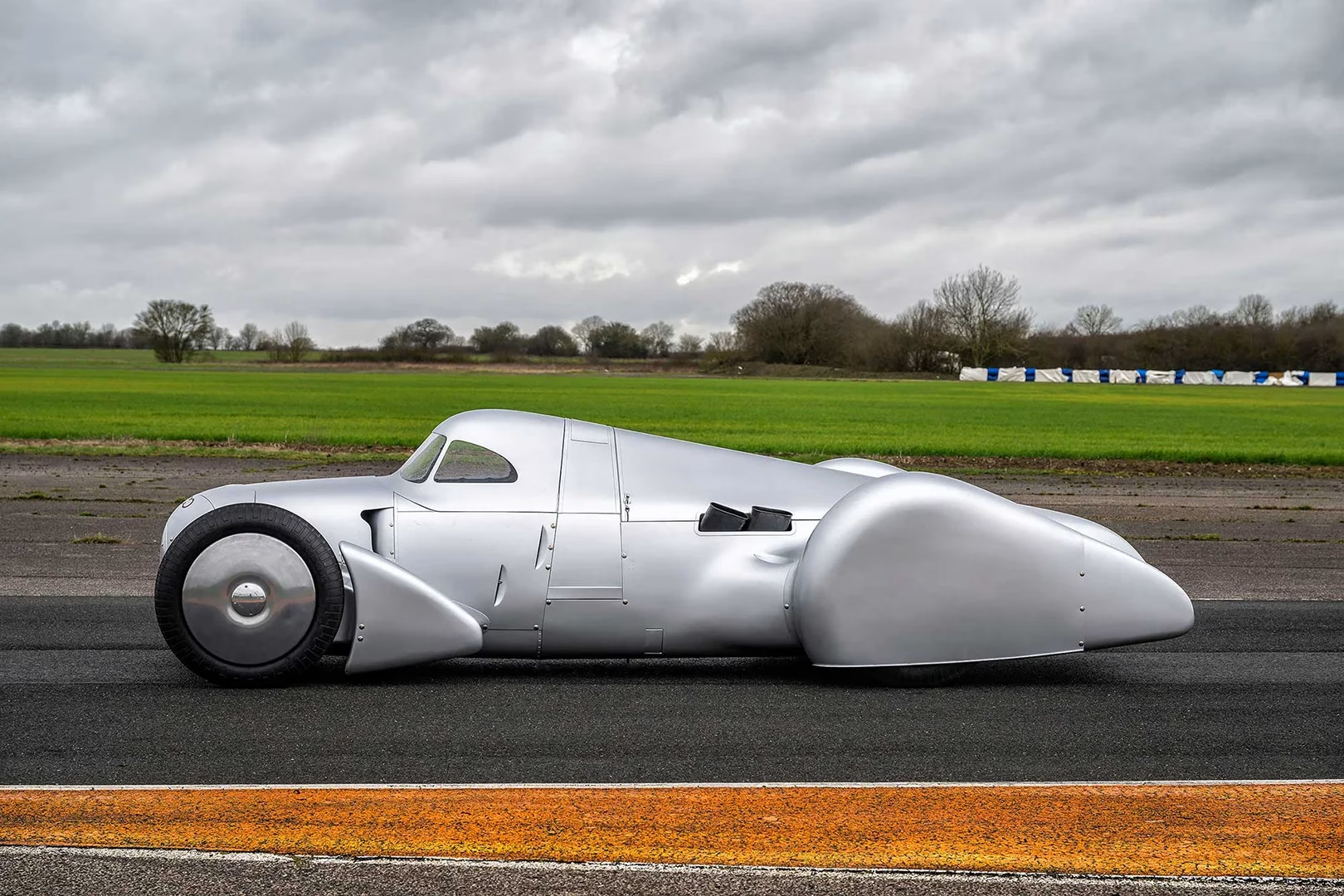
It looks like something a 1930s engineer might have sketched after reading too much science fiction. Long, silver, almost completely enclosed and built around a supercharged V16, the Auto Union Lucca was created for one job: to go brutally fast in a straight line.
More than 90 years later, Audi has built it again. Not restored it, because the original no longer survives, but recreated it from archive photographs, period documents and the accumulated knowledge of Audi Tradition and British specialist Crosthwaite & Gardiner.
When this article was first drafted, the new Lucca had only just been revealed and its Goodwood appearance was still in the future. That has now happened. The 2026 recreation made its first public appearance in motion at the Goodwood Festival of Speed in July, which means this is no longer just a static museum curiosity. Audi has created a working historic machine and actually let that V16 breathe again.
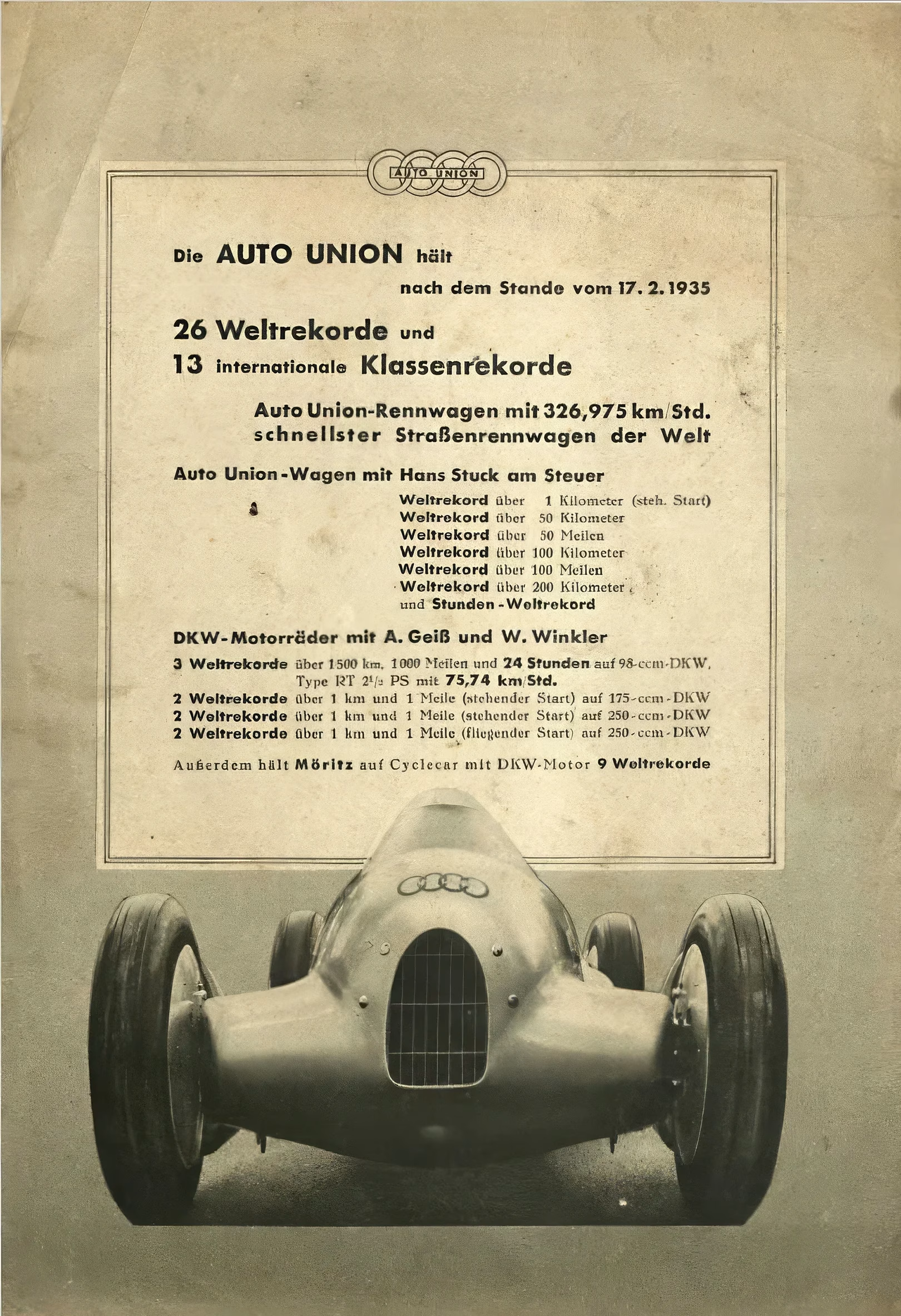
There is also an important correction to the old version of the story. The famous 203mph figure was not the official average for the record itself. Hans Stuck set the International Class C flying-mile record at an average of 320.267km/h, almost exactly 199mph, while timing equipment recorded 326.975km/h, or about 203mph, over part of the return run. That distinction matters, and it makes the achievement no less extraordinary.
Auto Union Lucca at a glance
| What is it? | A 2026 working recreation of Auto Union’s 1935 high-speed Rennlimousine |
| Original record date | 15 February 1935 |
| Driver | Hans Stuck |
| Flying-mile record | 320.267km/h average, around 199mph |
| Measured peak | 326.975km/h, around 203mph |
| 2026 engine | 6,005cc supercharged V16 from the Auto Union Type C family |
| 2026 power | 520PS / 382kW at 4,500rpm |
| Gearbox | Five-speed non-synchromesh manual |
| Weight | 960kg |
| Drag coefficient | Cd 0.43 measured in Audi’s modern wind tunnel |
| Builder | Crosthwaite & Gardiner for Audi Tradition |
| Latest milestone | Dynamic public debut at Goodwood Festival of Speed, July 2026 |
Auto Union Lucca guide
- Auto Union Lucca at a glance
- The Auto Union Lucca was born from a speed war
- Wind-tunnel thinking before most road cars had heard of aerodynamics
- A record attempt that kept moving south
- The original had 343PS. The recreation has 520PS
- Why Audi did not build an exact clone
- It weighs less than a modern supermini
- The Lucca’s second life lasted only a few months in 1935
- Goodwood changed the story in July 2026
- Key specifications
- Frequently asked questions
The Auto Union Lucca was born from a speed war
To understand the Lucca, you have to forget modern motorsport for a moment. In the mid-1930s, Grand Prix racing and speed records were part engineering contest, part national obsession and part rolling publicity war.
Auto Union had been formed in 1932 from Audi, DKW, Horch and Wanderer. Its four-ring badge survives today as Audi’s logo. By 1934 the new company was fighting Mercedes-Benz on circuits and record roads, using the extraordinary mid-engined Auto Union racers designed around Ferdinand Porsche’s concepts.
Hans Stuck had already set a string of records for Auto Union in 1934. Mercedes then answered through Rudolf Caracciola, who averaged 316.592km/h over a flying mile near Gyón in Hungary. Auto Union wanted that record back, and wanted it quickly.
The response was what period journalists called a Rennlimousine, literally a racing saloon. It was not a saloon in any modern sense. It was a single-seat competition car clothed in a long, smooth aerodynamic body whose shape mattered as much as the engine underneath.
Wind-tunnel thinking before most road cars had heard of aerodynamics
The really fascinating part is how seriously Auto Union treated airflow in 1934. The team developed a scale model and tested open and closed-cockpit forms in the wind tunnel at the Berlin-Adlershof Aeronautical Research Institute. Audi describes the use of those findings in European racing-car construction as a pioneering move for the period.
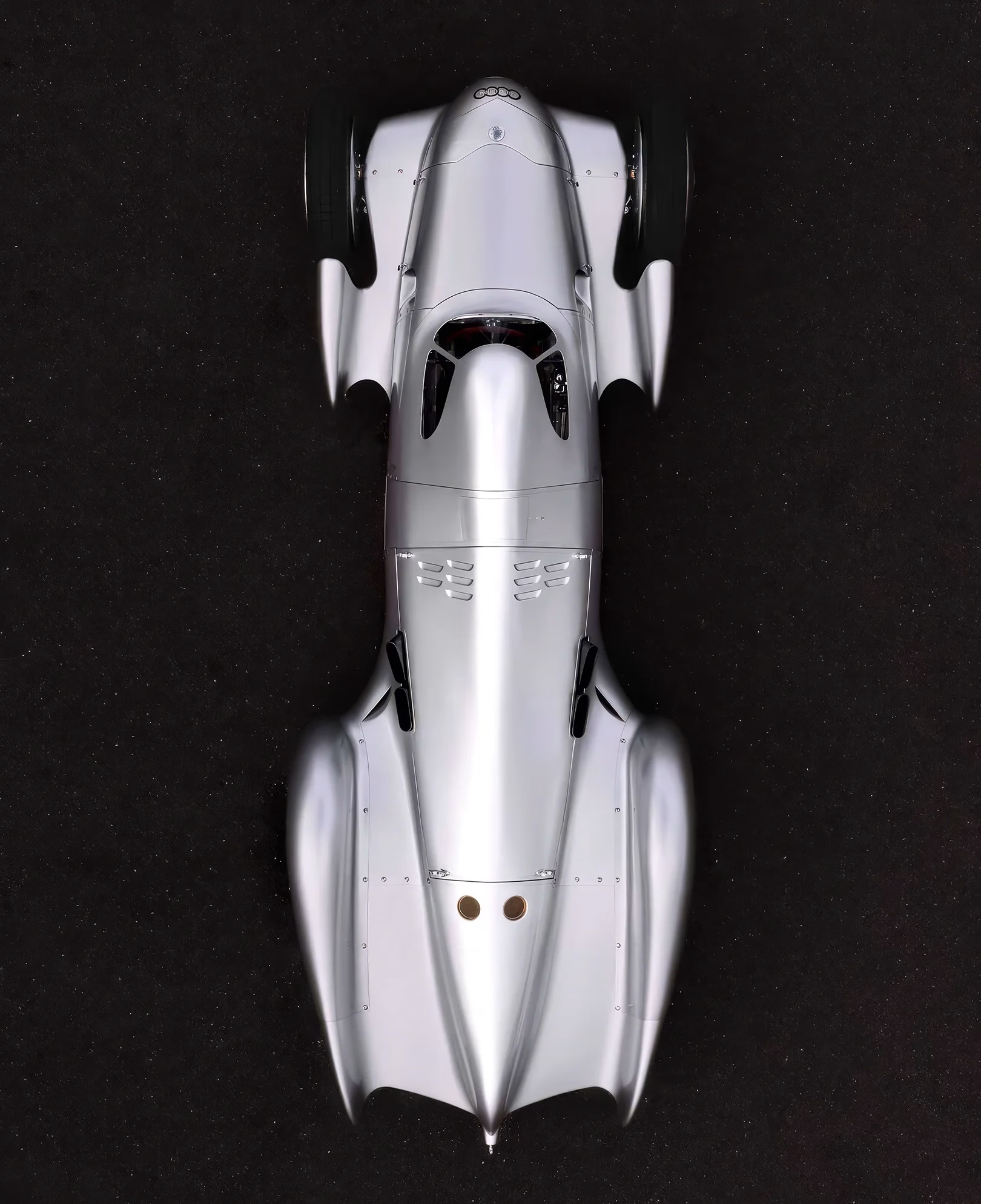
The result still looks startling today. The body stretches over the chassis like polished aircraft skin. Teardrop wheel fairings reduce turbulence, a tapered tail cleans up the wake and wheel covers smooth the airflow around the spoked rims. Two circular openings at the rear fed fresh air to the carburettors, while the exhausts exited high along the flanks.
Audi put the recreation back into a wind tunnel in April 2026. It measured a drag coefficient of 0.43. That number sounds ordinary next to a modern low-drag EV, but context is everything. This is a 1930s competition car with enormous tyres, cooling demands and packaging that was never designed around modern CFD.
A record attempt that kept moving south
The original plan was to attack the record in Hungary. The car reached Budapest in early February 1935, but the weather deteriorated and an exhaust failure interrupted testing. The team then headed south of Milan, only to find snow there too.
So the whole operation moved again, this time to the Florence-Viareggio road between Pescia and Altopascio, near Lucca. Audi’s archive describes the chosen section as roughly five kilometres of near-arrow-straight road, eight metres wide, level and grippy. It was about as good as public-road record hunting got in 1935.
Testing began on 14 February. Engineers experimented with the radiator opening, wheel covers and other details. The following morning Hans Stuck went again, with official timekeepers using electrically triggered photocells rather than stopwatches and guesswork.
With the radiator largely blanked off and the body in its fastest configuration, Stuck averaged 320.267km/h over the flying mile in International Class C. On part of the return run, timing equipment recorded 11.01 seconds over a kilometre, corresponding to 326.975km/h. That is where the celebrated 203mph figure comes from.
The original had 343PS. The recreation has 520PS
This is where the 2026 car deliberately departs from the exact 1935 specification.
The record-setting Lucca used an early version of Auto Union’s enlarged 16-cylinder engine at roughly five litres. Audi now confirms that it produced 343PS at the time of the record, below the 375PS achieved by later development engines during the 1935 season.
The recreation uses the 6,005cc supercharged V16 from the later Type C family instead. It produces 520PS at 4,500rpm. Audi chose it because the six-litre unit is externally almost indistinguishable from the five-litre engine and can be shared more practically within the historic Silver Arrow collection.
Fuel is every bit as exotic as the engine: 50 per cent methanol, 40 per cent premium unleaded and 10 per cent toluene. Drive goes through a five-speed non-synchromesh manual gearbox, which means anyone trusted with it needs old-school double-declutching skills as well as a healthy respect for a supercharged V16 sitting behind their shoulders.
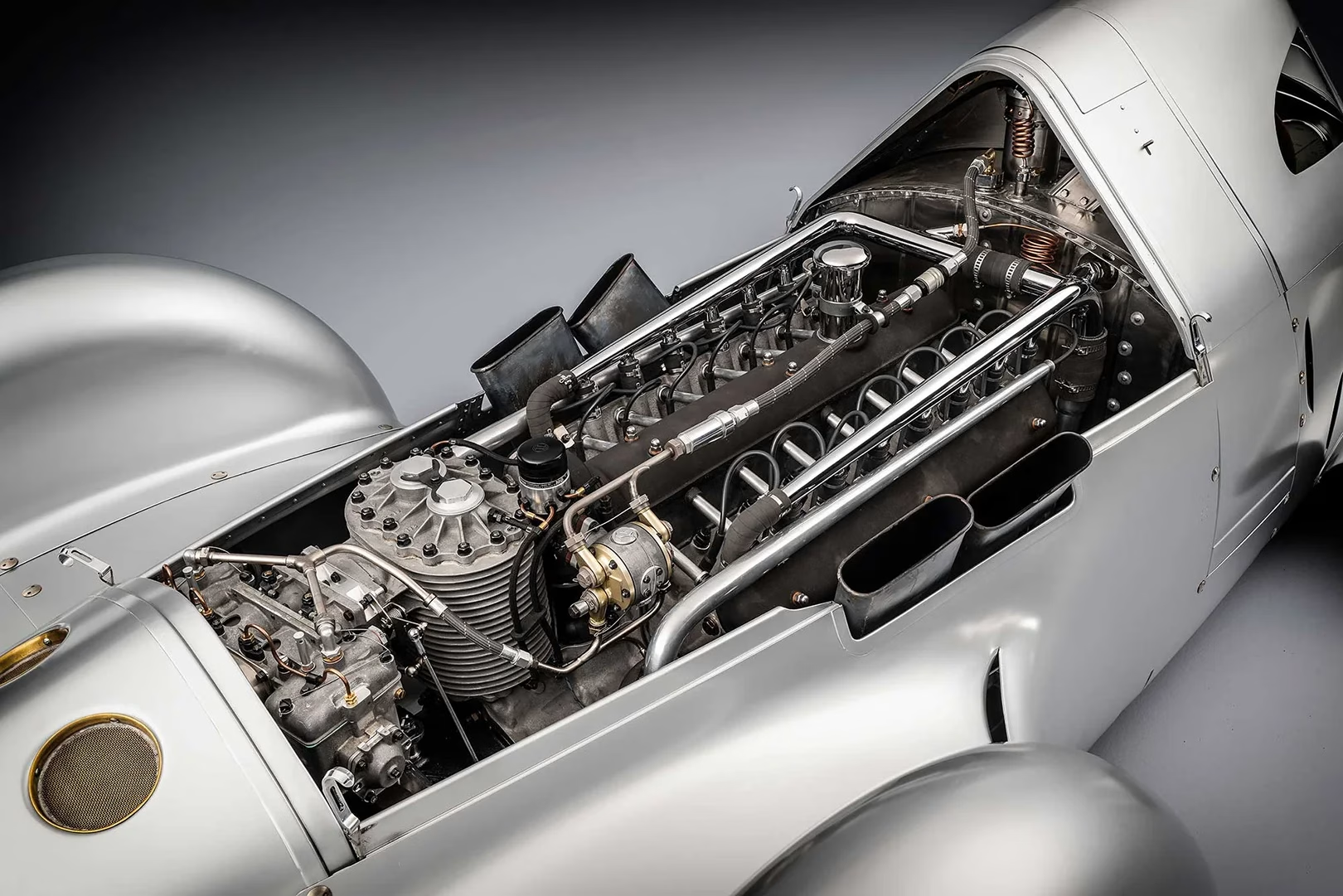
Why Audi did not build an exact clone
Purists may bristle at the larger engine and several later details, but Audi Tradition has been unusually open about the compromises. The point was to create something historically convincing that could also survive repeated demonstration running.
The new Lucca therefore incorporates ventilation changes associated with the Avus version used later in 1935. Without them, project leader Timo Witt says the car would face too much thermal stress during modern demonstration runs.
That also gives the recreation a useful party trick. With relatively small changes to the radiator and body panels, Audi can convert it between Lucca record specification and the later Avus configuration.
This is not a replica assembled from an off-the-shelf kit. Crosthwaite & Gardiner spent just over three years making components specifically for the project. The cockpit canopy, tapering tail and complex aluminium bodywork were among the most difficult pieces to reproduce.
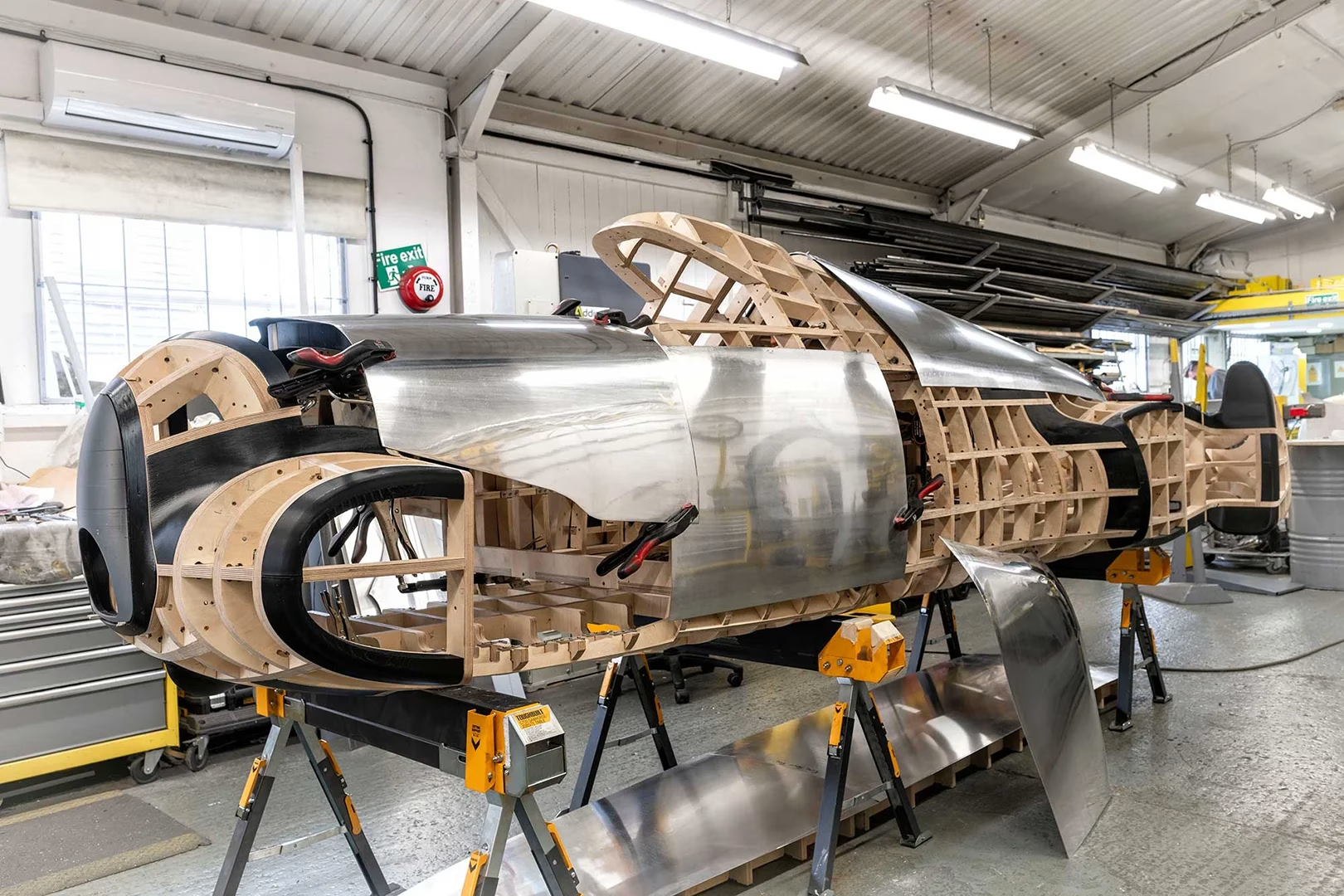
It weighs less than a modern supermini
The completed 2026 Auto Union Lucca weighs 960kg. That is almost comically light next to today’s performance cars, especially when you consider the six-litre V16, supercharger, cooling system and huge body wrapped around it.
Overall length is 4,570mm, width 1,700mm and height just 1,200mm, with a 2,800mm wheelbase. The proportions are deceptive because so much of the body exists to manage airflow around the wheels and taper it cleanly away behind the driver.
Viewed from above, the Lucca makes most modern cars look visually lazy. Every curve appears to have a job. Even the shape that seems purely theatrical usually has an aerodynamic reason behind it.
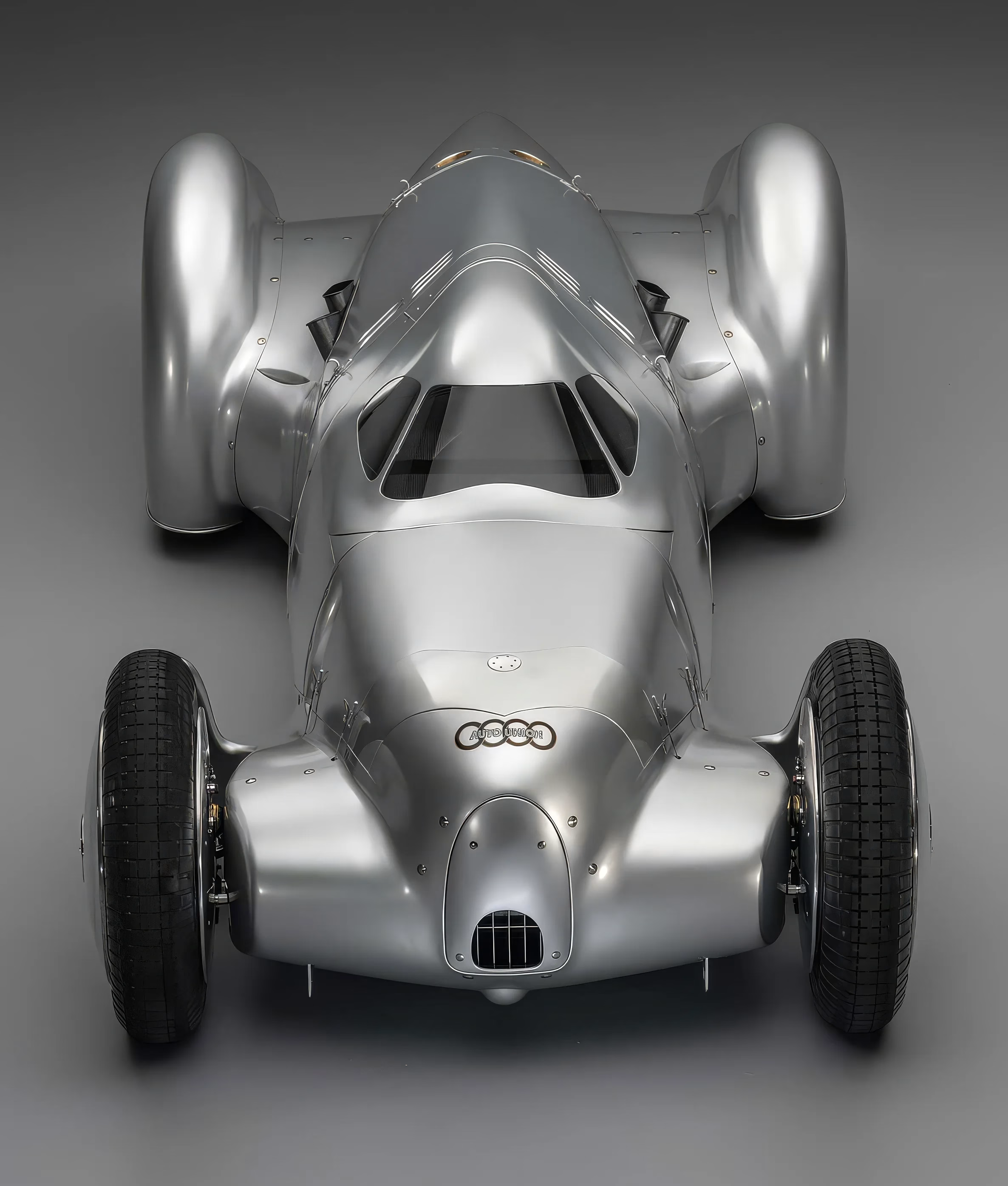
The Lucca’s second life lasted only a few months in 1935
After the record run, Auto Union did not place the car under a dust sheet. Development continued immediately.
In May 1935 the modified Lucca appeared at the Avus race in Berlin alongside a second closely related Rennlimousine. The former record car was driven by Prince Hermann zu Leiningen, while young Bernd Rosemeyer drove the sister machine.
Neither finished. Rosemeyer suffered a rear tyre failure, while zu Leiningen retired with a damaged coolant line. It was a reminder that 1930s high-speed engineering often existed right at the edge of what tyres, cooling systems and materials could tolerate.
The original Lucca later disappeared. Like several early Auto Union racing machines, it did not survive the upheaval surrounding the Second World War in a form that could later be recovered. That absence is precisely why the new car matters so much to Audi’s historic collection.
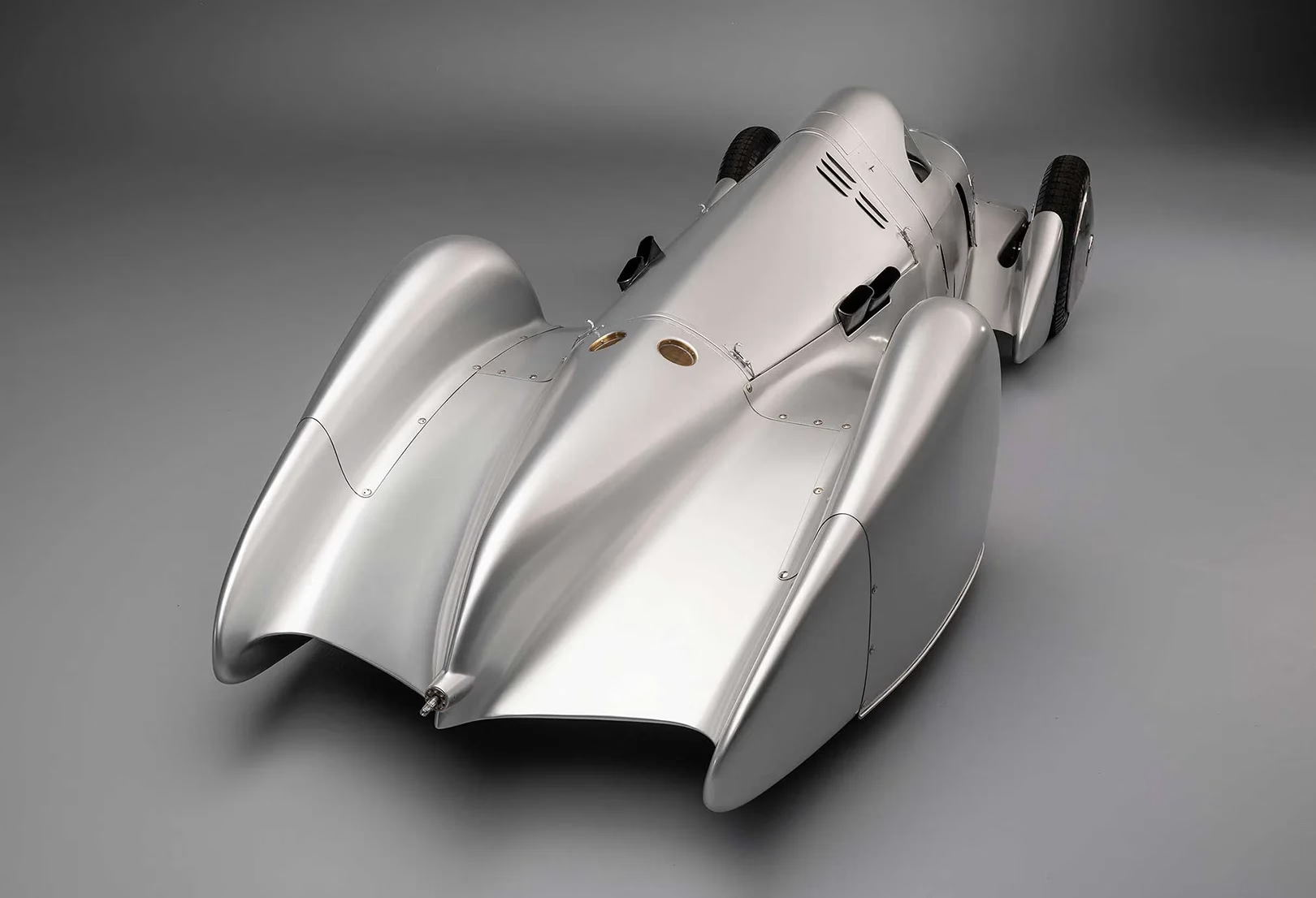
Goodwood changed the story in July 2026
When the recreation was unveiled in Italy in May, Audi promised that it would not remain static. The first proper public demonstration came at the Goodwood Festival of Speed from 9 to 12 July 2026.
That matters because a machine like this is only half understood when silent. The exposed photographs tell you about craftsmanship and shape; a running V16 tells you why people travelled to watch speed records in the first place.
Goodwood confirmed that Audi Tradition’s recreation programme is not just about filling museum gaps. The company also wants important historic machines to move, make noise and show how different generations of engineering actually felt.
Audi has done something similar with other lost or never-completed Auto Union projects, including the extraordinary Type 52 recreation seen at Goodwood in 2024. The Lucca is arguably more compelling because the original actually made history before disappearing.
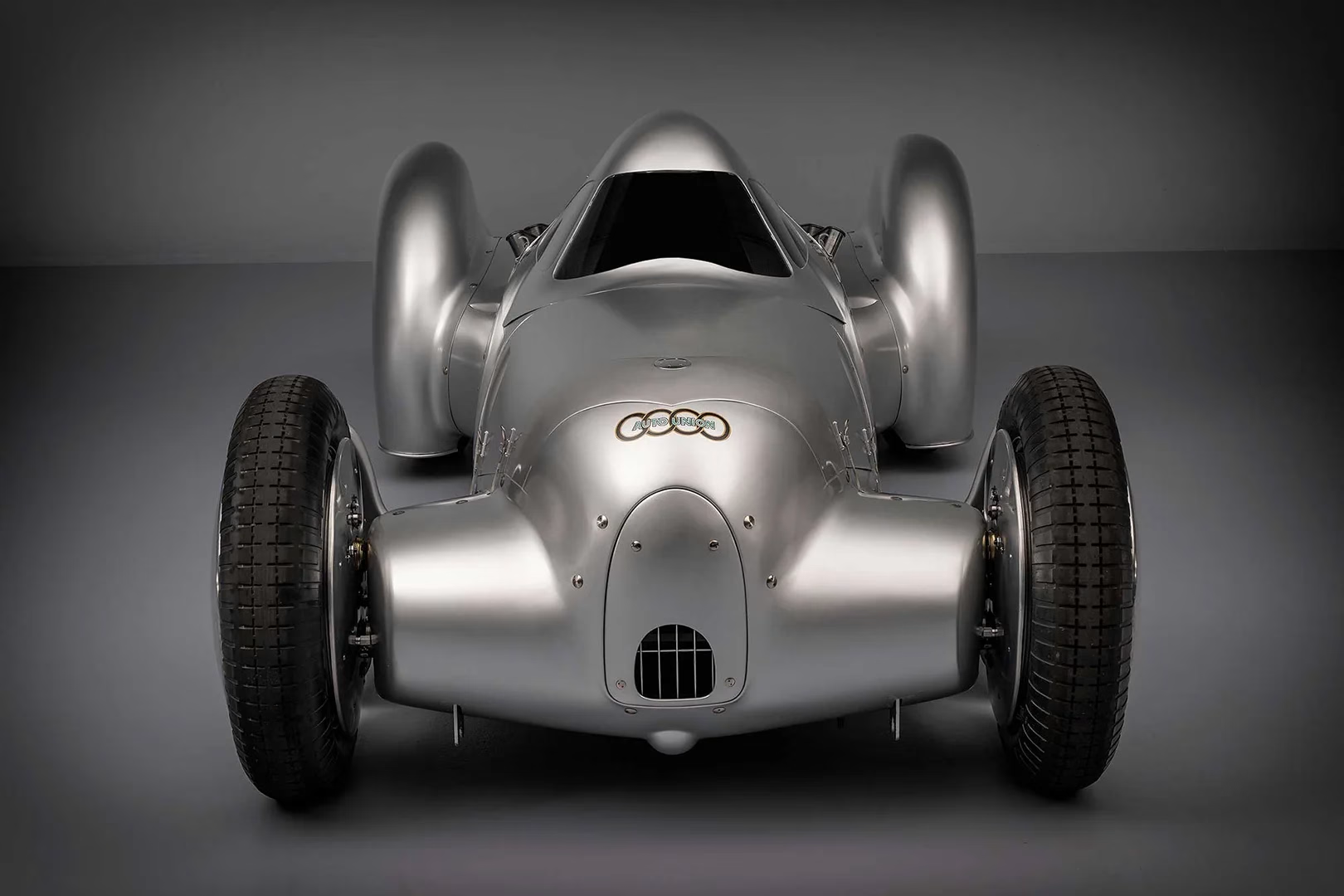
Why this strange silver car still matters
The Lucca is easy to admire simply because it looks spectacular. That undersells it.
It represents a moment when aerodynamics, light construction and engine power were converging at astonishing speed. Engineers were using wind tunnels, chasing fractional gains in cooling and drag, moving entire record attempts across countries when the weather turned and learning from every failed run.
It also connects neatly with Audi’s present. In 2026 the company is again using motorsport as a technology showcase, this time in Formula 1. The engineering tools have changed beyond recognition, but the basic impulse is familiar: reduce drag, control heat, find grip, make power and beat the clock.
Most heritage recreations are interesting because they remind us what once existed. The Auto Union Lucca is better than that. It has returned as a functioning machine, and now that it has actually run in public, Audi has turned a missing chapter of its history into something people can hear as well as see.
Key specifications
| Item | Auto Union Lucca recreation |
|---|---|
| Vehicle | Auto Union Lucca, 2026 recreation |
| Original record car | Auto Union Rennlimousine, 1935 |
| Builder | Crosthwaite & Gardiner for Audi Tradition |
| Construction time | Just over three years |
| Engine | Supercharged 16-cylinder |
| Displacement | 6,005cc |
| Engine origin | Auto Union Type C specification, 1936 family |
| Power | 520PS / 382kW at 4,500rpm |
| Gearbox | Five-speed non-synchromesh manual |
| Drive | Rear-wheel drive |
| Fuel | 50% methanol, 40% premium unleaded, 10% toluene |
| Length | 4,570mm |
| Width | 1,700mm |
| Height | 1,200mm |
| Wheelbase | 2,800mm |
| Kerb weight | 960kg |
| Drag coefficient | Cd 0.43 |
| Paint | Cellulose Silver |
| Production | One-off recreation |
| Original flying-mile record | 320.267km/h average |
| Original measured peak | 326.975km/h / around 203mph |
| Latest public milestone | Dynamic debut at Goodwood Festival of Speed, July 2026 |
Frequently asked questions
It is Audi Tradition’s working recreation of the streamlined Auto Union record car used by Hans Stuck near Lucca, Italy, in February 1935.
Timing equipment recorded 326.975km/h, about 203mph, over part of the return run. The official flying-mile record was an average of 320.267km/h, roughly 199mph.
No. The original no longer survives. Audi commissioned a new recreation from Crosthwaite & Gardiner using archive photographs and historical documentation.
It uses a 6,005cc supercharged V16 from the Auto Union Type C family, producing 520PS at 4,500rpm.
No. The record car used an early roughly five-litre V16 producing 343PS. Audi fitted the larger six-litre Type C engine to the recreation for practical historic-fleet reasons.
Audi quotes a kerb weight of 960kg for the 2026 recreation.
Yes. After its unveiling in Lucca in May 2026, it made its first public dynamic appearance at the Goodwood Festival of Speed in July.
It joins Audi AG’s historic vehicle collection as part of the company’s Silver Arrow family of heritage cars.
Images: AUDI AG / Audi Tradition
Like What You’ve Read?
For more articles like this, receive our weekly e-newsletter, including partner deals and all things motoring, register your email below.
Please note: You cannot subscribe to Smart-Motoring unless you put a tick in the checkbox below to indicate have read and agreed to our privacy policy.