
The Nissan Z has gone from forbidden fruit to one of 2026’s more interesting sports-car stories. The refreshed Z is now on sale in America, the NISMO finally has a manual gearbox, and Nissan executives are openly working on a return to Europe. The UK, however, is not confirmed yet.
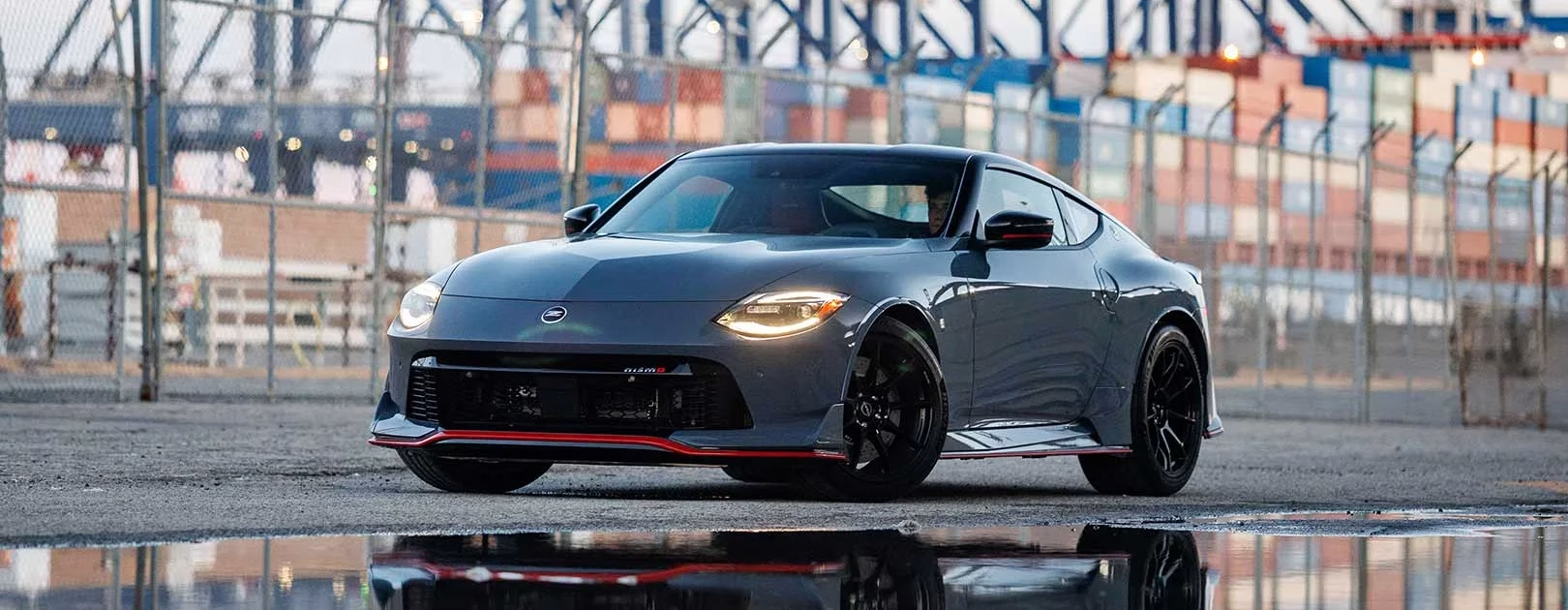
I have said this before, but the Nissan Z has a habit of making me repeat myself. Years ago, while working for Nissan at a track-day evaluation of the Skyline, there were a couple of 350Zs on hand to keep the rest of us occupied while access to the Skyline was being rationed. I expected the Skyline to be the star. Instead, I kept finding reasons to get back into the smaller car.
The 350Z felt simple in the best possible way. Engine in front, drive to the rear, two seats, a manual gearbox and just enough power to keep you interested without turning every straight into a launch-control demonstration. That formula is becoming surprisingly rare.
Which is why the current Nissan Z matters more now than it did when this article was first written. Back then, the big question was whether Nissan might somehow squeeze the car into Europe. Since then the story has moved on. The 2027 Z has been refreshed, the Z NISMO has finally gained the six-speed manual enthusiasts were asking for, US pricing has been confirmed, early track drives have been published and Nissan’s European management has publicly reopened the door to selling the car on this side of the Atlantic.
So the question is no longer simply, ‘Why can’t we have it?’ It is now, ‘How close is Nissan to actually bringing it here?’
2027 Nissan Z at a glance
| Model year | 2027 |
| Engine | 3.0-litre twin-turbo V6 |
| Power | 400hp Sport/Performance; 420hp NISMO |
| Torque | 350lb ft Sport/Performance; 384lb ft NISMO |
| Drive | Rear-wheel drive |
| Gearboxes | Six-speed manual or nine-speed automatic across the 2027 range |
| US MSRP | $44,480 Sport; $54,480 Performance; $67,260 NISMO, before destination |
| UK status | Not confirmed; European return is being actively pursued |
About the Nissan Z
- 2027 Nissan Z at a glance
- Why the Nissan Z suddenly matters more
- What changed for the 2027 Nissan Z
- The manual Z NISMO is the update that matters
- GT-R brakes give the NISMO more stamina
- Inside, the Z still feels pleasingly old-school
- 2027 Nissan Z price and US availability
- Is the Nissan Z finally coming to Europe?
- Euro 7 is a hurdle, but the story is more complicated
- What would a UK Nissan Z actually offer?
- Verdict: bring it, Nissan
- 2027 Nissan Z specifications
Why the Nissan Z suddenly matters more
The affordable two-seat sports car is not extinct, but it is starting to feel like an endangered species. The Toyota GR86 has disappeared from the new-car market in Britain, production of the current GR Supra is ending after the 2026 model year, and the R35 GT-R has gone. Move higher up the price ladder and there are still excellent cars, but the old idea of a relatively attainable, front-engined, rear-wheel-drive coupe with a proper manual gearbox is getting harder to find.
Nissan, rather unusually, is leaning into that gap rather than backing away from it. US demand gives the company a reason to keep going. Nissan Z sales in America rose from 3,164 cars in 2024 to 5,487 in 2025, an increase of 73.4 per cent. Those are not SUV numbers, obviously, but for a specialist two-seat coupe they show that the audience is still there.
The current car is officially called Nissan Z outside Japan and Fairlady Z in its home market. ‘400Z’ remains a popular nickname, but Nissan never adopted it as the production model’s official name. That is worth clearing up because the badge on the boot simply says Z, and that is increasingly appropriate. The car now carries more than half a century of history on one letter.
What changed for the 2027 Nissan Z
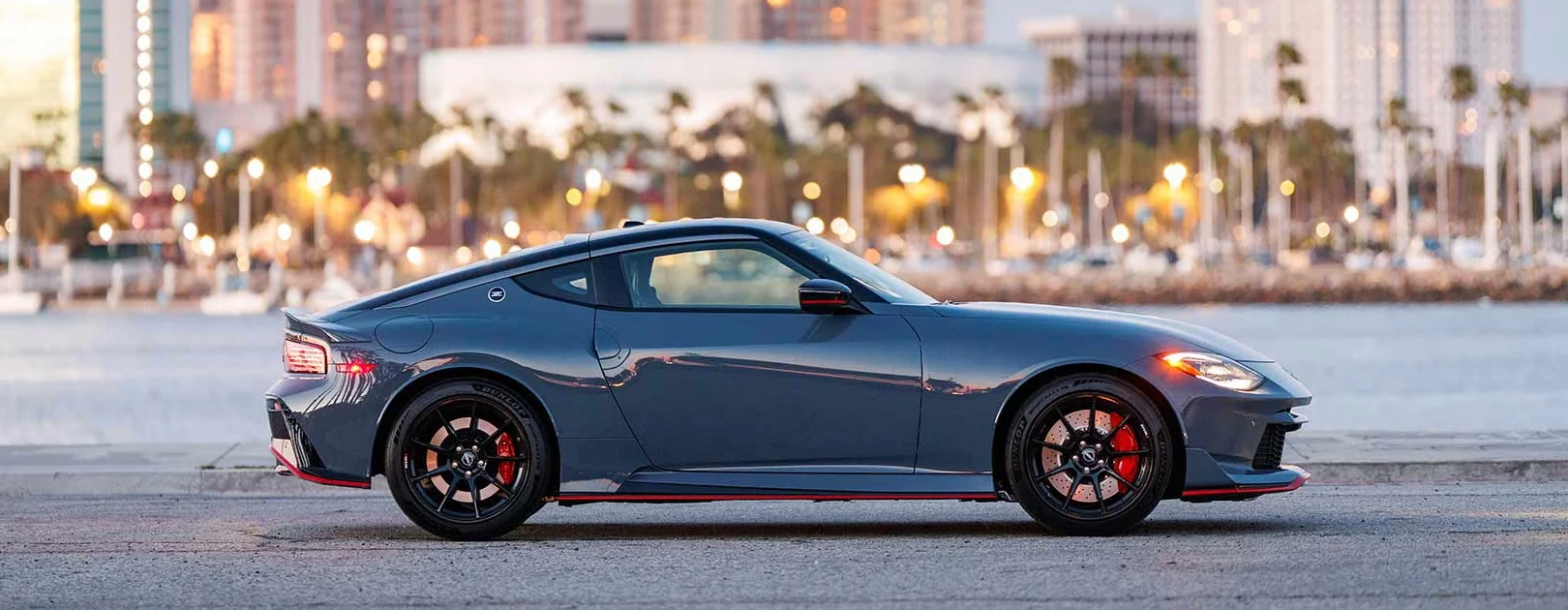
The 2027 update looked modest when Nissan first showed it at the Tokyo Auto Salon in January. In reality, the changes are better judged than a dramatic facelift would have been.
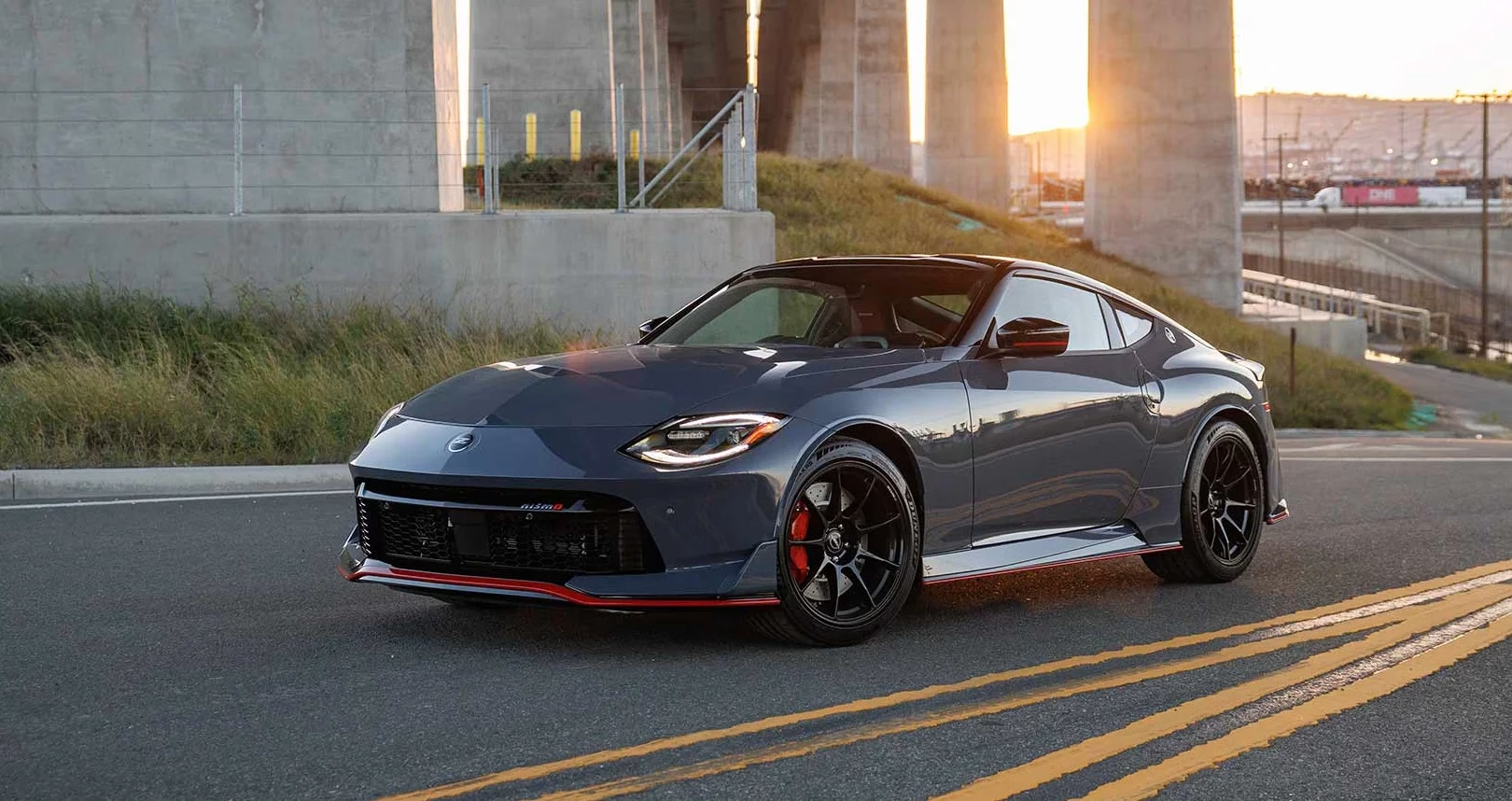
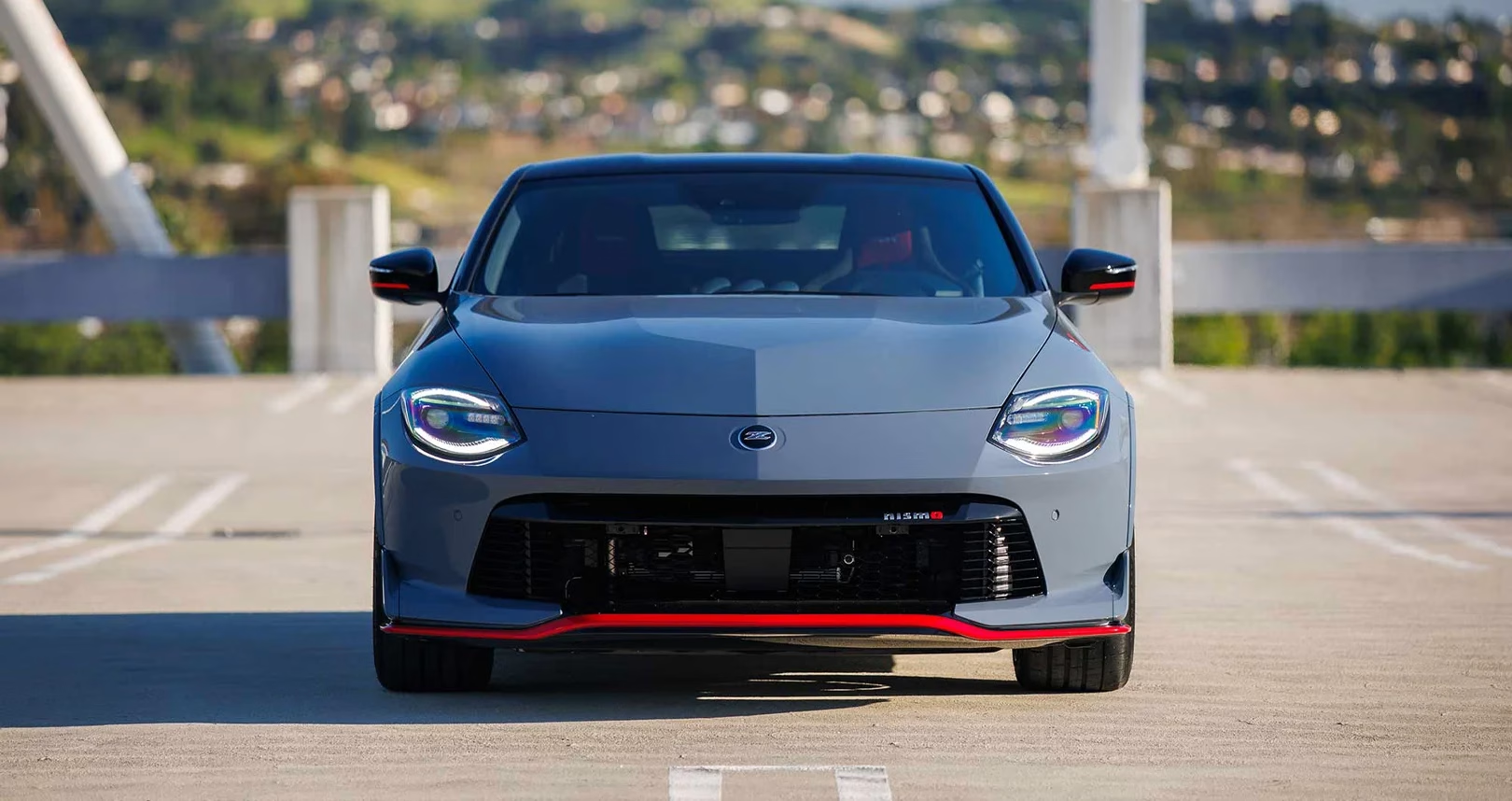
Sport and Performance versions receive a cleaner front bumper and a split grille divided by a body-coloured bar. It removes some of the visual heaviness of the earlier rectangular opening and brings the nose closer to the simplicity of the original S30-generation Z. Nissan says the reshaped front end cuts drag by 1 per cent and reduces front lift by 3.3 per cent.
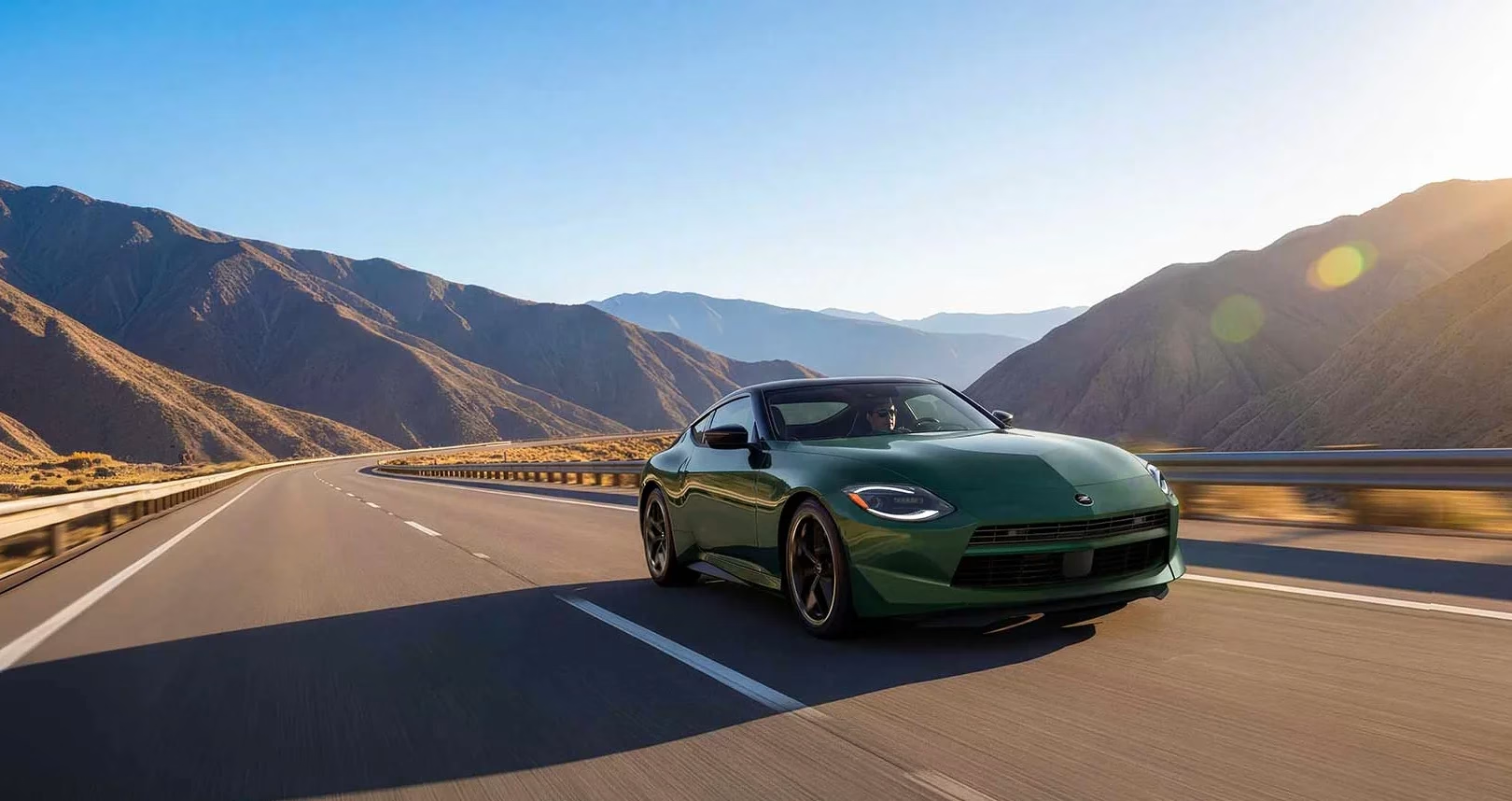
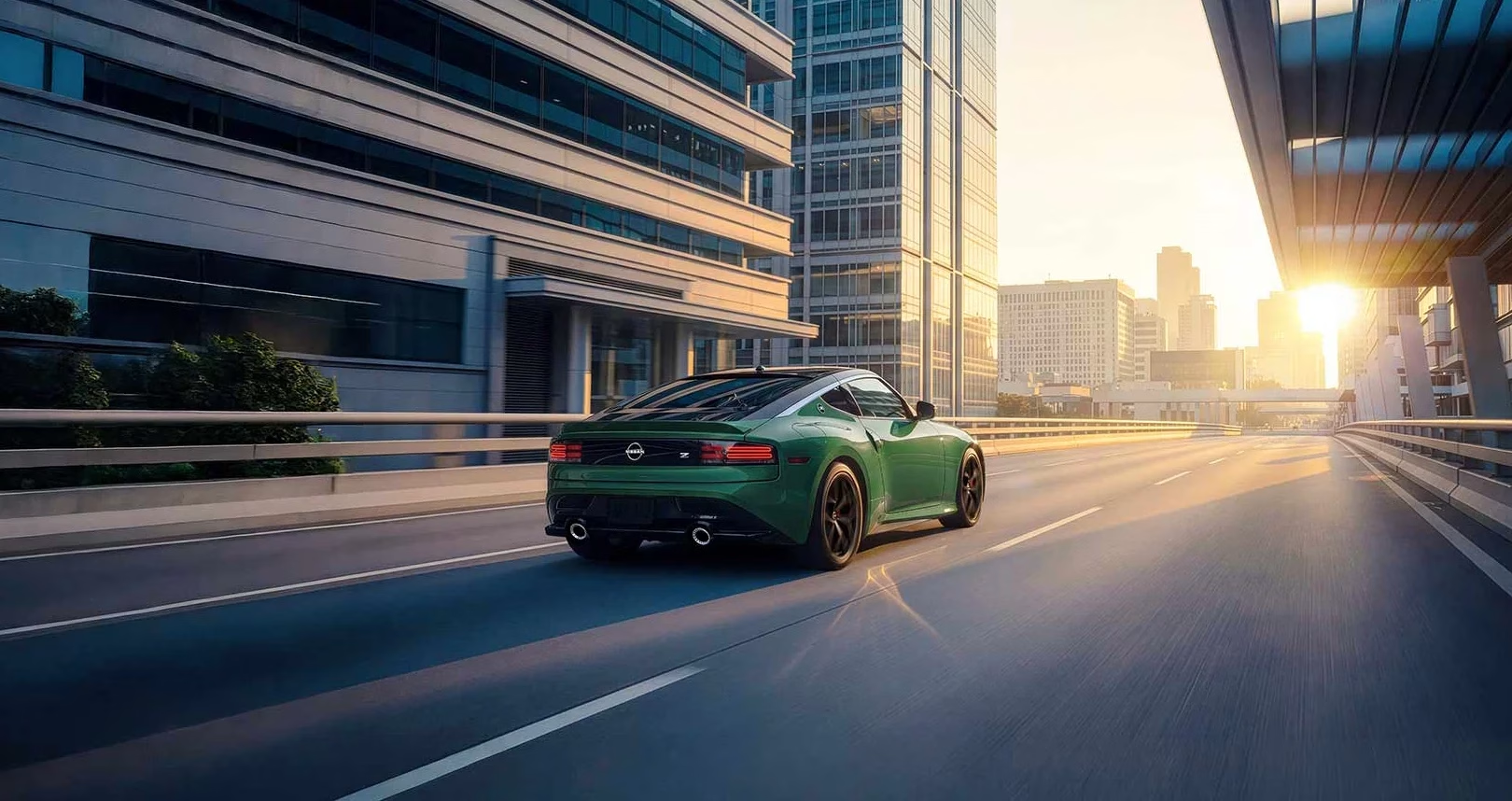
The Performance model also gets revised 19-inch forged RAYS wheels and larger monotube dampers intended to improve body control without turning the ride into punishment. A new heritage-inspired green appears too. Nissan calls it Shinkai Green Pearl in the US market, while the Japanese reveal used the name Unryu Green.
There are smaller engineering changes that are easy to miss in photographs. Nissan redesigned the fuel tank to maintain a steadier fuel supply during sustained high-g cornering, and the updated range gains new cabin technology including wireless phone charging on higher grades. None of this changes the basic personality. The standard Z still uses a 3.0-litre twin-turbo V6 producing 400hp and 350lb ft, driving the rear wheels through either a six-speed manual or nine-speed automatic.
The manual Z NISMO is the update that matters
The obvious criticism of the Z NISMO has finally been removed. When the 420hp flagship arrived, Nissan offered it only with a nine-speed automatic. That made sense if the only objective was lap time. It made rather less sense for a car carrying the NISMO badge and aimed directly at enthusiasts.
For 2027 there is a six-speed manual, and Nissan did more than lift the gearbox from the ordinary Z. The NISMO version gets a stronger clutch and pressure plate, reinforced transmission hardware, a revised shift mechanism with a shorter throw and engine calibration tailored to the manual. SynchroRev Match remains available for automatic rev-matching on downshifts.
Power remains at 420hp with 384lb ft of torque from the 3.0-litre twin-turbo VR30DDTT V6. That is only 20hp more than the regular Z, but the NISMO has never really been about winning a dyno chart. The suspension, steering, tyres, cooling and braking hardware are what turn it into the more serious car.
The early verdict is encouraging. First drives at Sonoma Raceway in May were remarkably consistent: reviewers praised the more positive shift action, the stronger brakes and the way the manual makes the NISMO feel more like the car it should have been from the start. The automatic will still be the quicker choice for a stopwatch, but the manual is the one that makes the better argument for the Z’s survival.
GT-R brakes give the NISMO more stamina
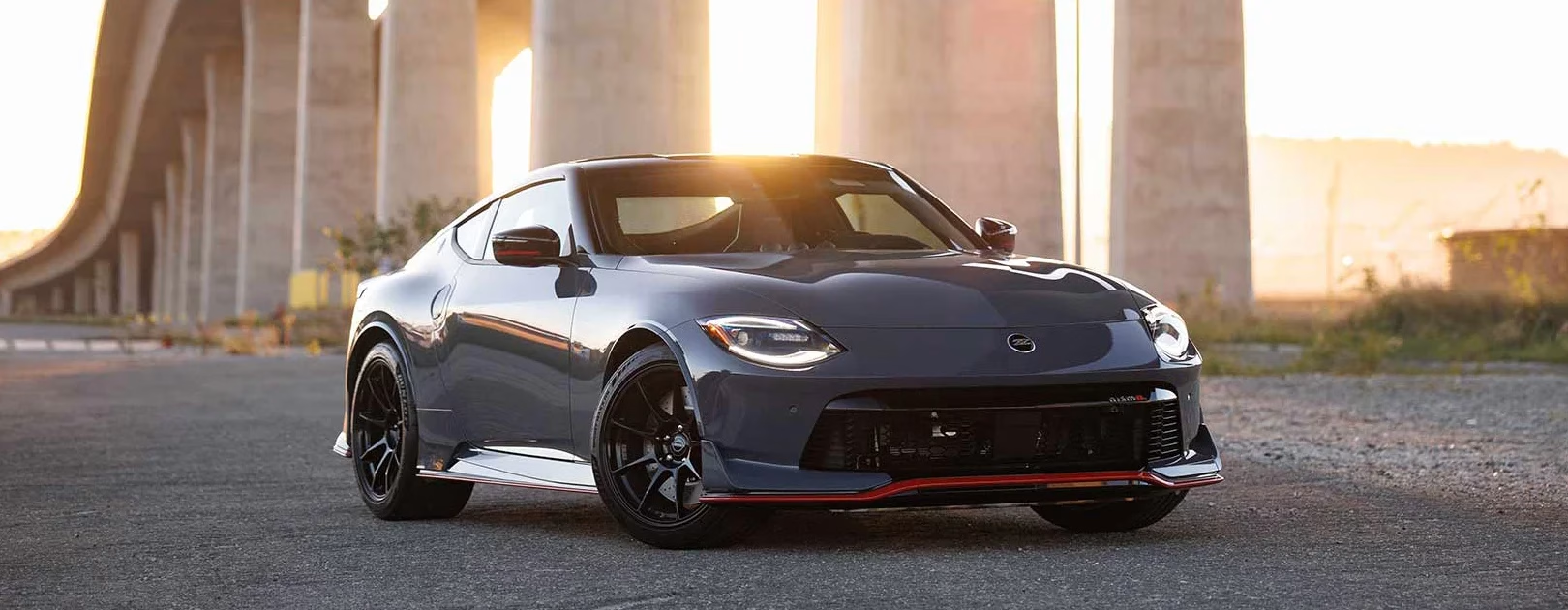
Nissan has also raided the parts bin of its late, much-missed GT-R. The 2027 Z NISMO uses two-piece front brake rotors derived from the R35, with iron discs and aluminium hats. They measure 15 inches across and cut roughly 19lb of unsprung weight from the front axle compared with the previous hardware.
That weight reduction forced Nissan to retune the front suspension, while the steering rack was revised to recover precision and feel. The changes sound incremental on a specification sheet, but repeated track testing is exactly where lighter, cooler-running brakes matter.
Several of the early US track reviews noted that the NISMO’s brakes remained consistent deep into sessions where the regular Z Performance began to show fade. That is the sort of improvement that makes more sense than another 30 or 40 horsepower. A fast road car does not need to be a qualifying special. It needs to keep doing the same thing after the third hard stop.
Inside, the Z still feels pleasingly old-school
The cabin will not win an award for reinventing the sports car. That is partly because much of the architecture still traces its roots back through the 370Z. In 2026, though, I am not convinced that is entirely a criticism.
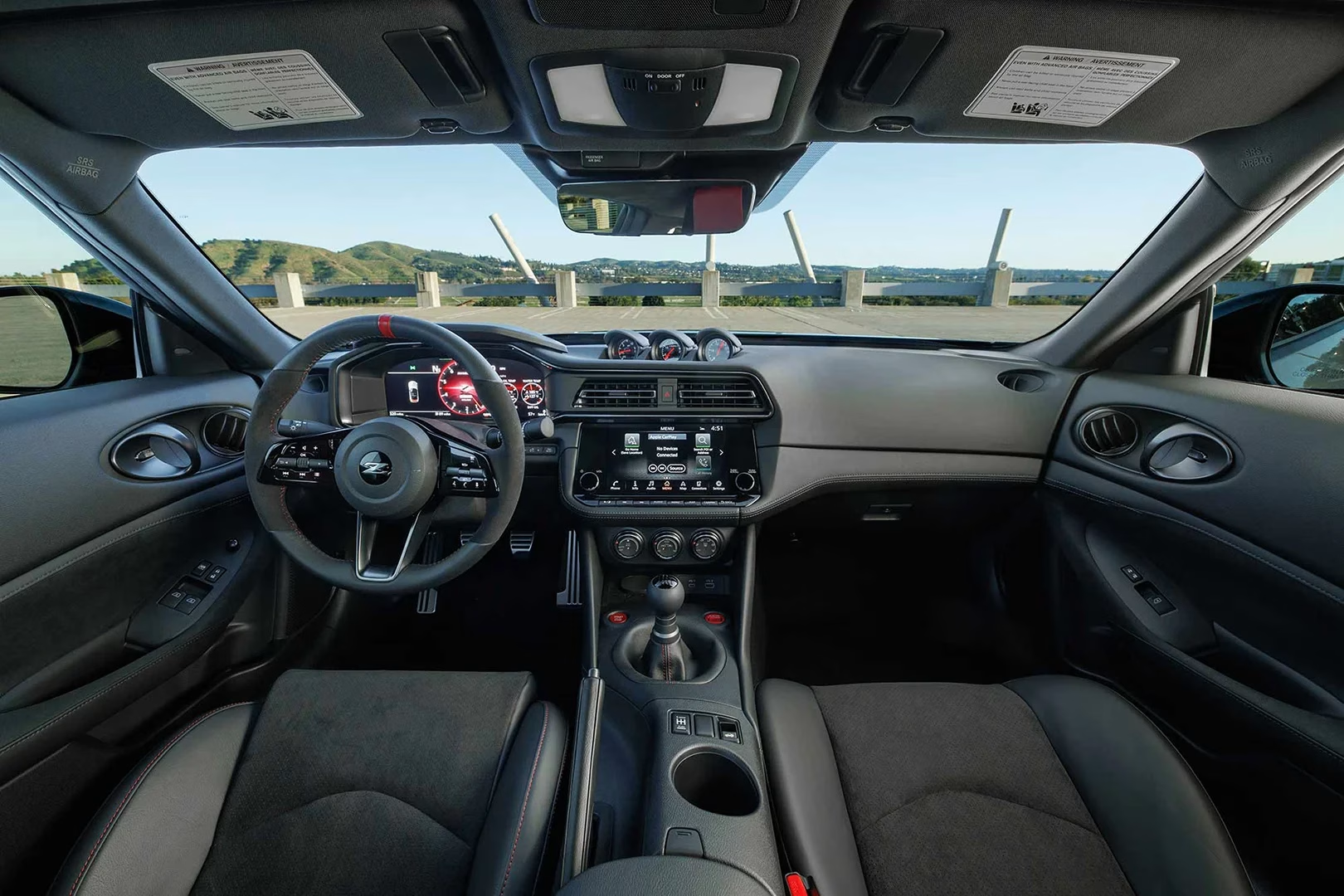
You sit low, there are physical controls for important functions, and the manual gear lever is exactly where your hand expects it to be. Higher grades add the large digital instrument display and infotainment technology, but the Z does not make the driver negotiate a wall of touch-sensitive controls before getting on with the job.
NISMO cars add supportive Recaro seats, Alcantara trim and the visual red accents that have become part of the badge’s identity. The 2027 update also brings an improved wireless charging arrangement and other detail changes. It remains a two-seat cabin with a usefully shaped hatch behind it rather than an exercise in digital theatre.
2027 Nissan Z price and US availability
The 2027 Z is no longer a future motor-show car. It is now reaching US dealers, and Nissan has confirmed the numbers.
US MSRP starts at $44,480 for the Z Sport, $54,480 for the Z Performance and $67,260 for the Z NISMO, before the $1,295 destination charge. Nissan charges the same MSRP whether the buyer chooses the six-speed manual or nine-speed automatic. Including destination, that puts the three grades at $45,775, $55,775 and $68,555 respectively.
That pricing matters because the Z is beginning to stand almost alone. A manual BMW M2 sits in a higher price bracket in America, while the Ford Mustang offers a different kind of front-engined, rear-drive experience. The Supra, which once looked like the Z’s most obvious rival, is bowing out.
There is still no sensible UK price to quote because there is still no UK model to price. Converting the US figure into pounds is meaningless once homologation, tax, specification and distribution costs are added. Until Nissan GB opens an order book, any supposed UK list price is guesswork.
Is the Nissan Z finally coming to Europe?
This is where the story has changed most since the original article.
In March, Nissan Europe’s divisional vice president for sales and marketing, Jordi Vila, told Auto Express that the company was still studying ways to bring the Z to the UK and Europe. That was already a significant change from the previous flat refusal.
Then in May, Nissan Europe chairman Max Messina went further. Speaking to evo, he said European management had reversed the earlier decision to exclude the Z and was working to bring the facelifted car to Europe. His reasoning was refreshingly straightforward: Nissan needs exciting ‘heartbeat’ models, and the Z is exactly that.
That does not yet amount to a UK launch announcement. Nissan’s UK website still does not list the current Z, there is no British price and no confirmed UK on-sale date. The most accurate position in late August 2026 is therefore this: a European return is being actively pursued, while Britain remains possible rather than confirmed.
For British enthusiasts, that is still a substantial improvement. Six months ago the Z was forbidden fruit. Now the people running Nissan in Europe are openly discussing how to put it back on sale.
Euro 7 is a hurdle, but the story is more complicated
The earlier version of this article treated Euro 7 as a simple November 2026 wall that a 3.0-litre V6 could not get over. The real position is more nuanced.
In the European Union, Euro 7 applies to newly type-approved passenger-car models from 29 November 2026 and to all newly registered cars from 29 November 2027. Great Britain is outside the EU system, but the Department for Transport consulted in 2026 on aligning GB minimum emissions requirements with Euro 7 on the same timetable. Northern Ireland follows EU rules under the Windsor Framework.
That distinction matters. Euro 7 does not automatically ban a powerful petrol engine simply because it is a powerful petrol engine. It changes type-approval requirements covering pollutants, durability, monitoring and non-exhaust emissions, while manufacturers also have separate fleet CO2 obligations and commercial targets to manage.
For Nissan, the problem is therefore not just whether the VR30 V6 can be made to pass one test. It is whether a European Z can be homologated, packaged and sold in sufficient numbers to justify the engineering and compliance work. The encouraging part is that Nissan Europe’s senior management now appears to think the exercise is worth pursuing.
What would a UK Nissan Z actually offer?
If Nissan does bring it here, it should resist the temptation to sanitise the car into irrelevance. The whole attraction is that the Z still follows a recipe Britain has rapidly run out of: two seats, rear-wheel drive, a turbocharged six-cylinder engine and the option of changing gear yourself.
The regular 400hp Performance version could be the sweet spot for road use. The NISMO would provide the halo car, especially now that the manual gearbox has removed its biggest philosophical flaw. Both would arrive with genuine heritage rather than a marketing department inventing it after the fact.
There is also an argument that the timing is better now than when the Z first appeared. The market is smaller, but the competition is smaller too. Buyers who still want a compact combustion-engined sports coupe are running out of new cars to choose from. A niche can be a warning sign, but if everybody else leaves it, it can also become an opportunity.
Verdict: bring it, Nissan
The 2027 refresh has not transformed the Nissan Z into an entirely new car, and that is probably the point. The basic ingredients were never the problem. The car needed a cleaner nose, better chassis detail and, above all, a manual gearbox in the NISMO.
It now has those things. It also has a rather stronger reason to exist because the sports-car landscape around it is disappearing.
Would I choose the Z over every rival without hesitation? No. The BMW M2 is more sophisticated, and there are lighter cars that offer even more delicate handling. But the Nissan has an increasingly rare honesty about it. It looks like a sports car, drives the correct wheels and lets the driver decide when to change gear.
More importantly for us, the UK question has moved from fantasy to a live business decision inside Nissan. That is progress. If the company can make the numbers and homologation work, there may yet be a new Z on a British registration plate.
After all these years, I would quite like another excuse to discover that the smaller Nissan is the one I do not want to hand back.
2027 Nissan Z specifications
| Item | Specification |
|---|---|
| Model | 2027 Nissan Z |
| Body | Two-seat, two-door fastback coupe |
| Layout | Front engine, rear-wheel drive |
| Engine | 3.0-litre VR30DDTT twin-turbo V6 |
| Sport / Performance output | 400hp, 350lb ft |
| NISMO output | 420hp, 384lb ft |
| Manual gearbox | Six-speed; NISMO gets its own uprated specification for 2027 |
| Automatic gearbox | Nine-speed automatic |
| Differential | Mechanical limited-slip differential on Performance and NISMO |
| Performance wheels | 19-inch forged RAYS alloys |
| NISMO front brakes | 15-inch two-piece GT-R-derived rotors with four-piston Akebono calipers |
| NISMO rear tyres | 285/35 R19 |
| 2027 aero change | Front lift down 3.3%; overall drag down 1%, according to Nissan |
| US Sport MSRP | $44,480 before $1,295 destination |
| US Performance MSRP | $54,480 before $1,295 destination |
| US NISMO MSRP | $67,260 before $1,295 destination |
| UK availability | Not confirmed as of 29 August 2026 |
Frequently asked questions
Not yet officially. Nissan Europe executives have said the company is working on bringing the facelifted Z to Europe and has discussed the UK specifically, but Nissan GB has not announced a UK launch, price or on-sale date.
Yes. For 2027 the 420hp Z NISMO is available with a six-speed manual as well as the nine-speed automatic. The manual uses an uprated clutch, revised shift mechanism and NISMO-specific calibration.
In the United States, MSRP starts at $44,480 for Sport, $54,480 for Performance and $67,260 for NISMO, before the $1,295 destination charge. As yet, there is no confirmed UK price.
Sport and Performance versions produce 400hp and 350lb ft from the 3.0-litre twin-turbo V6. The NISMO increases this to 420hp and 384lb ft.
Sport and Performance versions get a cleaner front bumper and split grille, revised aerodynamics and detail changes. Performance gains larger dampers and new forged wheels, while the NISMO adds the manual gearbox, GT-R-derived front brake rotors and further steering and suspension revisions.
The current car is officially called Nissan Z outside Japan and Fairlady Z in Japan. ‘400Z’ became a popular unofficial name before launch, but Nissan did not use it for the production model.
Shinkai Green Pearl is the heritage-inspired green offered on 2027 US-market Sport and Performance versions. The Japanese-market colour was introduced under the name Unryu Green and references classic Z-car colours.
Not by itself. Euro 7 creates new emissions and type-approval requirements in the EU, while Great Britain has been consulting on alignment. Nissan still has to solve homologation, fleet-emissions and commercial issues, but company executives are actively studying a European return.
Images: Nissan / Nissan News.
Like What You’ve Read?
For more articles like this, receive our weekly e-newsletter, including partner deals and all things motoring, register your email below.
Please note: You cannot subscribe to Smart-Motoring unless you put a tick in the checkbox below to indicate have read and agreed to our privacy policy.
