Eagle Lightweight GTR: E-Type Restomod Guide
- Eagle E-Types: the Sussex firm behind the GTR
- Jaguar Lightweight E-Type: the racing heritage
- How Eagle got the Lightweight GTR to 975kg
- Eagle Lightweight GTR engine and performance
- Inside the Eagle Lightweight GTR interior
- Eagle Lightweight GTR review: how it drives
- Eagle Lightweight GTR price and rivals
- Key Specifications
- About the Eagle Lightweight GTR
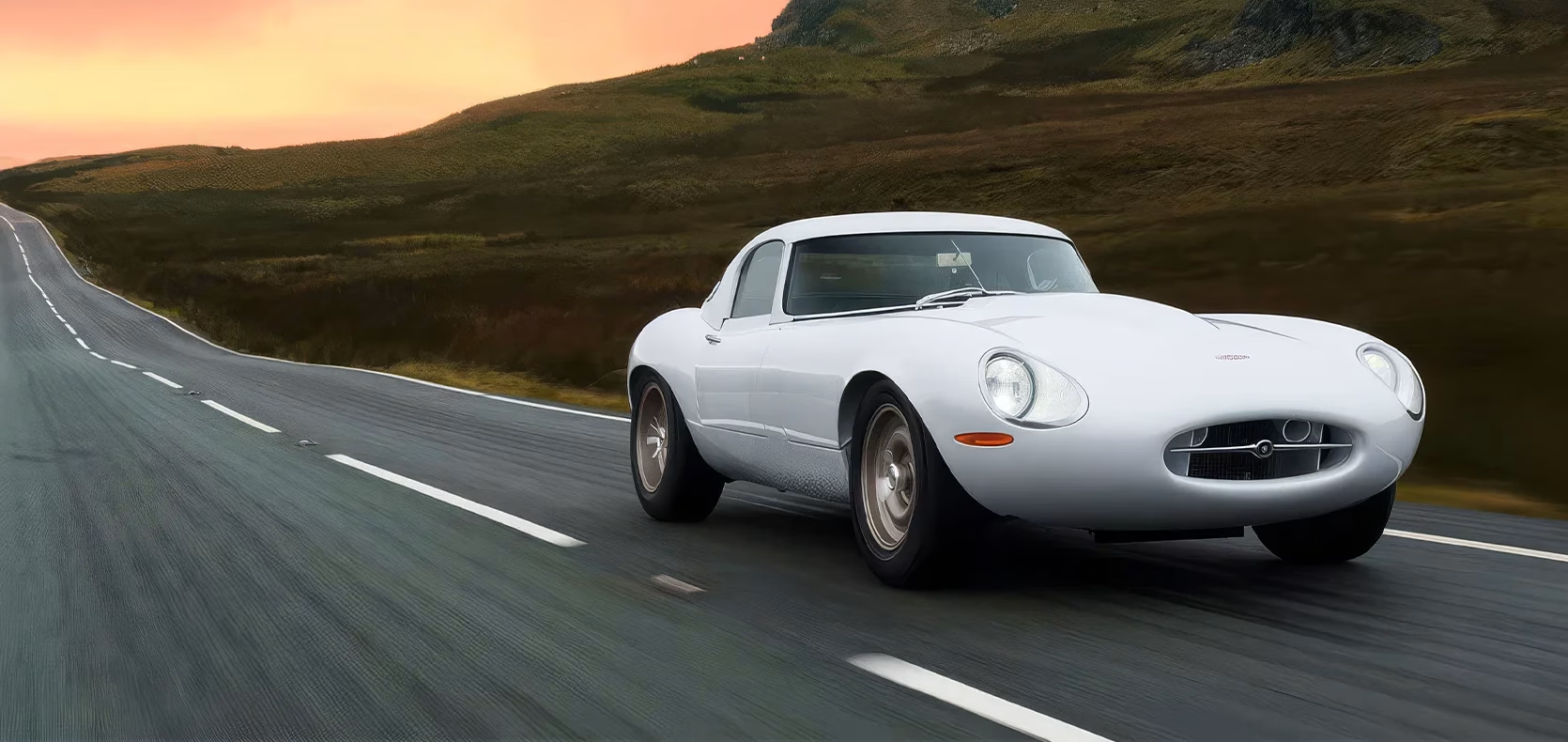
I have a soft spot for cars that do less. My first proper enthusiast car was a stripped-out little thing with wind-up windows and a radio that only picked up static, and I have never quite got over how honest it felt. So when a Sussex firm quietly builds a Jaguar E-Type that weighs less than an original Mazda MX-5 and costs the best part of a million pounds, I want to know whether all that subtraction actually adds up to something. The Eagle Lightweight GTR is that car, and having read the reviews from the people lucky enough to drive it, I think it might be the most desirable E-Type ever made.
Eagle E-Types: the Sussex firm behind the GTR
Eagle has been reworking the E-Type from a barn in East Sussex since 1984, when a 21-year-old Henry Pearman put his stock of cars up for sale to bet everything on a single model. Engineer Paul Brace joined him in 1989 and went on to build the first dozen Eagles by hand, and the pair have spent the decades since turning Jaguar’s icon into what one motoring authority once called the best-built handmade car in the world. This is not a company that chases headlines. It builds roughly a handful of cars a year, each one commissioned rather than catalogued, and it has never needed a marketing department to sell out its order book.
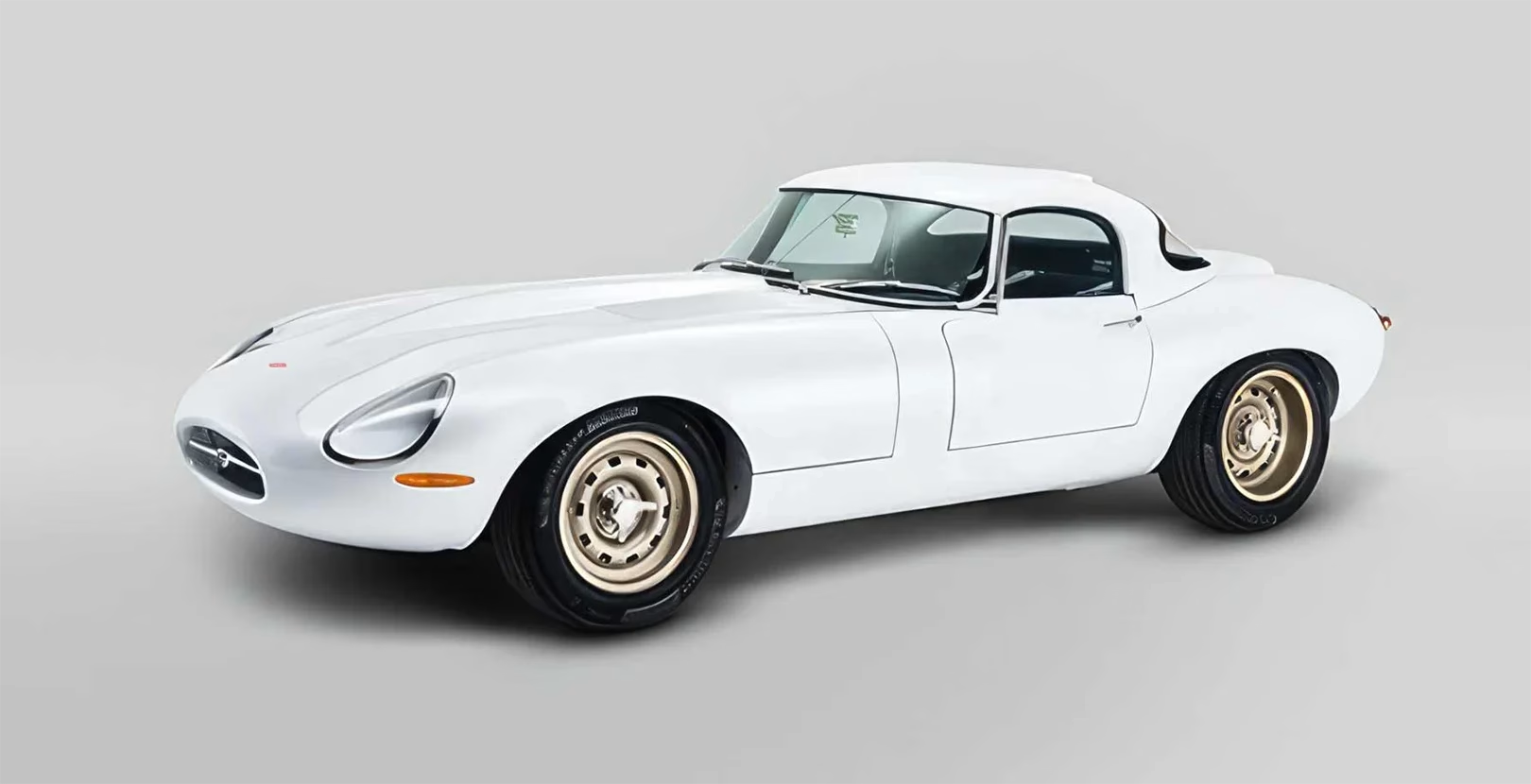
The Lightweight GTR is the most extreme thing Eagle has ever attempted. It is a genuine one-off, described by the firm as a One of One, dreamed up by a client who wanted the antithesis of the modern performance car. In his own words, today’s fast cars are getting bigger and heavier and lean on clever electronics to hide the mass, and he was not convinced they would age gracefully. So he asked Eagle for the opposite: as light as humanly possible, no screens, no driver aids, just performance, long-distance comfort and, in his words, timeless beauty.
Jaguar Lightweight E-Type: the racing heritage
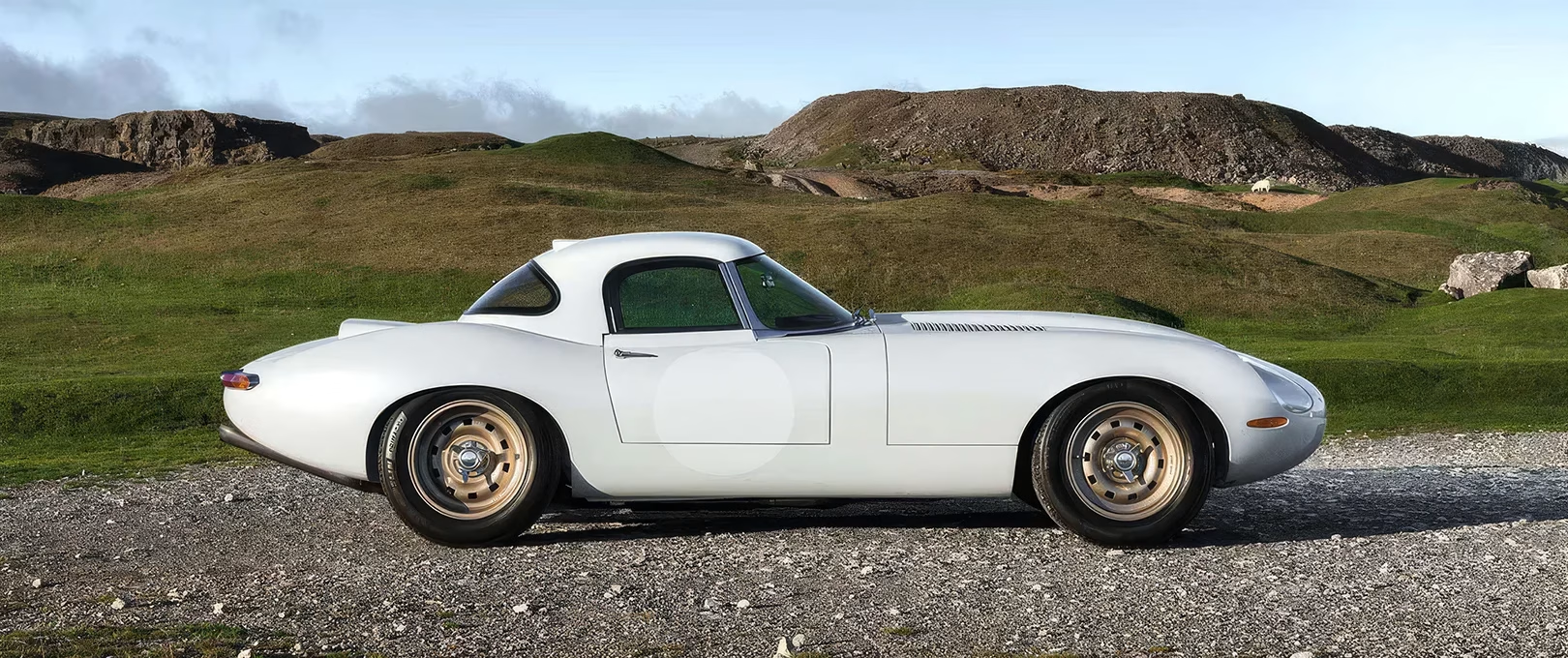
The name is not marketing froth. In 1963 Jaguar planned a run of aluminium-bodied Lightweight E-Types as its racing answer to the D-Type, aiming for eighteen cars but completing just twelve. Those originals are now among the most valuable Jaguars on the planet, the sort of machinery you see slithering sideways through Goodwood on period tyres. Eagle’s GTR is a modern tribute to that bloodline rather than a replica of it, and the firm has chased the same uncompromising spirit while keeping the everyday usability its customers expect.
It is worth remembering just how loved the donor car is. Jaguar built around 72,000 E-Types between 1961 and 1974, and Enzo Ferrari reportedly called it the most beautiful car ever made. It has been a movie regular for six decades, from A Shot in the Dark in 1964 to The Italian Job in 1969 and right up to Jason Statham’s The Mechanic in 2011. Values for good originals sit comfortably into six figures, and Jaguar’s own Classic works will happily sell you a factory Reborn restoration for north of £300,000. Against that backdrop, an Eagle occupies a different universe entirely.
How Eagle got the Lightweight GTR to 975kg
Here is where the earlier version of this story got its numbers in a twist, so let me set the record straight. The GTR weighs 930kg dry and 975kg with all its fluids on board. That is a full 100kg lighter than Eagle’s already-svelte Lightweight GT, and around 30 per cent lighter than a standard E-Type roadster. To put it in terms that made me smile, it weighs about the same as an original 1990s Mazda MX-5, and only a passenger’s worth more than a late Lotus Elise. For a car with a 4.7-litre engine and a fully trimmed, air-conditioned cabin, that is faintly ridiculous.
Eagle got there by being forensic rather than flashy. The car is built from a shopping list of exotic materials, magnesium, titanium, Inconel, carbon fibre, lithium and aluminium, and the weight has been chipped away almost everywhere you look. The engine sump, gearbox casing and rear hub carriers are magnesium. Titanium turns up in the wheel hubs, suspension spindles and fasteners. The steering column, flywheel, alternator and brake servo are all lightweight items. The magnesium wheels have been pocketed out behind their spokes to reduce unsprung mass, and they wear knock-on spinners like a proper racer.
My favourite detail is the smallest one. Eagle removed the rear anti-roll bar entirely, partly because the real Lightweights never ran one, and partly to save two kilograms. Two. On a car costing close to seven figures, that tells you everything about the mindset. Even the badges are painted straight onto the bodywork rather than fixed on as chrome, because a physical badge is weight you do not need to carry.
Eagle Lightweight GTR engine and performance
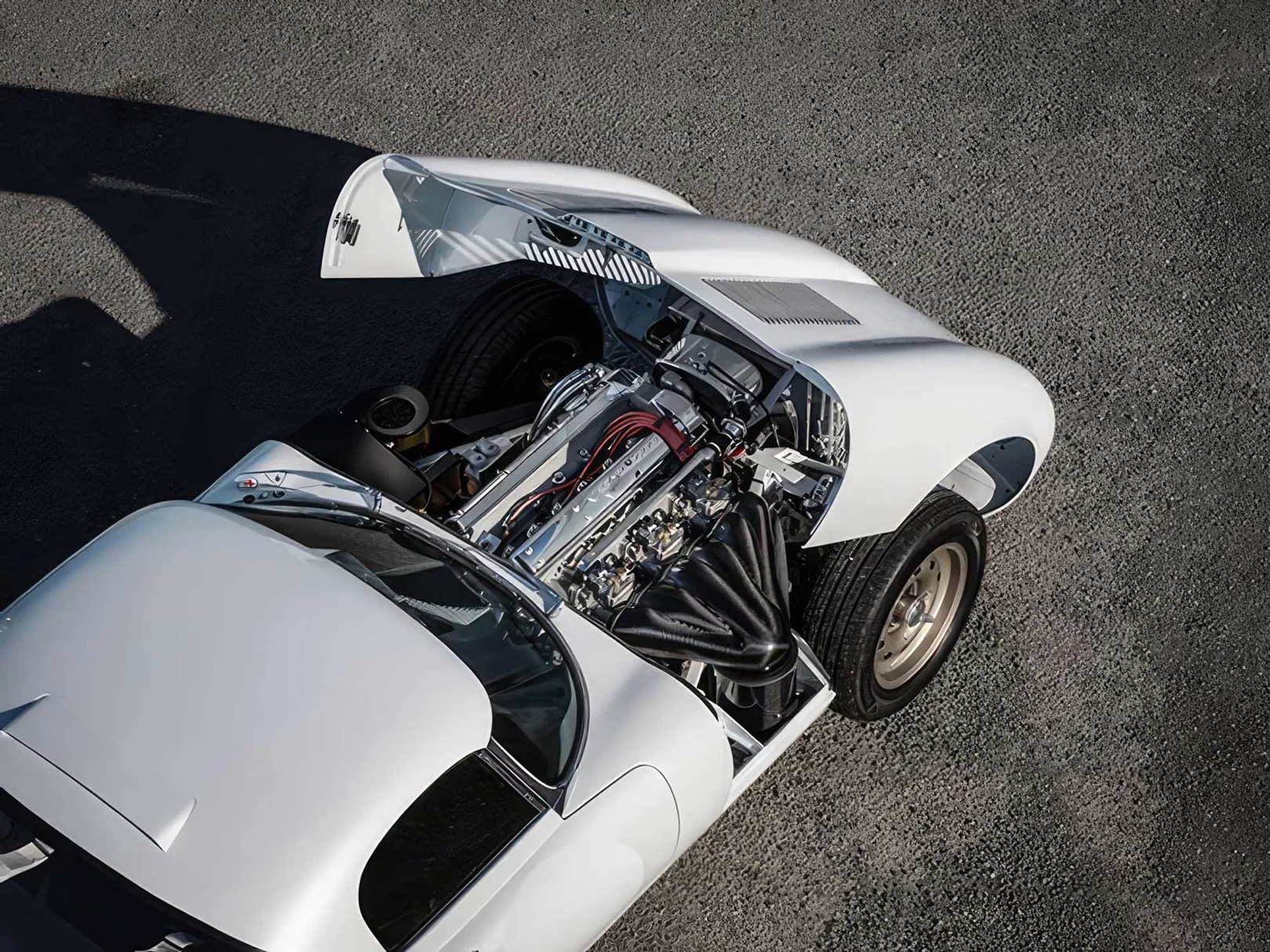
Lift that endless bonnet and you find Eagle’s own all-aluminium 4.7-litre straight-six, a modern reworking of Jaguar’s legendary XK engine. It breathes through triple Weber carburettors and a carbon-fibre intake plenum, and in the driven car it produces 385bhp with 380lb ft of torque. If you have seen bigger numbers quoted elsewhere, that is the power-to-weight ratio talking. Thanks to that featherweight body the GTR delivers roughly 401bhp per tonne, which is genuine supercar territory and the figure that tends to get mangled in the retelling.
What matters more than the peak is how it is delivered. Titanium connecting rods raise the red line by 500rpm, and a big-valve, wide-angle cylinder head has been fitted to wake the engine up at the top end. The result, by all accounts, is a motor with two personalities: docile and tractable below 3500rpm, then a hard turn skyward as the Webers open fully and the whole thing rushes towards the limiter on a howling, layered wail. Eagle’s managing director Paul Brace has said they considered the smaller, rev-happier 3.8 unit but could not bring themselves to give away the torque.
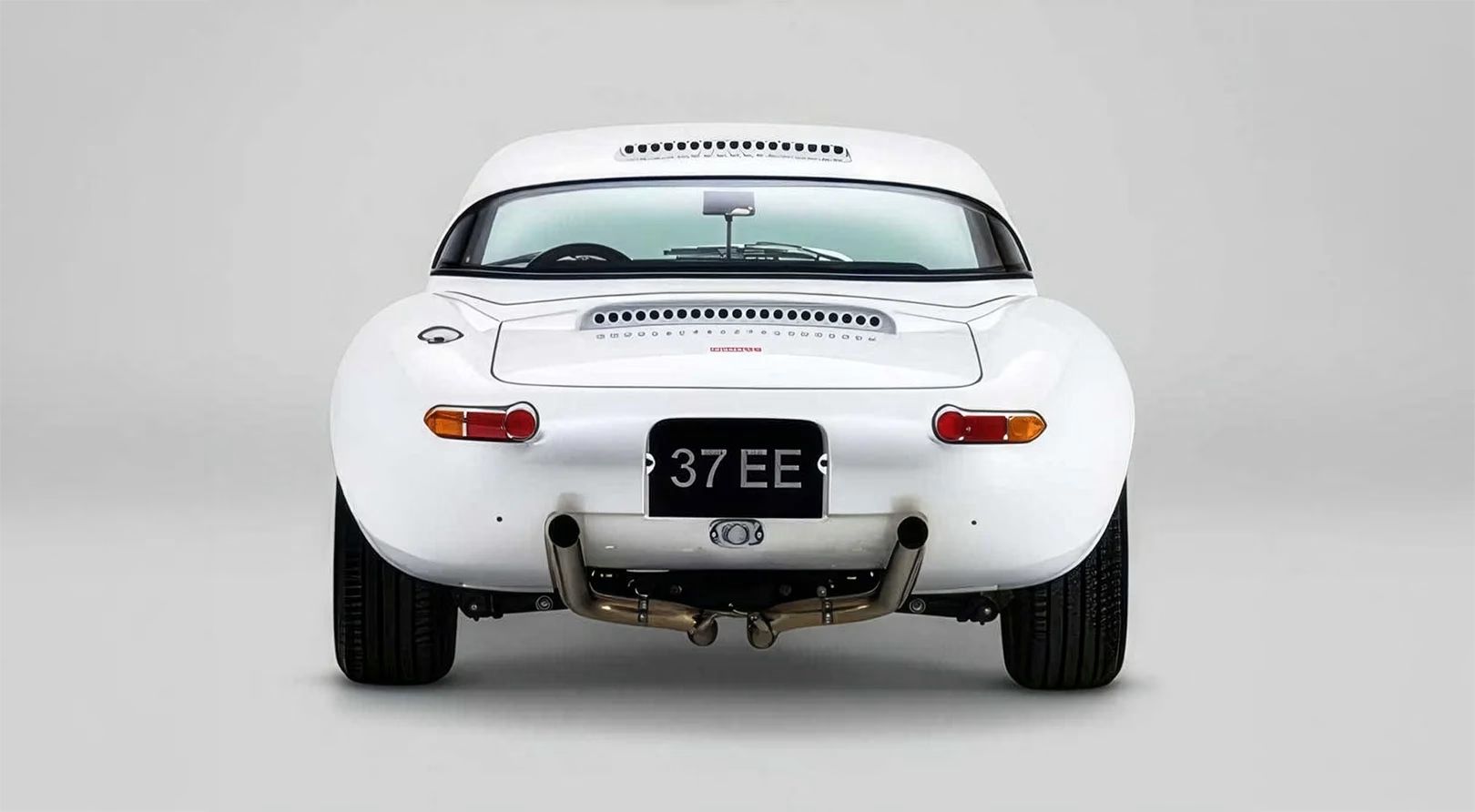
The chassis has been brought thoroughly up to date to match. There are adjustable Ohlins dampers, bespoke springs, revised suspension geometry tuned for modern radial tyres, and carbon-ceramic brakes gripped by AP Racing calipers. A shorter final drive sharpens the responses, and the exhaust is a titanium item that tucks tight against the underbody. This is an E-Type engineered to be driven hard on today’s roads, not babied between concours lawns.
Inside the Eagle Lightweight GTR interior
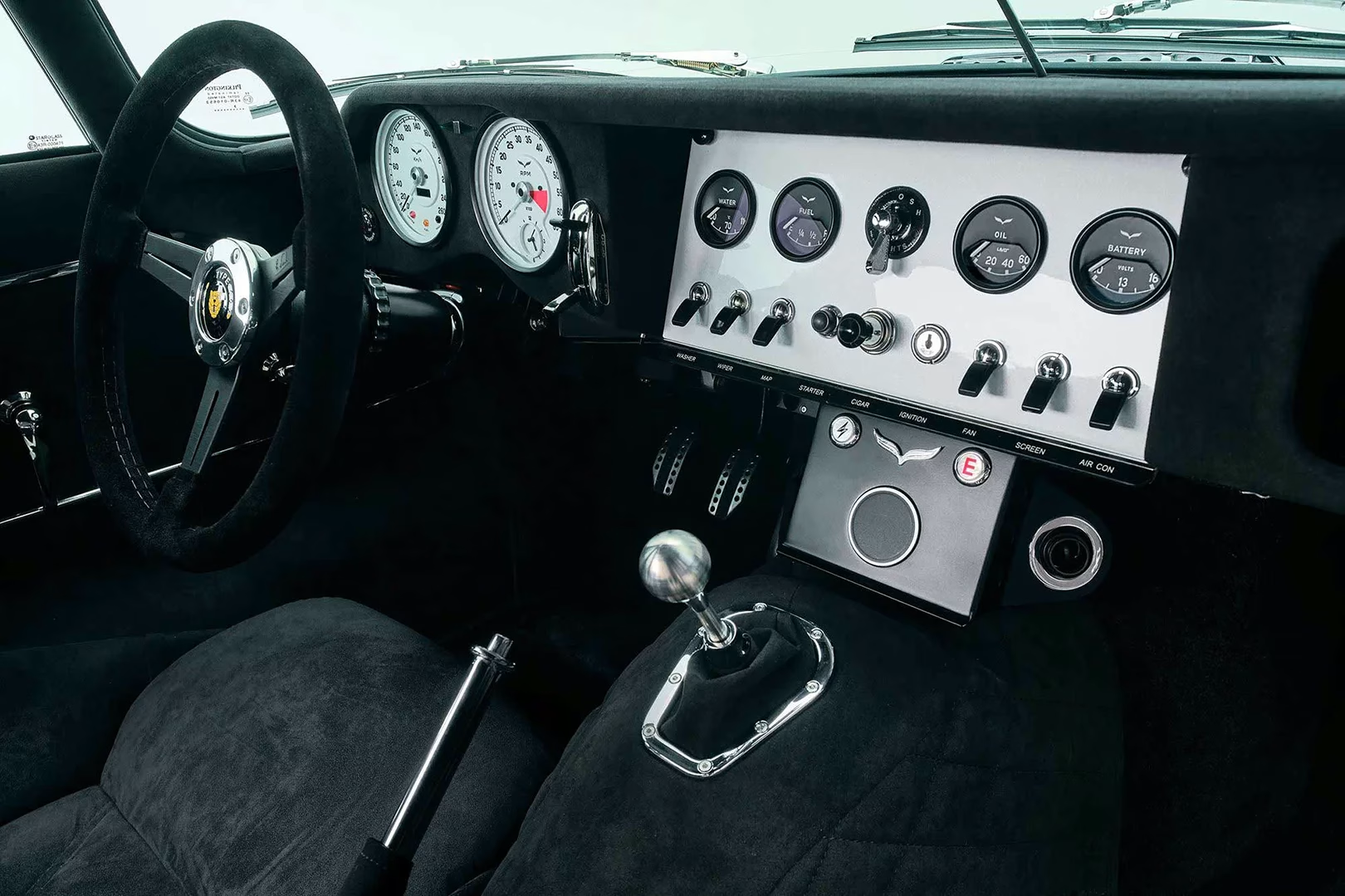
Slide over the tall sill, fold yourself through the small door and drop into the seat, and the GTR wraps you in black Alcantara. There is no wood and no leather here, which would be too quaint for the road-racer brief, and no centre console either. In its place sits a floating instrument binnacle with auxiliary switches machined from platinum and inlaid with iridescent mother of pearl. It is glorious overkill, and proof that when a client’s imagination is the only budget, you get details most manufacturers would never dare cost out.
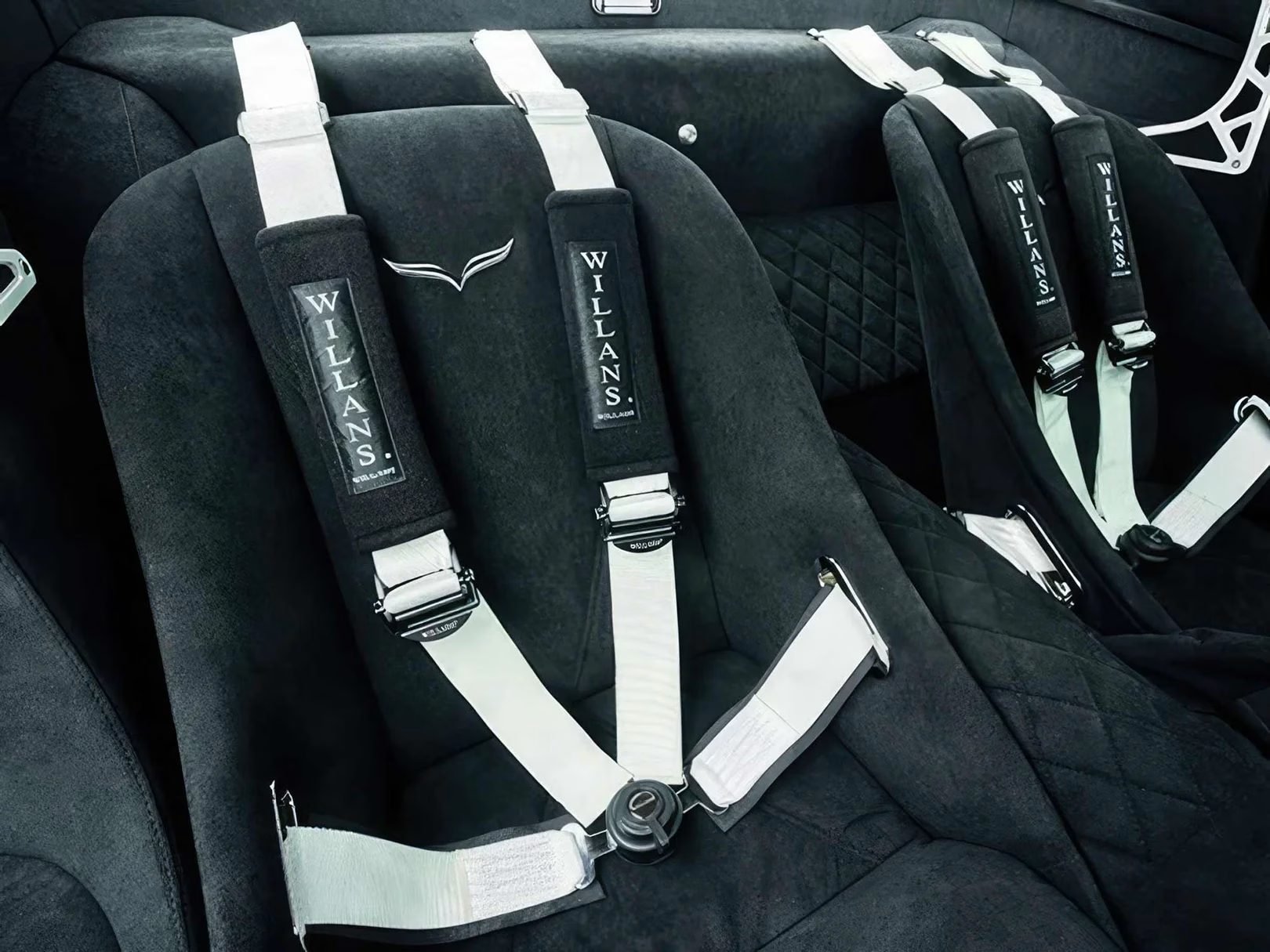
The seats are lightweight aluminium buckets echoing period racing designs, and this owner specified four-point Willans harnesses rather than inertia belts, which adds a satisfying little ritual to every start. There is a titanium gearknob no bigger than a golf ball, a black Nardi wheel and an integrated fire-suppression system. Yet for all the stripped-back theatre, Eagle has quietly kept the things that make a car usable across a continent: air conditioning, heated glass, carefully targeted sound and heat insulation, and even a discreet magnetic phone dock. Spartan, but never uncivilised.
Eagle Lightweight GTR review: how it drives
This is the part the original draft could never tell you, because back then nobody outside Eagle had driven the thing. Now they have, and the verdict is close to rapturous. On a soaking wet day near Snowdonia, with fog rolling across the hills, evo found a car that flatters you from the first mile: alien if you are used to modern machinery, yet remarkably intuitive, with controls that operate with a finely honed slickness.
Drive it gently and it is docile and mild-mannered. Lean on it and it transforms, the steering firmly weighted and alive with feedback, the low mass revealing itself in how effortlessly the car sheds speed under braking and snaps forward out of a corner. Testers reckon it is as biddable and easy to read as a Caterham, which for a 1960s silhouette is high praise indeed. The only real criticism is that peaky top end: keep the revs up and it is intoxicating, but let them fall and you drop out of the sweet spot. That, and the small matter of the price, are about the only marks against it.
Eagle Lightweight GTR price and rivals
Nothing about the Eagle Lightweight GTR is sensible, and the price tag is the proof. It starts at around £975,000 and, as a fully bespoke one-off, effectively runs to a cool million once you have specified it the way this client did. Eagle makes no apology for that, pointing to the thousands of hours it takes to design, develop and finish every component to its standards and to the customer’s wishes.
Is it worth it? That depends on whether you see a car or a commission. For the money you could have a Singer-reimagined 911, or an Alfaholics GTA-R with a Kimera Evo37 alongside it, and the restomod world has exploded since Eagle first showed its Speedster more than fifteen years ago. But none of those is this. The GTR is a genuine one of one, built around a single owner’s vision of what a fast car should be, and in stripping the E-Type back to its lightest, purest form, Eagle has arguably built the definitive love letter to Britain’s most beautiful sports car. I would not change a thing, except perhaps to find a spare million down the back of the sofa.
Key Specifications
| Key Specifications | |
|---|---|
| Model | Eagle Lightweight GTR (One of One) |
| Engine | All-aluminium 4.7-litre XK straight-six |
| Fuelling | Triple Weber carburettors, carbon intake plenum |
| Power | 385bhp @ 5500rpm |
| Torque | 380lb ft @ 4000rpm |
| Power to weight | Around 401bhp per tonne |
| Weight | 930kg dry, 975kg with fluids |
| Weight saving | About 30% lighter than an E-Type roadster |
| Brakes | Carbon-ceramic discs, AP Racing calipers |
| Suspension | Adjustable Ohlins dampers, bespoke springs |
| 0 to 62mph | Under 5.0 seconds (estimated) |
| Top speed | Around 170mph |
| Price | From around £975,000 |
| Built by | Eagle, East Sussex (est. 1984) |
About the Eagle Lightweight GTR
Prices start at around £975,000. Because it is a fully bespoke one-off, the finished cost sits close to a million pounds once the client’s specification is taken into account.
The GTR weighs 930kg dry and 975kg with fluids, roughly 30 per cent less than a standard E-Type roadster and about 100kg lighter than Eagle’s Lightweight GT.
Eagle’s 4.7-litre straight-six produces 385bhp and 380lb ft of torque. Thanks to the low weight, that works out at around 401bhp per tonne, which explains the supercar-baiting figures sometimes quoted.
Just one. The Lightweight GTR is a genuine One of One, commissioned by a single client, though Eagle continues to build a small number of its other Special Editions each year.
Yes. Every Eagle starts life as a donor E-Type, which is completely dismantled and rebuilt to modern tolerances. The GTR takes its inspiration from Jaguar’s original aluminium Lightweight E-Type racers of 1963, of which only twelve were built.
Images: eaglegb.com
Like What You’ve Read?
For more articles like this, receive our weekly e-newsletter, including partner deals and all things motoring, register your email below.
Please note: You cannot subscribe to Smart-Motoring unless you put a tick in the checkbox below to indicate have read and agreed to our privacy policy.