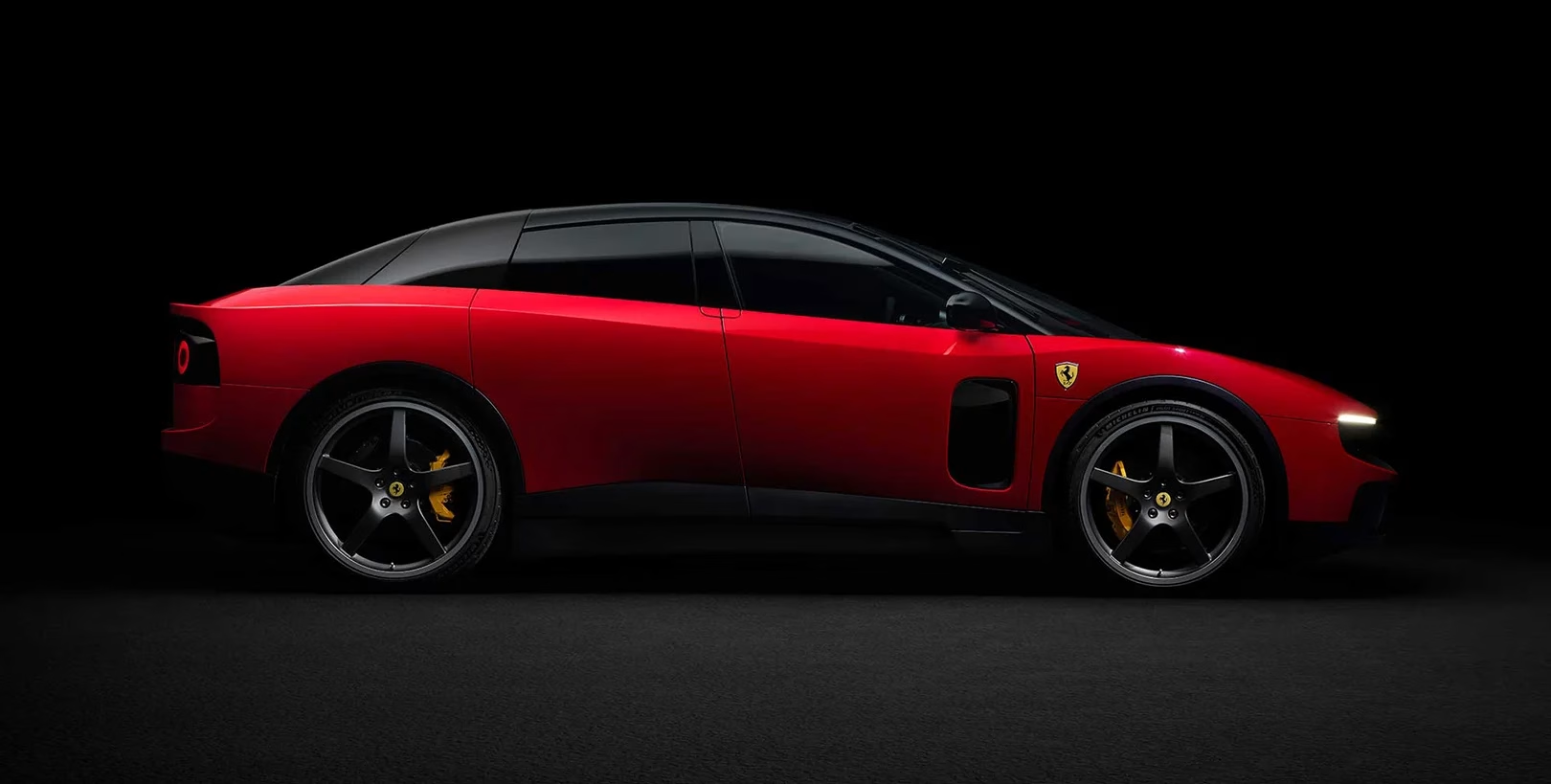
The Ferrari Luce is the first fully electric Ferrari, and I will admit I did not see it looking like this. For decades the Prancing Horse has meant a screaming V12 or a hard-edged turbo V8, so an electric Ferrari with four doors, five seats and an interior dreamed up by the man behind the iPhone was always going to cause a stir. It has. Unveiled in Rome in May 2026, the Luce has split the room like few cars in recent memory, and having dug into the detail, I think both the lovers and the haters have a point.
Ferrari Luce EV: Electric Ferrari Guide
The Ferrari Luce, explained
A Ferrari like no Ferrari before it
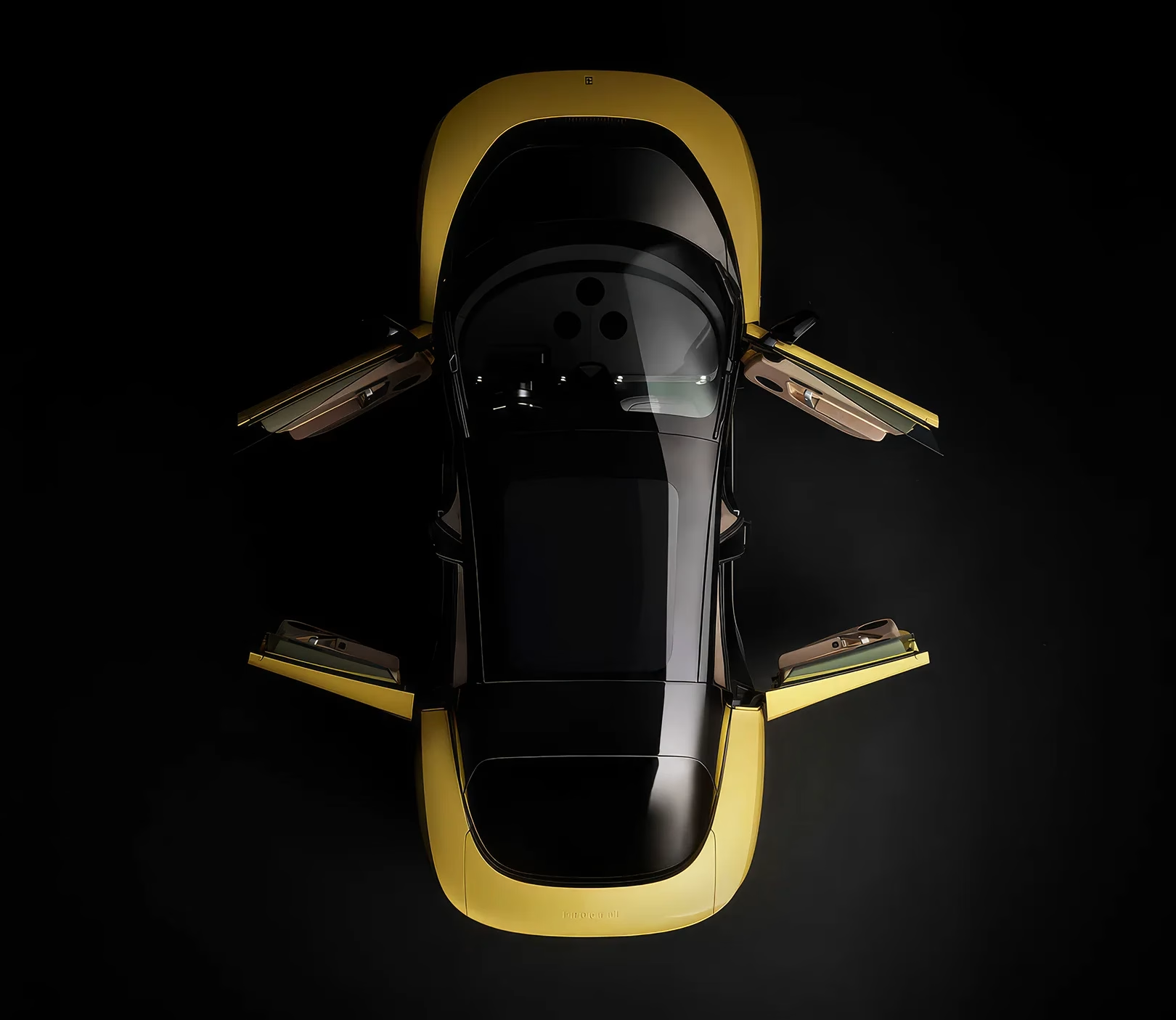
Let us start with the thing Ferrari cannot quite bring itself to shout about: this is a four-door, five-seat Ferrari. That alone makes the Luce unlike anything in the company’s history. Freed from the need to package a combustion engine up front and a gearbox out back, the designers have used the electric architecture to push the cabin outward and open up genuine space for five people. The name, Luce, means light in Italian, and Ferrari clearly intends the double meaning: light as in illumination, and light as in a fresh start.
It was revealed on 25 May 2026 against the dramatic backdrop of the Vela di Calatrava in Rome, the third act in a slow-burn reveal that began with the powertrain in late 2025 and the interior in San Francisco earlier in 2026. That American staging was no accident. This is an Italian car designed largely on the West Coast of the United States, and it has arrived carrying more expectation, and more scepticism, than almost any Ferrari before it.
Why the Luce design has split opinion
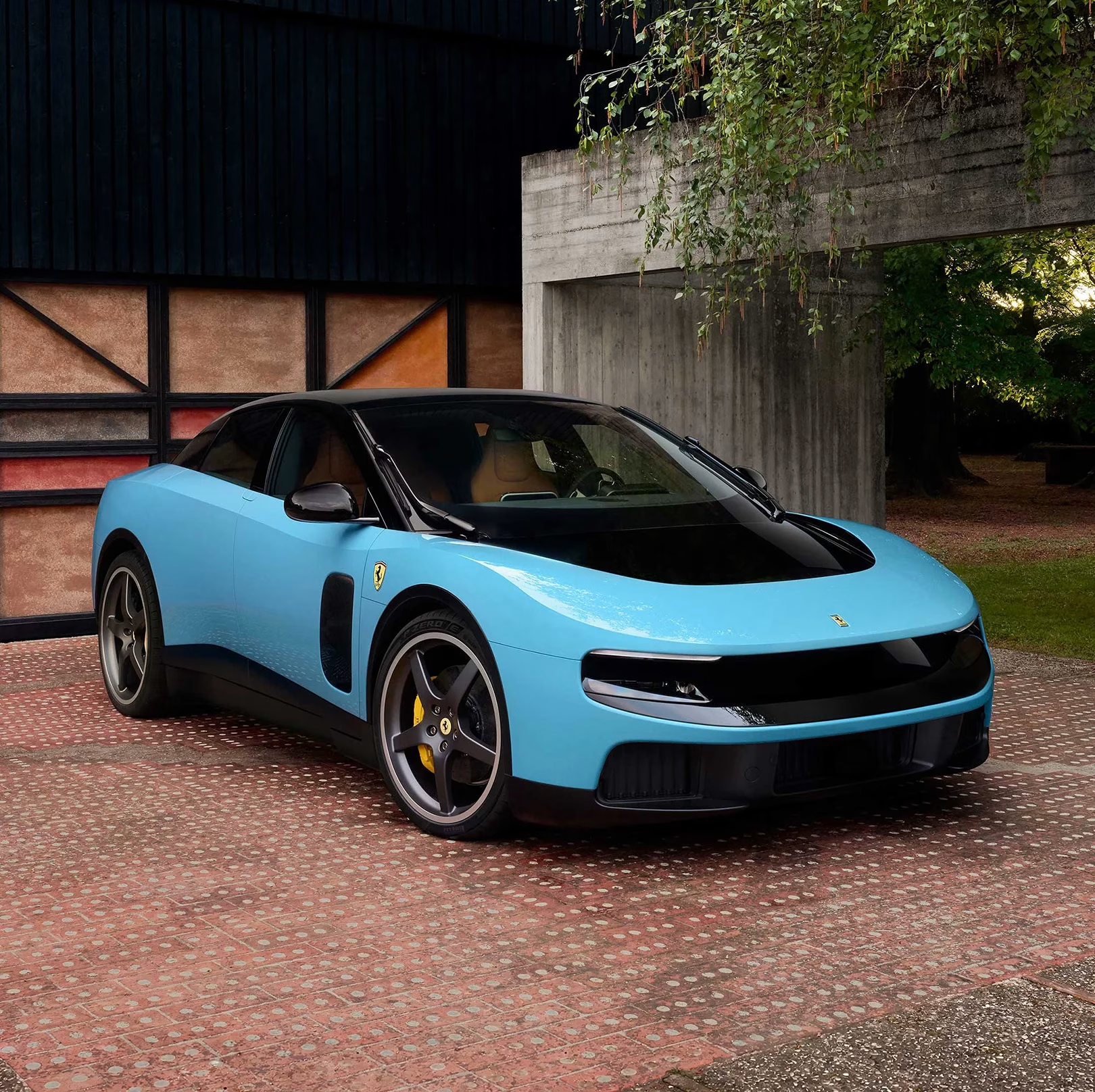
Here is where it gets spicy. Ferrari handed the styling of its most important new car in a generation not to its own studio alone, but to LoveFrom, the design collective founded by Sir Jony Ive, the former Apple design chief, and the Australian industrial designer Marc Newson. The pair spent around five years on the project alongside Ferrari’s own team led by Flavio Manzoni. The result is a smooth, continuous, almost liquid form, a shell-like body with a glass canopy that Ferrari developed with Corning, and slim aerodynamic wings that appear to float front and rear.
Not everyone loves it. When the full car broke cover, some longtime Ferraristi were dismayed, and Ferrari’s share price reportedly dipped around eight per cent in the aftermath, a rare sign of investors blinking at a design. Critics say the exterior looks anonymous, more premium electric saloon than red-blooded Ferrari. Supporters counter that a car with a completely new drivetrain deserves a completely new look, and that the fluid shape is doing real aerodynamic work rather than shouting for attention. Ferrari’s own line is that the Luce was deliberately freed from the legacy and constraints of past models. On that brief, LoveFrom has delivered exactly what was asked.
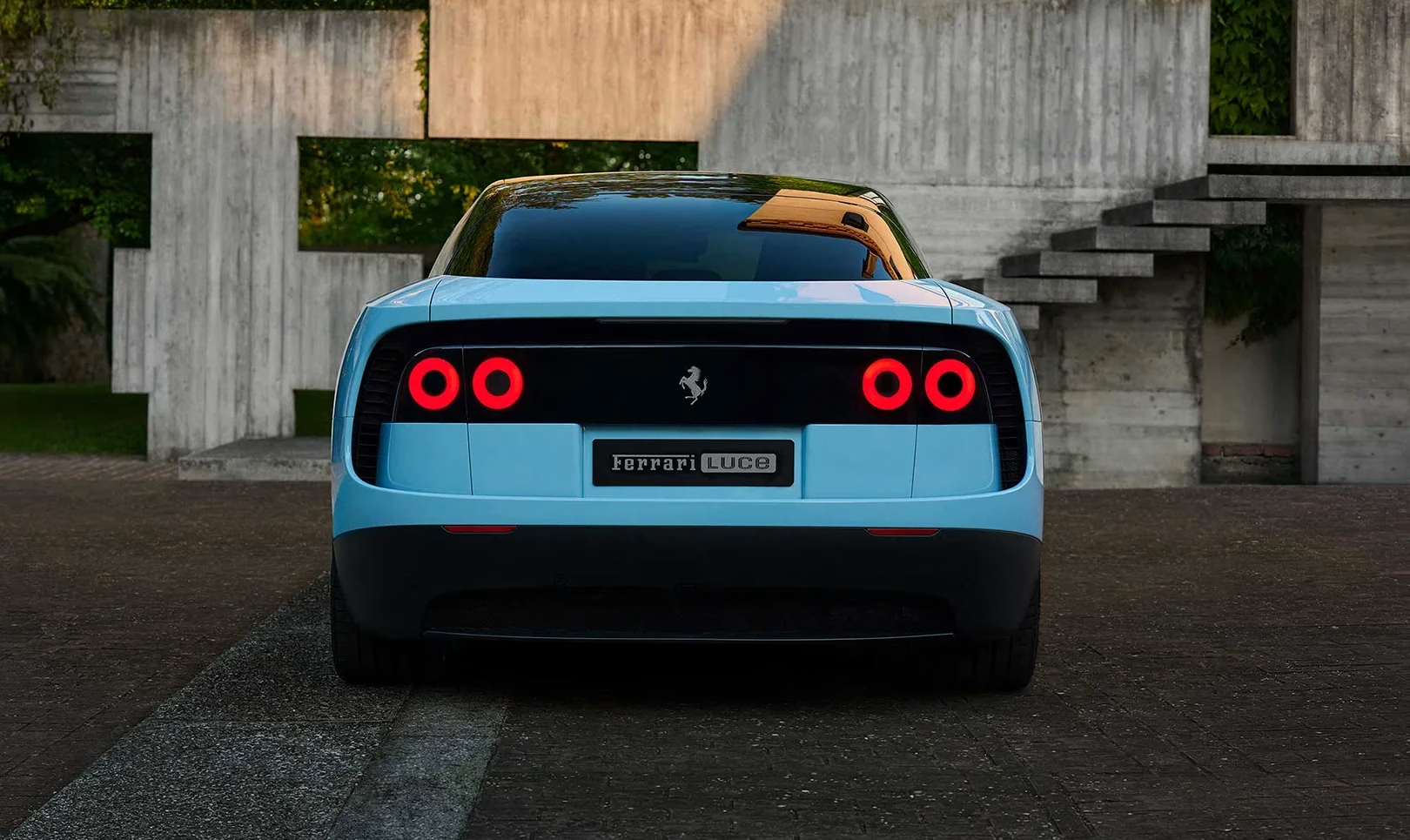
There are quiet nods to the past for those who look. The round halo tail lights are a deliberate tribute to the 360 Modena and 458 Italia, and the flush light panels recede into the bodywork when switched off to keep the surfaces clean. It is a car that rewards a second glance, even if the first one divides people.
Jony Ive and the LoveFrom cabin
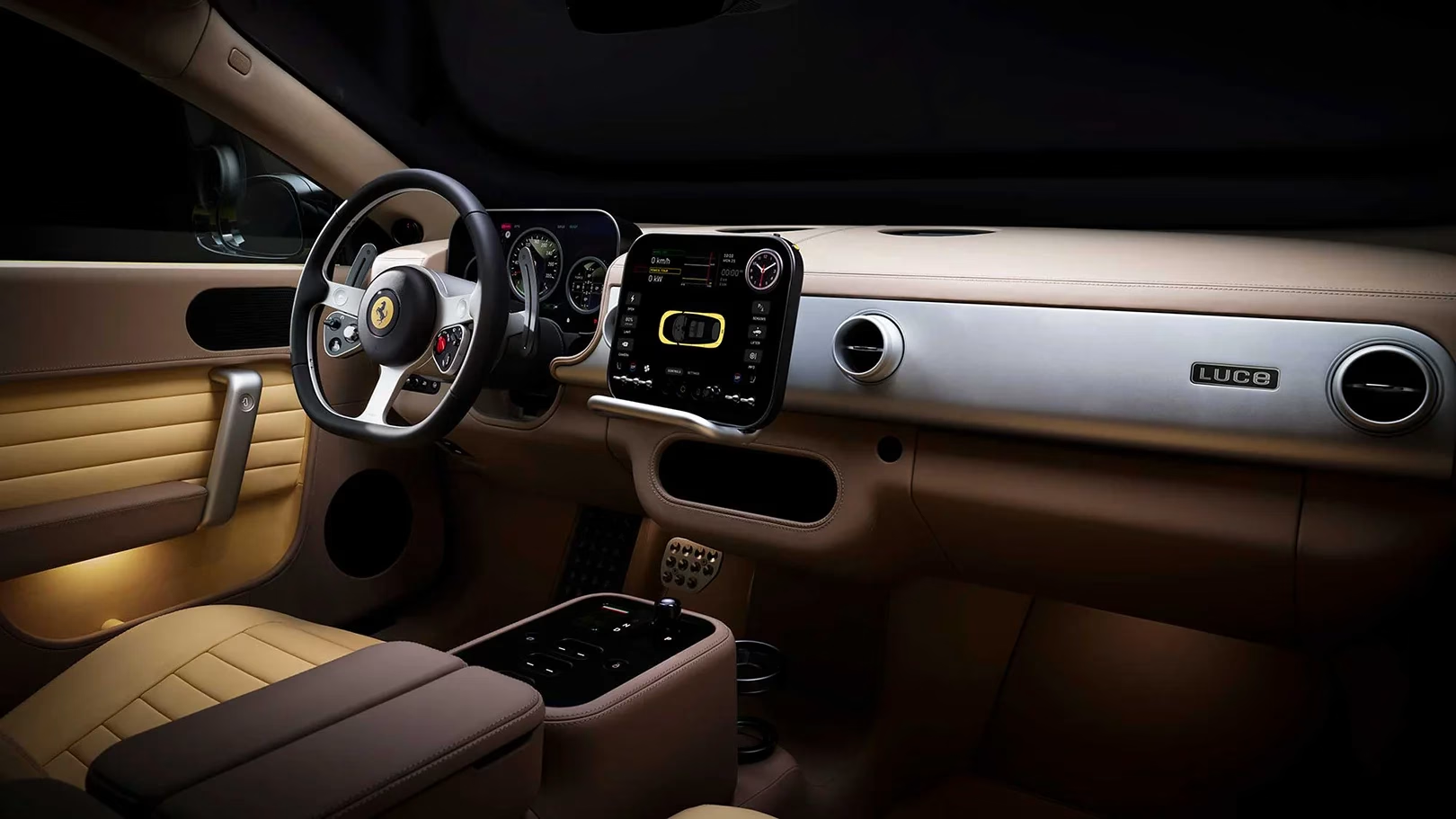
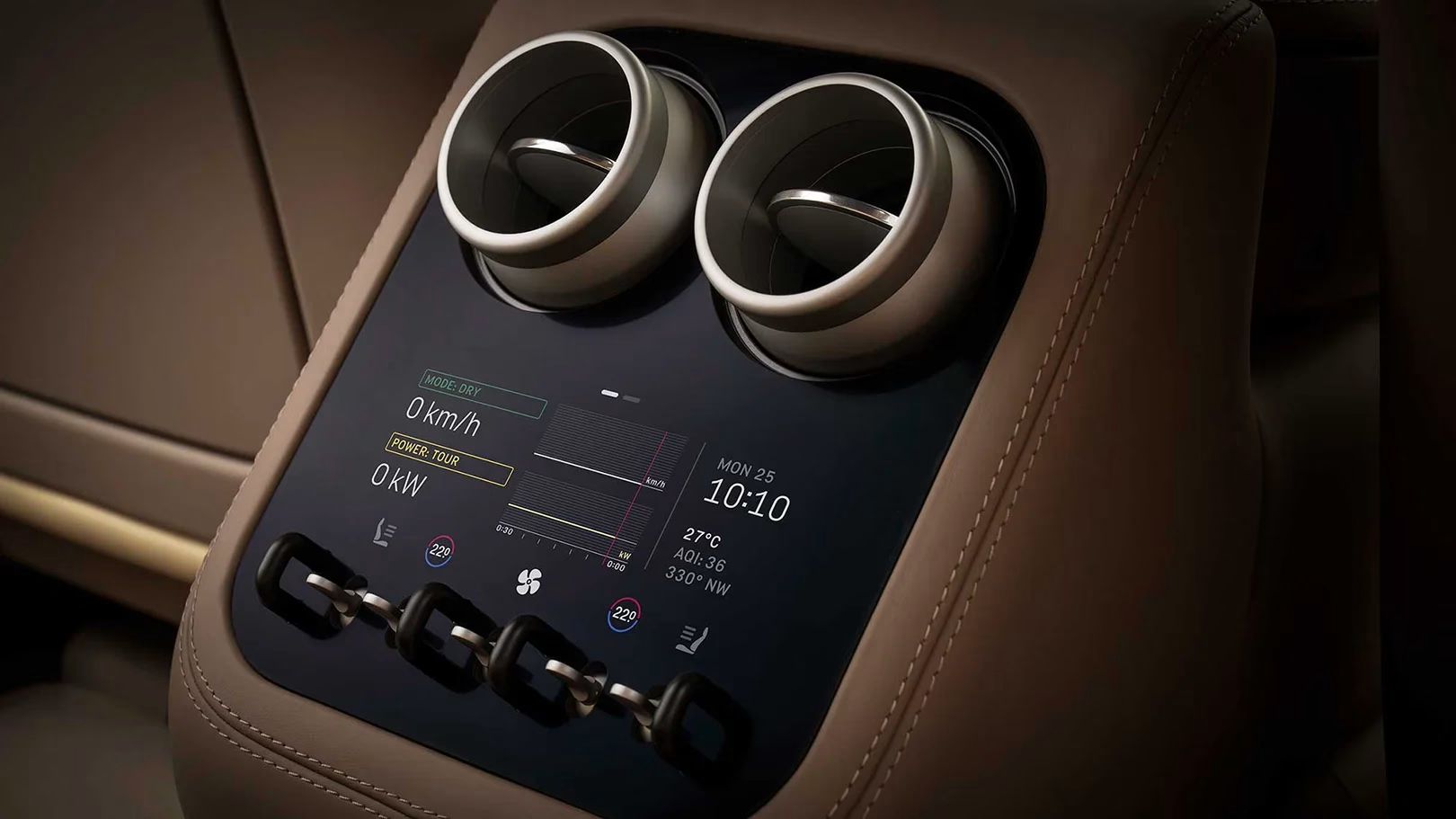
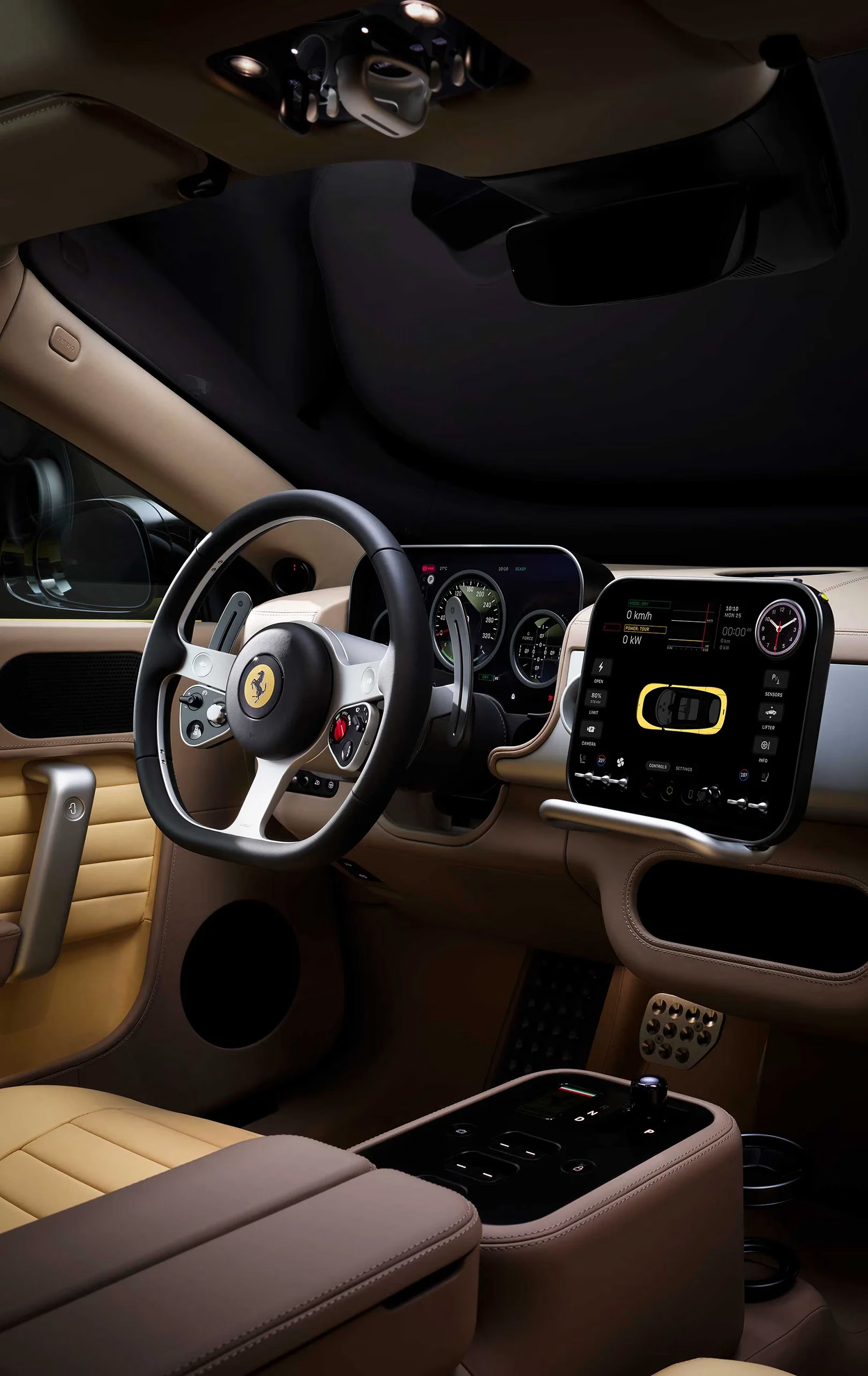
If the exterior divides, the interior is where most agree LoveFrom has done something special. The whole cabin pushes against the idea that an electric car must be dominated by a giant touchscreen. Instead the Luce leans into physical, mechanical controls, inspired by classic sports cars and Formula One single-seaters, and it is all the better for it.
Buttons you can actually feel
The three-spoke steering wheel is CNC-machined from a single piece of 100 per cent recycled aluminium, with real buttons for the indicators and dials for the drive modes, wipers and cruise control. Ferrari says every button was tuned across more than twenty rounds of evaluation with its test drivers to get the mechanical and acoustic feedback just right. There is an aluminium theme throughout, plus genuinely retro round analogue dials and a proper clock, a lovely contrast with the digital displays alongside them.
The theatrical glass key
My favourite detail is the key. LoveFrom built a colour-changing E Ink display into a glass key fob that fades from yellow to black when you drop it into its dock in the centre console. At the same time the gear selector and control panel light up to tell you the car is ready. It is pure theatre, the kind of small ceremony that makes starting a special car feel like an event, and exactly the sort of thing you would expect from the people who obsessed over Apple’s unboxing experience.
Paddles with no gears to shift
Then there are the paddles behind the wheel. There are no gears in an EV, so Ferrari repurposed them for what it calls Torque Shift Engagement. The right paddle steps through five levels of how aggressively the car delivers its torque, while the left paddle sets the strength of the regenerative braking, again across five levels. It is a clever way of keeping the driver’s hands busy and involved, turning what could be a numb electric experience into something you actively manage.
Power, battery and performance
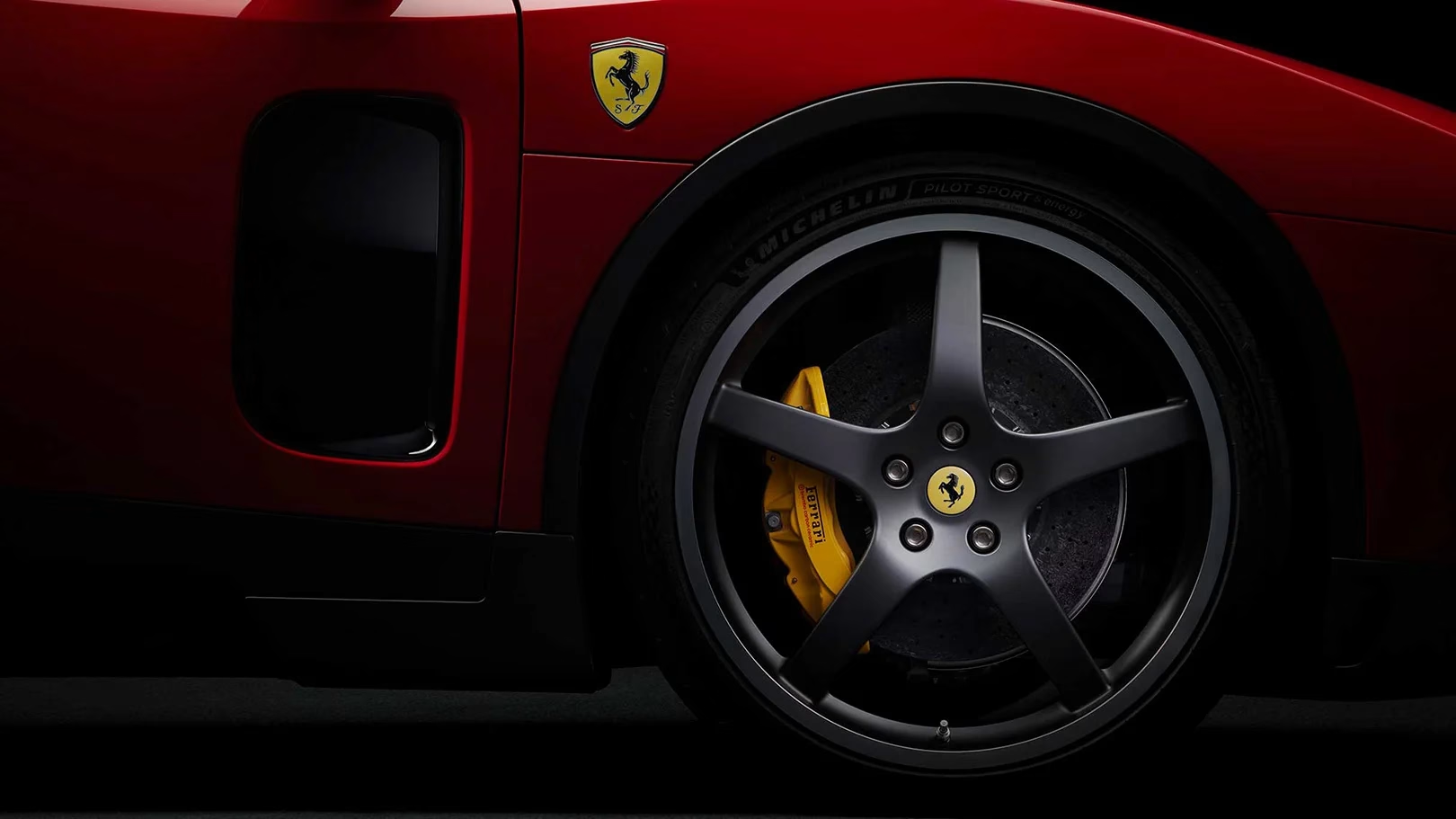
For all the design talk, the Luce is a monster underneath. Four electric motors, two on each axle, produce a combined 1,036bhp, or 1,050 metric horsepower, with 730lb ft of torque and full four-wheel drive with torque vectoring. That is enough to fire this five-seat Ferrari from zero to 62mph in around 2.5 seconds, on to 124mph in 6.8 seconds, and all the way to a top speed of 193mph. So much for the idea that an electric Ferrari would be a soft touch.
Power comes from a 122kWh battery, built in-house at Maranello, which Ferrari claims has the highest energy density of any production EV at 195Wh per kilogram. It forms a structural part of the chassis, runs on an 800-volt architecture and supports DC fast charging at up to 350kW, enough to claw back around 70kWh in roughly twenty minutes. Range lands at about 329 miles on the WLTP cycle, which is respectable given the performance on tap. The whole car is the product of a five-year engineering effort that generated more than sixty new patents.
Crucially, Ferrari has not tried to fake a V12 soundtrack. Instead the Luce captures the real mechanical sounds of its own drivetrain and amplifies them to suit the driving mode, so the noise you hear is authentic to the car rather than a synthesised impression of an engine it does not have. Combined with active suspension and that clever torque management, Ferrari insists the Luce still drives like a Ferrari should, even without a drop of petrol.
Price, range and on-sale date
None of this comes cheap. Ferrari has positioned the Luce in its ultra-exclusive bracket, with prices reported at around 550,000 euros in Europe, roughly 640,000 US dollars, placing it above the hybrid SF90 and firmly in special-edition territory. Assembled in Maranello, it is due to reach its first customers from October 2026, with deliveries beginning in Italy before rolling out further.
Is it worth it, and is it really a Ferrari? That is the argument that will run and run. What is not in doubt is the ambition. The Luce is a 1,036bhp, four-door, five-seat electric grand tourer that charges fast, travels far and comes wrapped in a design by two of the most celebrated product designers alive. Whether you see heresy or genius probably depends on how tightly you cling to the idea of what a Ferrari must be. For my part, judged on its own terms rather than against a mental image of a 250 GTO, I find it hard not to be impressed.
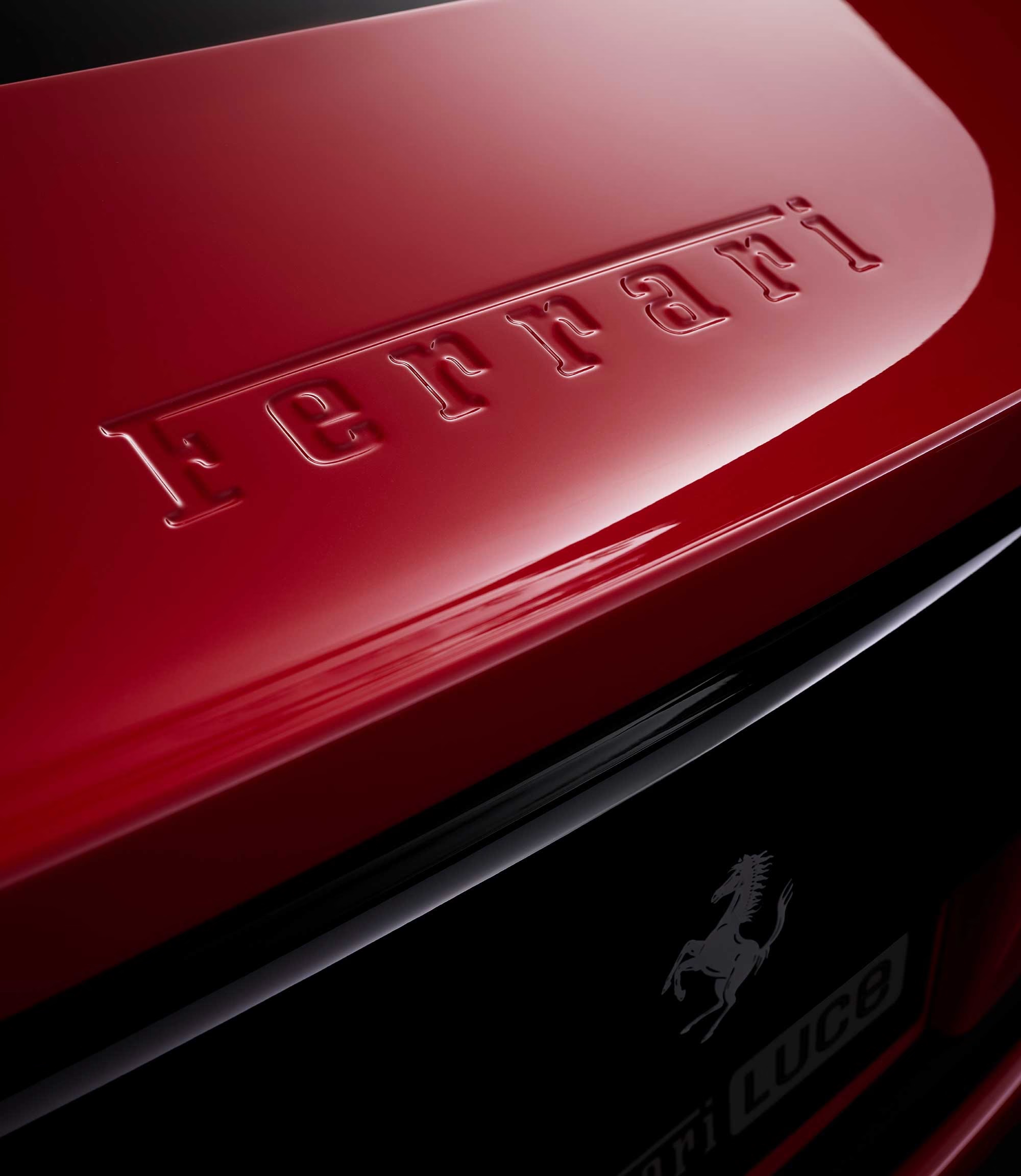
Ferrari Luce Key specifications
| Model | Ferrari Luce (first electric Ferrari) |
|---|---|
| Layout | Four-door, five-seat GT, four-wheel drive |
| Motors | Four electric motors, two per axle |
| Power | 1,036bhp (1,050 cv) |
| Torque | 730lb ft (990Nm) |
| 0 to 62mph | About 2.5 seconds |
| 0 to 124mph | About 6.8 seconds |
| Top speed | 193mph |
| Battery | 122kWh, 800V, Maranello-built, structural |
| Energy density | 195Wh/kg (Ferrari claims a production EV best) |
| Charging | Up to 350kW DC, about 70kWh in 20 minutes |
| Range | Around 329 miles (WLTP) |
| Design | LoveFrom (Jony Ive, Marc Newson) with Ferrari |
| Price | Around 550,000 euros (about 640,000 dollars) |
| On sale | Deliveries from October 2026 |
Frequently asked questions
Yes. The Luce is Ferrari’s first fully electric production car, revealed in Rome in May 2026 and built at Maranello. It is a genuine Ferrari, just one with a battery, four doors and five seats rather than a combustion engine.
Prices are reported at around 550,000 euros in Europe, roughly 640,000 US dollars, which places the Luce above the hybrid SF90 Stradale and in Ferrari’s most exclusive bracket.
The Ferrari Luce produces 1,036bhp (1,050 metric horsepower) and 730lb ft from four electric motors, with four-wheel drive. That is good for zero to 62mph in about 2.5 seconds and a 193mph top speed.
A 122kWh battery built in-house at Maranello gives the Ferrari Luce around 329 miles on the WLTP cycle. It uses an 800-volt system and charges at up to 350kW, recovering roughly 70kWh in about twenty minutes.
The Ferrari Luce exterior and interior were shaped by LoveFrom, the studio founded by Sir Jony Ive and Marc Newson, working with Ferrari’s own design team under Flavio Manzoni over about five years.
Ferrari has said customer deliveries begin from October 2026, starting in Italy before a wider rollout.
Photo credits: All images courtesy of Ferrari
Like What You’ve Read?
For more articles like this, receive our weekly e-newsletter, including partner deals and all things motoring, register your email below.
Please note: You cannot subscribe to Smart-Motoring unless you put a tick in the checkbox below to indicate have read and agreed to our privacy policy.