
The Return of the Button
There is a particular small frustration that we have all quietly agreed to live with. You are driving along, nothing dramatic, and you simply want to turn the fan down a notch. Once, that was a knob. You found it without looking, the way you find the indicator or the gearstick, and thought nothing of it. Now, as often as not, it lives inside a screen, two or three taps deep, and you go hunting for it while the road slides past at seventy. We have grown so used to this that we barely register it anymore. Euro NCAP has registered it. And from January 2026, it is quietly doing something about it
| Euro NCAP 2026 | the buttons rule at a glance |
|---|---|
| In force from | January 2026 |
| Applies to | New-car safety ratings across Europe |
| Physical controls now needed for | Indicators, hazard lights, horn, wipers and the emergency SOS call |
| They must work | By feel, without looking, even with gloves on |
| Miss the brief and | No full five-star rating |
| Why it stings | Around 9 in 10 European buyers check the score before they buy |
What’s Actually Changed
The change is undramatic, which is rather the point of it. From January 2026, Euro NCAP, the body whose star ratings quietly shape what most of us end up buying, will start marking cars down if they hide their essential controls inside a touchscreen.
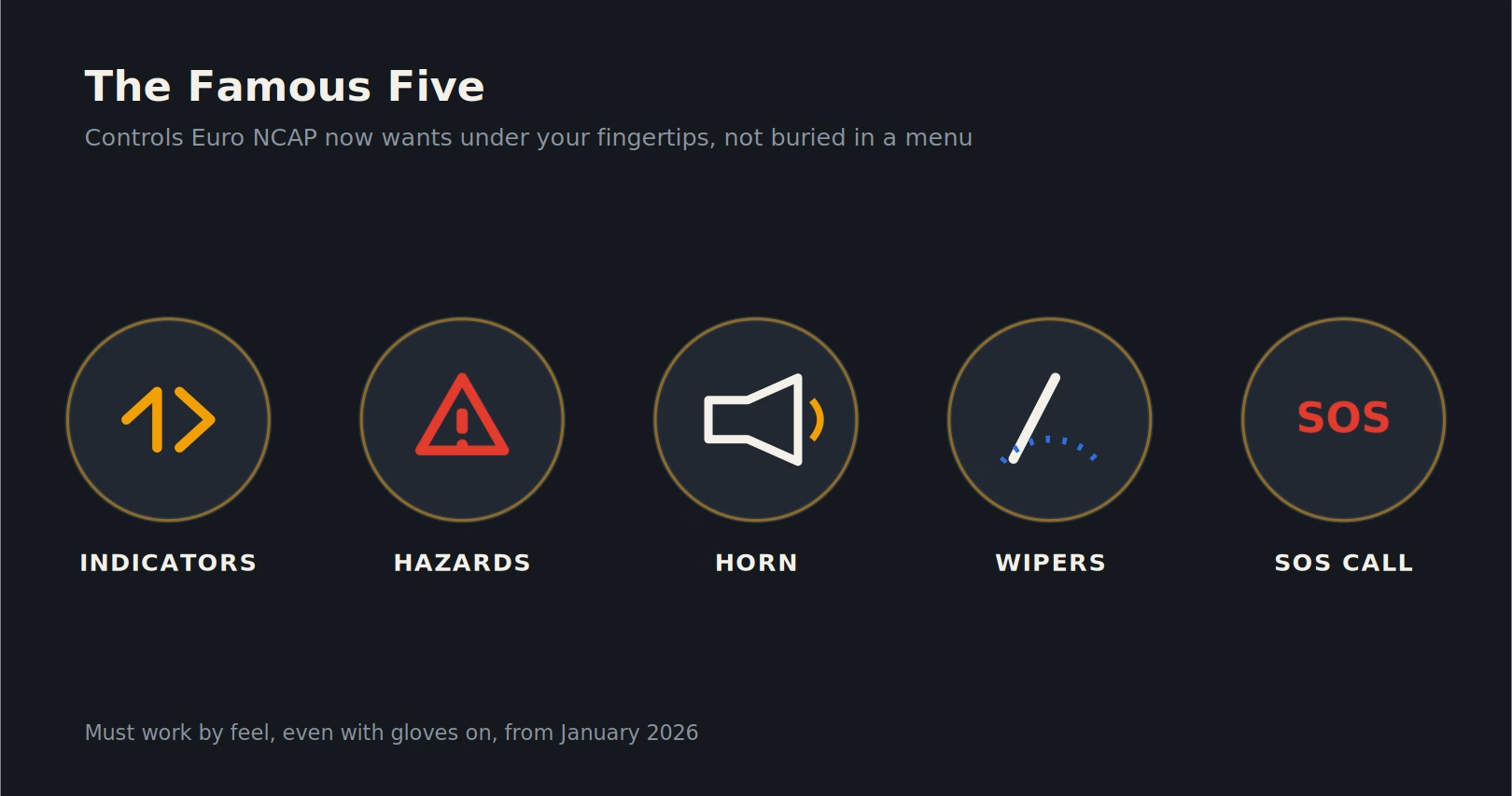
Five things now need to sit on physical controls you can work by feel: the indicators, the hazard lights, the horn, the wipers, and the emergency call. They even have to function with gloves on, which is the sort of requirement that only sounds absurd until you remember how far we had drifted from it. Fall short and a car loses its fifth star. And since something like nine in ten European buyers glance at that rating before they sign, no manufacturer is going to treat it as optional.
Why Screens Took Over (and Why We Went Along With It)
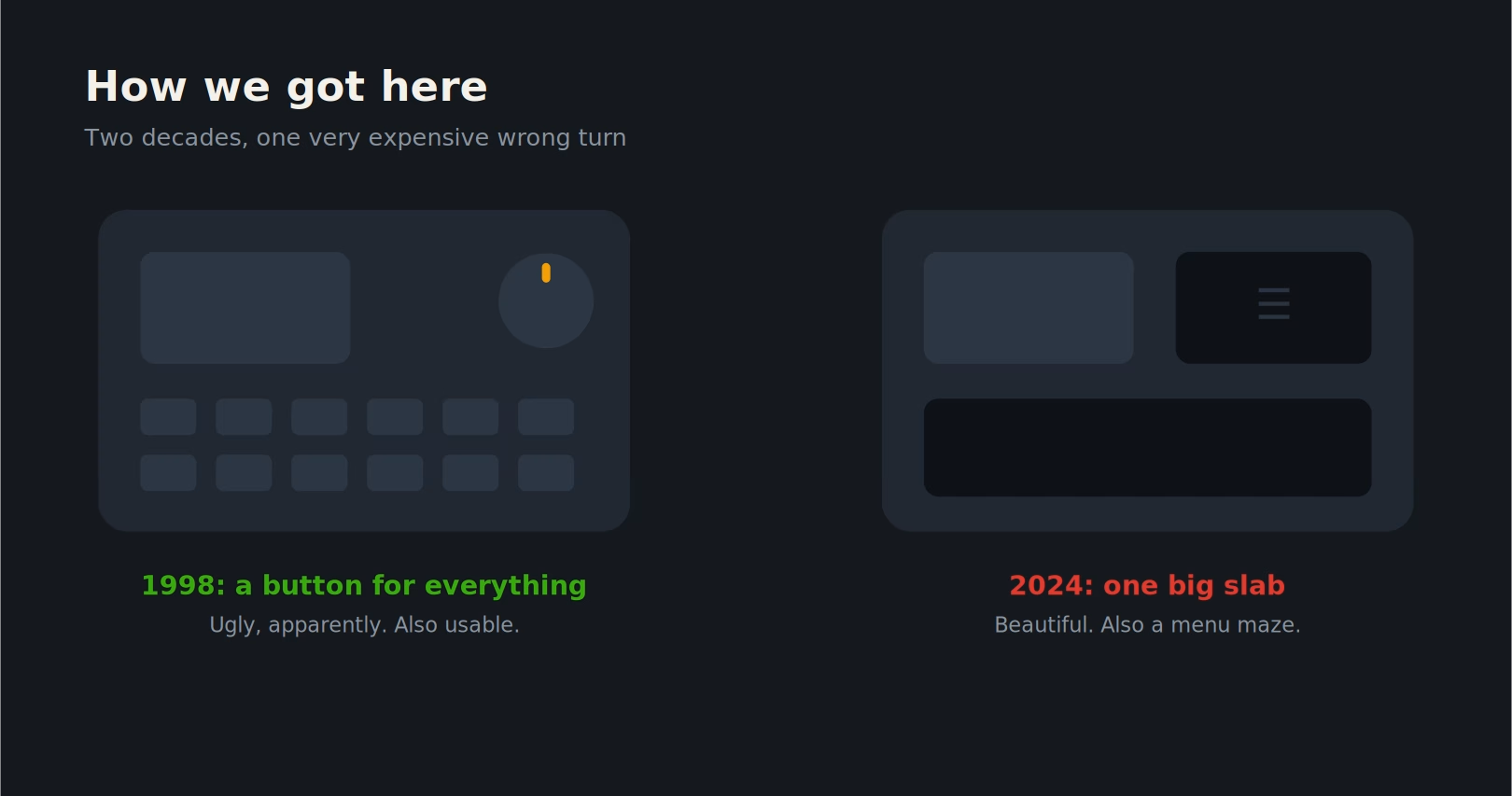
It is worth being honest about how we got here, because it was not really a conspiracy. A large screen is cheaper to build than a carefully engineered bank of switches, and it lets a manufacturer add things later through a software update, which sounds modern and is occasionally even useful. It also looks wonderful in photographs, clean and uncluttered, and, if we are honest, we rather liked that. We stood in showrooms, admired the big glass panel, and quietly decided it looked like the future.
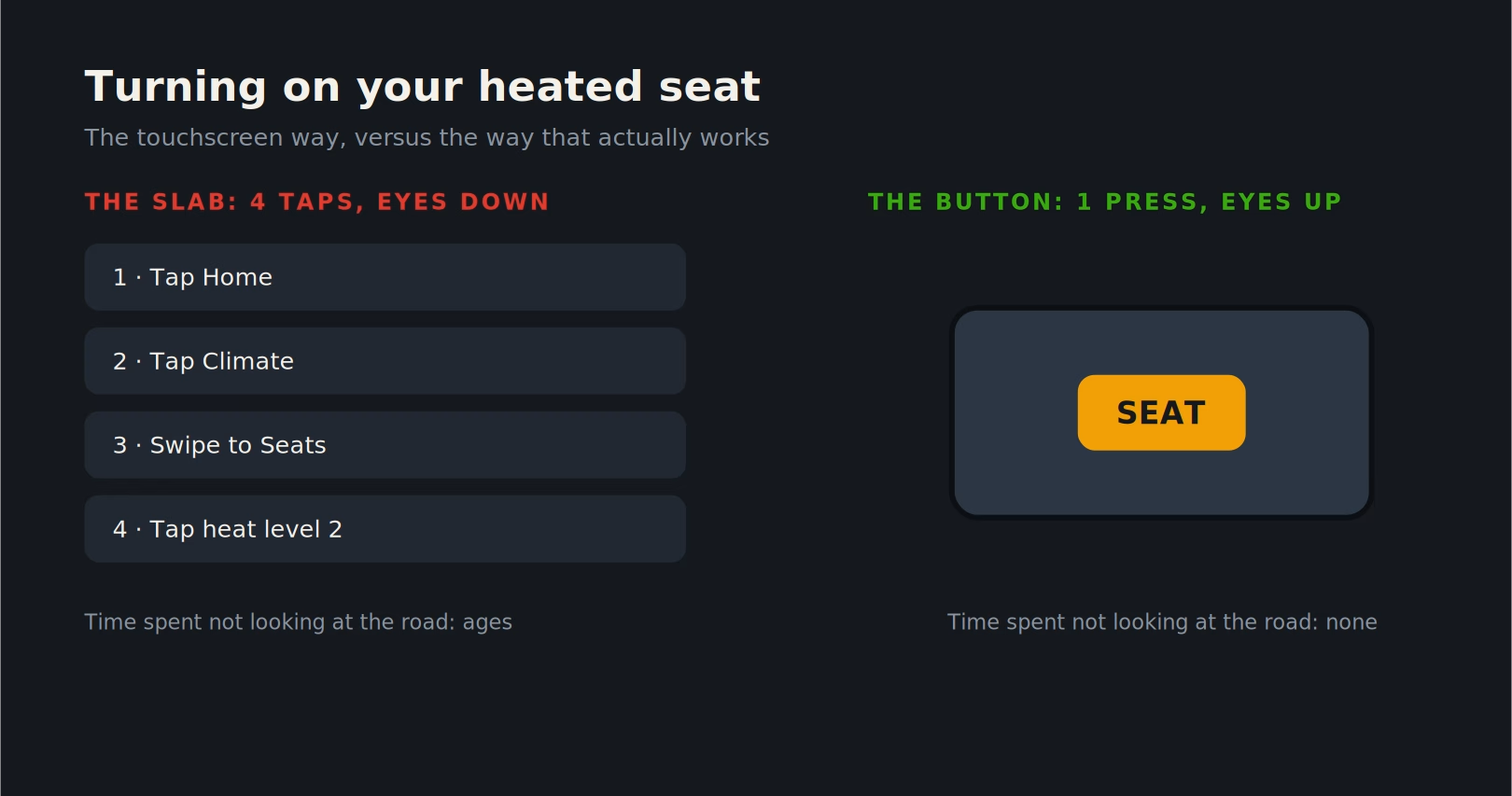
What none of us properly reckoned with was living with it. Minimalism is a lovely idea in a room that is standing still. In a moving car it mostly means the demister is now somewhere, rather than under your thumb, and you will find it eventually, probably at the next set of lights.
The Bit Where Screens Are Genuinely Dangerous
And then there is the bit most of us have filed away at the back of our minds, because it is not especially comfortable to look at directly. Taking your eyes off the road for two seconds roughly doubles your chance of an accident, and reaching into a menu takes about twice as long as pressing a button ever did. A widely reported UK study went further still, finding that drivers interacting with a touchscreen reacted more slowly than someone over the drink-drive limit.
We know this, on some level. We know that prodding a screen at speed is not clever. We do it anyway, because the car has quietly left us no other way to turn the heating down, and we have talked ourselves into treating that as normal. It is not, really, and it is oddly reassuring to hear a safety body finally say so out loud.
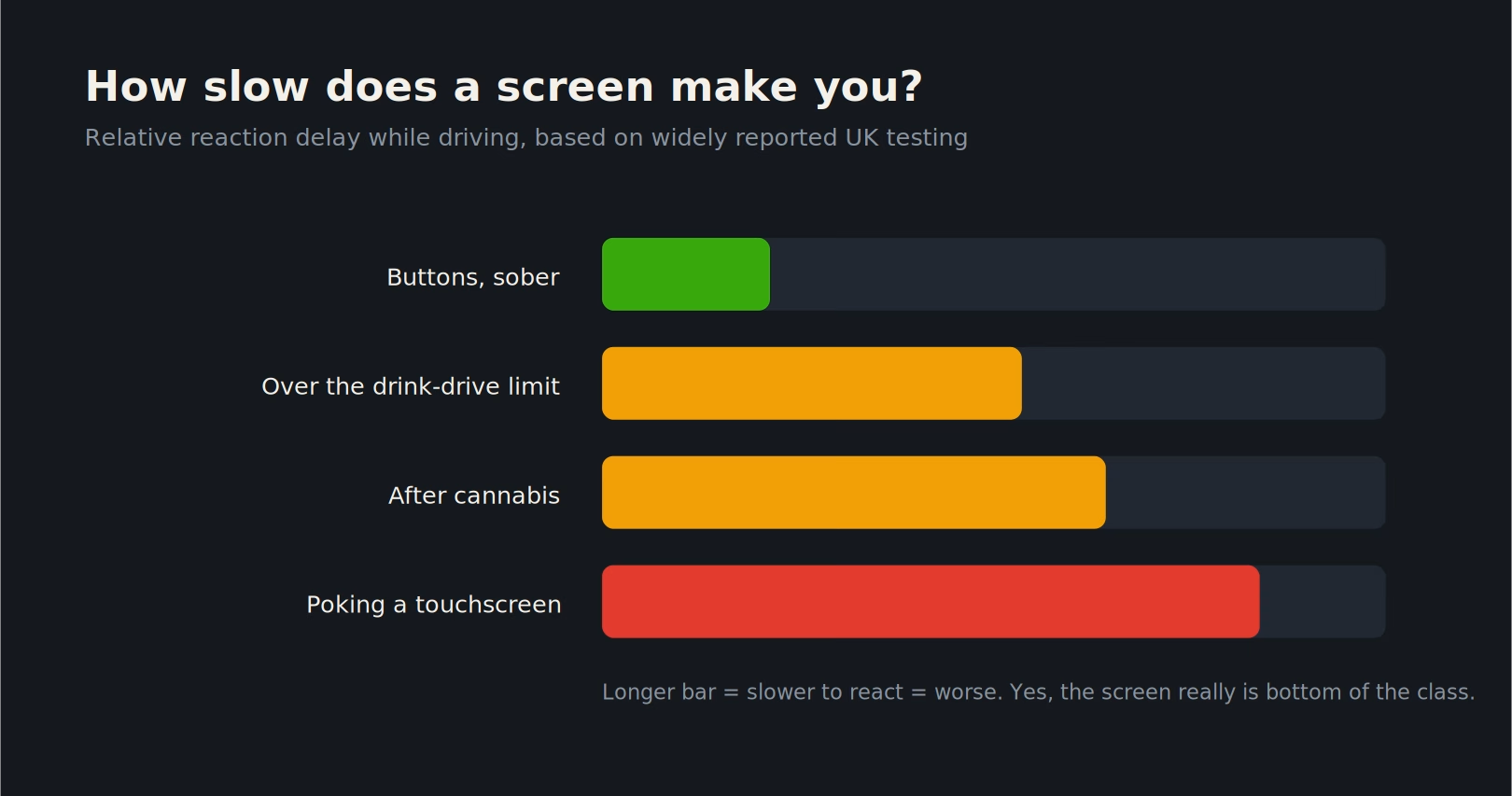
On reaction times, the screen quietly comes last.
Who’s Quietly Changing Their Minds
The interesting part now is watching the industry come round, mostly without admitting it was ever wrong. Volkswagen, which not long ago stripped its interiors almost bare, has conceded it went too far and is putting proper switches back onto its steering wheels. Hyundai and Nissan are rediscovering the knob. The Volvo EX30, which routes nearly everything, down to the door mirrors, through its central screen, suddenly looks less like the future and more like a moment we are already moving past.
None of it is being framed as a climbdown, naturally. But the timing tells its own quiet story: the buttons began reappearing at almost precisely the point the safety scores were on the line.
Where That Leaves Us
So where does this leave us? Not, I think, at war with the screen. A good display for maps and music is one of the genuinely nicer things about a modern car, and nobody sensible is asking to go back to wrestling a folded paper map at a junction. The screen was never really the problem.
The problem was quietly moving the things you reach for every few seconds behind glass, and then treating the wish for a simple knob as faintly old-fashioned. It was not old-fashioned. It was just right. Buttons are coming back because they always worked, and the only slightly deflating part is that it took a safety rating to remind an entire industry of something every driver already knew, and had simply stopped saying.
The Touchscreen Question: Your Questions Answered
From January 2026, Euro NCAP requires physical controls for five key functions before it will award a full five-star safety rating.
Indicators, hazard lights, the horn, the windscreen wipers and the emergency SOS call.
No. A big screen for maps and media is fine. The rule is simply that the safety-critical basics cannot be buried inside it.
Because around nine in ten European buyers check the Euro NCAP score, so a missing star has a real effect on sales.
Yes. Volkswagen, Hyundai and Nissan are among those already restoring physical switches and dials
Studies suggest it can slow a driver’s reactions more than being over the drink-drive limit, which is the reasoning behind the rule change.
Like What You’ve Read?
For more articles like this, receive our weekly e-newsletter, including partner deals and all things motoring, register your email below.
Please note: You cannot subscribe to Smart-Motoring unless you put a tick in the checkbox below to indicate have read and agreed to our privacy policy.
